Language
 English
 中文简体
 русский
 Español
 عربى
Material Selection for Butt Weld Fittings Choosing the right material is the first step in selecting...
Home / News / Industry News / abrasion resistant pipe: Applications, Selection Criteria, and Practical Guidance
abrasion resistant pipe: Applications, Selection Criteria, and Practical Guidance

Content
- 1 What Abrasion Resistant Pipe Really Means
- 2 Where Wear Actually Happens in a Piping System
- 3 Material and Fitting Choices That Improve Service Life
- 4 Matching the Pipe to the Duty: A Practical Framework
- 5 Inspection, Installation, and Life-Cycle Planning
- 6 Working With a Fitting Manufacturer on Wear Service
Abrasion resistant pipe sounds like a single product, but wear is rarely uniform. In a slurry line, ash circuit, or pneumatic conveyor, one elbow may fail in months while the straight run beside it lasts for years. After more than three decades supplying pressure piping components, we have learned that abrasion resistance comes from matching material, geometry, wall thickness, and duty. This guide explains what matters when you specify an abrasion-resistant piping system, and why fittings deserve closer attention than they usually get.
What Abrasion Resistant Pipe Really Means
“Abrasion resistant pipe” is a performance description, not a metallurgical category. The pipe may be through-hardened carbon steel, induction-hardened on the inner surface, ceramic or basalt lined, polymer lined, or a corrosion-resistant alloy for a wet chemical duty. Hardness is usually reported in Brinell (BHN). Abrasion-resistant steels commonly fall between about 200 and 800 BHN, while an induction-hardened bend may have a very hard inner surface and a softer, tougher outer wall. The number helps, but it is not a complete specification.
Wear depends on particle shape, size, velocity, impact angle, temperature, and corrosivity. A hard surface can resist sliding abrasion yet crack under impact. A softer, tougher material may deform instead of fracture in a coarse, high-angle stream. Corrosion can also remove the matrix that holds hard particles, so a wet-line “wear” failure may really be corrosion-wear. That is why we ask for the duty condition before recommending a material.
| Approach | How it works | Often considered for | Check before specifying |
|---|---|---|---|
| Through-hardened or AR steel | Hardness typically around 200-800 BHN through the wall | Coarse ash, slurry, low-corrosion wear | Toughness, weldability, and matching fittings |
| Induction-hardened bend | Hard inner surface with a tougher outer wall | Power, ash, pneumatic conveying | Hardness depth, bend radius, field weld prep |
| Ceramic or basalt lining | Hard liner inside a steel shell | High-wear slurry and coal handling | Bond integrity, thermal cycling, flange make-up |
| Polymer or UHMWPE lining | Low-friction polymer contact surface | Fine abrasive slurry at low temperature | Pressure and temperature limits, support spacing |
| Stainless, duplex, or nickel alloy | Corrosion resistance with good toughness | Wet, corrosive slurries | Abrasion is not the same as corrosion resistance |
| Heavy-wall fitting | Extra wall thickness as a wear allowance | Any abrasive duty with known wear points | Bore match, weight, and weld procedure |
Where Wear Actually Happens in a Piping System
Straight pipe gets most of the attention because it has the largest surface area, but fittings often set the maintenance interval. At an elbow, flow changes direction and particles concentrate on the outer radius. At a tee, the branch creates turbulence and recirculation. Reducers, expanders, and short spools between valves can do the same. In many plants, the first through-wall loss appears not in the pipe but in a bend, a branch, or a weld-bore protrusion.
Geometry is a wear-control tool. A longer-radius bend spreads impact over a larger area. A lateral tee can provide a smoother branch path than a square tee in some abrasive duties. An eccentric reducer installed with the flat side up or down can avoid a liquid pocket or a particle trap, depending on the line. The right choice depends on whether wear is mainly sliding or impact, and on whether the line must drain or stay free of settled solids.
Where a wear allowance is needed, heavy-wall pipe bends and large-diameter industrial elbows are often specified rather than standard fittings. Extra wall is not a substitute for good geometry, but it can extend the time between shutdowns in a well-laid-out line.
Material and Fitting Choices That Improve Service Life
Carbon steel remains the workhorse for abrasive duties when corrosion is not the main issue. ASTM A234 WPB butt weld fittings are widely available, weldable, and can be supplied in schedules or wall thicknesses that leave a wear allowance. The fitting should not be an afterthought: a standard-wall elbow at the worst wear point can undermine a heavy-wall pipe run. Alloy grades such as P11, P22, and P91 are chosen for high-temperature or high-pressure service, not because they are inherently more abrasion resistant. Stainless steels, duplex grades, and nickel alloys help where corrosion accelerates metal loss, but their hardness is generally lower than that of quench-and-tempered wear steel. In a corrosive slurry, that trade-off needs to be checked against the actual chemistry and temperature.
When the duty is severe, the fitting may need a hardened surface, a thicker wall, or a different construction. A heavy-wall 90-degree elbow with a matched bore and weld preparation can replace a standard elbow that has become a maintenance item. The aim is not to make every component the hardest available; it is to put wear resistance where particle energy is highest while keeping the pressure boundary sound.
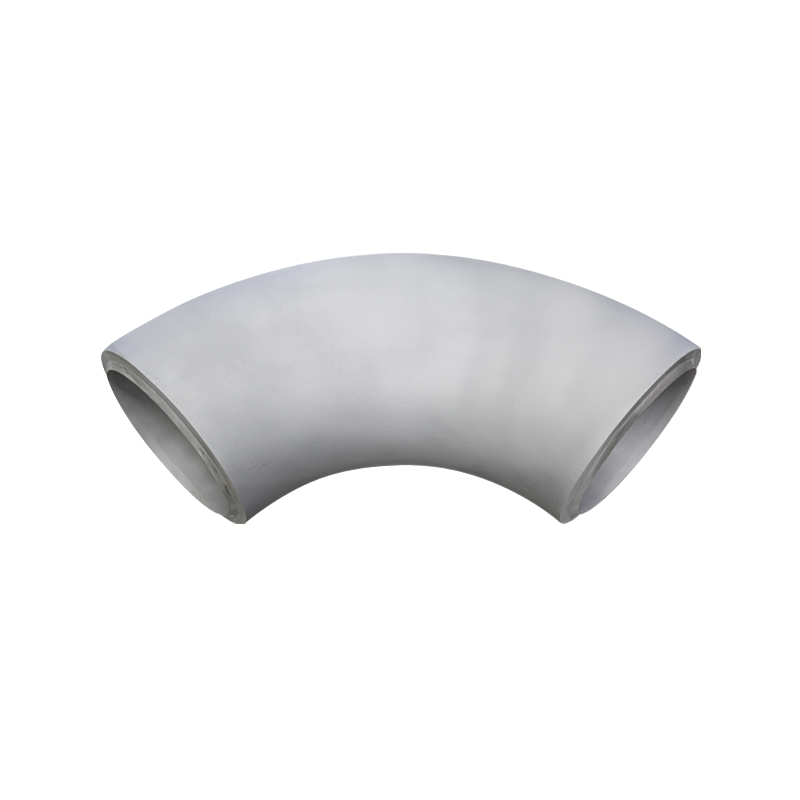 Heavy-Wall Butt Weld 90-Degree ElbowA heavy-wall butt weld elbow with matched bore can replace a standard 90-degree elbow that has become a maintenance item in severe duty.View Product →
Where a branch carries the same abrasive stream, a lateral tee can reduce the sharp recirculation zone of a conventional tee. It is not a universal answer, but it is worth evaluating when a branch has a history of rapid wall loss.
 45-Degree Butt Weld Lateral TeeFor abrasive branch flow, this 45-degree butt weld lateral tee can reduce the sharp recirculation zone of a conventional tee where wall loss is rapid.View Product →
Matching the Pipe to the Duty: A Practical Framework
Before choosing a material or fitting type, write down the duty in plain terms. This sequence keeps the conversation grounded:
- Identify the wear mechanism: sliding, impact, gouging, corrosion-wear, or a combination.
- Record particle size, shape, concentration, and moisture.
- Confirm velocity and any short-radius bends, tees, or throttling points.
- Check temperature and pressure together, not separately.
- Confirm the base material's corrosion resistance in the actual fluid.
- Decide whether the line needs a wear allowance, a lining, or a replaceable spool.
- Plan inspection access and spare parts before the first shutdown.
Then compare total cost, not only purchase price. A lined pipe may cost more up front but last longer; a hardened bend may be cheaper to replace but demand a weld procedure that preserves its hardness. The best projects discuss layout, material, and maintenance together.
Pump suction and drainage lines deserve the same scrutiny. An eccentric reducer can prevent a vapor pocket or a solids trap, but its orientation must match the process intent. A reducer that solves one problem can create another if it is installed the wrong way up.
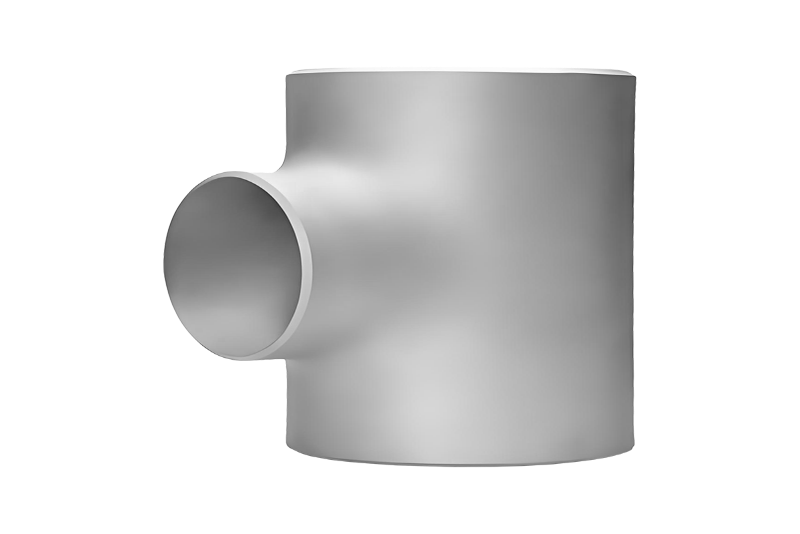
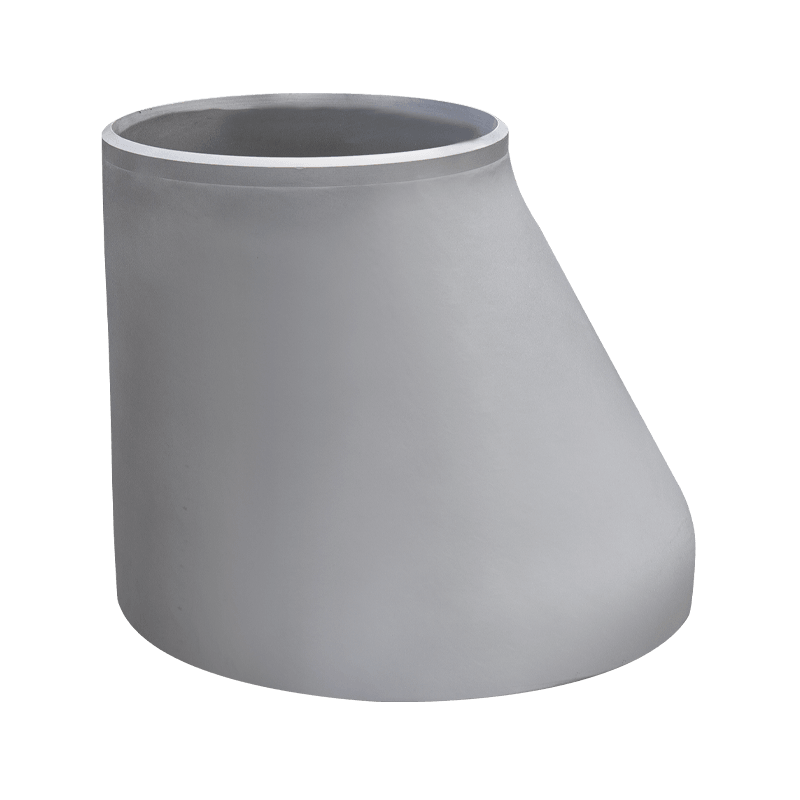 Butt Weld Eccentric Reducer for Horizontal PipelinesAn eccentric reducer’s centerline offset can help prevent vapor pockets or solids traps in pump suction and drainage lines when orientation matches the process intent.View Product →
Inspection, Installation, and Life-Cycle Planning
Abrasion-resistant pipe is still a pressure boundary. Weld quality, bore alignment, and support spacing matter. Field cuts and welds on hardened or lined pipe need a qualified procedure; excessive heat input can soften a hardened surface or damage a liner. Internal misalignment at a butt weld creates a step that accelerates local wear, so fit-up deserves the same attention as the material certificate.
Monitoring turns wear from a surprise into a planned event. Baseline ultrasonic thickness readings at elbows, tees, reducers, and downstream straight runs give maintenance teams a reference point. Fixed inspection locations, repeated at the same intervals, are more useful than random readings. Where access allows, rotating a symmetrical fitting or replacing a bolted spool can extend service life without a full line shutdown.
Our team at Jiangyin Gaoxin Pipe Fittings has supplied pressure piping components since 1993. We stock common specifications, work with long-term raw material partners, and use NDT personnel certified in MT, PT, UT, and RT to check critical items. Our products serve oil and gas, chemical, power, marine, and other industrial projects in 56 countries. For wear service, those capabilities matter most in wall thickness, heat treatment, weld prep, and dimensional check.
Working With a Fitting Manufacturer on Wear Service
An abrasion-resistant piping project involves more than a pipe purchase. Fittings, flanges, and spools must match bore, pressure class, and welding procedure, and the wear strategy must be consistent across components. We ask for a simple duty sheet: medium, particle size, velocity, temperature, pressure, line size, and the location that failed before. Then we can discuss whether a heavy-wall carbon steel fitting, a corrosion-resistant grade, a hardened bend, or a replaceable spool is the sensible route.
We do not treat abrasion resistance as a catalogue label. We treat it as a service condition that has to be reflected in the drawing, the material certificate, and the inspection plan.
A well-chosen abrasion resistant pipe is only one part of a reliable wear plan. The elbows, tees, reducers, and weld details around it determine how often the line comes down. If you are planning a new slurry, ash, or conveying system, bring the duty conditions and failed-component history into the specification review. A practical, experience-based selection is usually more durable than a single hardness number on a data sheet.
Latest News
News And Blogs
Stay Informed About Our Recent Events