Language
 English
 中文简体
中文简体 русский
 Español
 عربى
عربى
Material Selection for Butt Weld Fittings Choosing the right material is the first step in selecting...
What Is a Butt Weld 180 Degree Elbow and How Is It Used?

Content
Understanding the Butt Weld 180 Degree Elbow
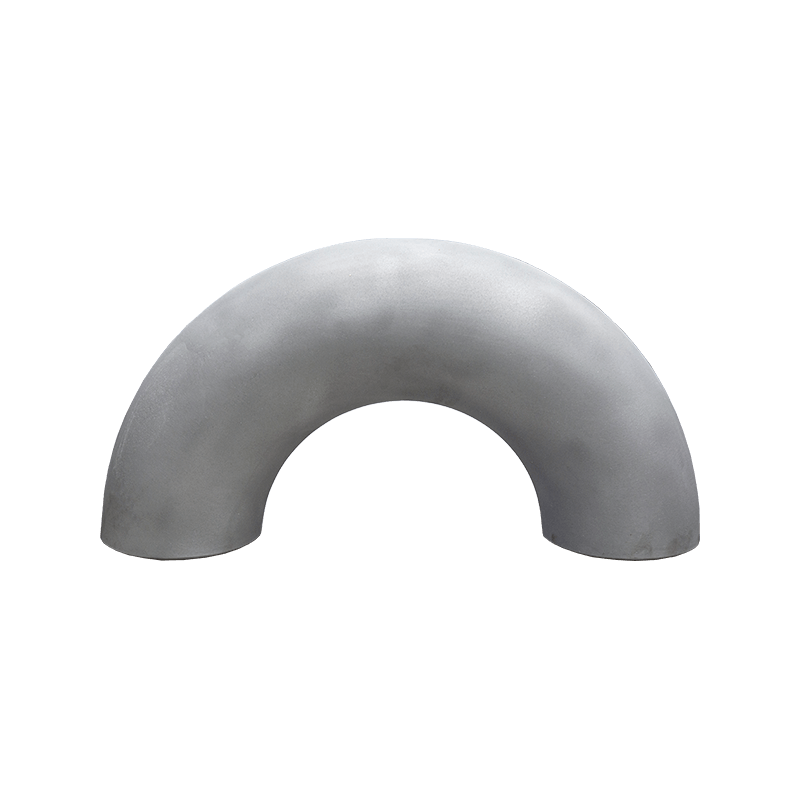
A butt weld 180 degree elbow, sometimes called a return bend, is a pipe fitting engineered to reverse the direction of flow by a full half-circle. Unlike a standard 90 degree elbow that changes direction by a quarter turn, this fitting brings piping back parallel to its original path, which is why it is widely used in heat exchangers, condensers, boiler tube assemblies, and compact piping layouts where space is limited. The "butt weld" designation refers to the connection method: the fitting is beveled at both ends so it can be welded directly to matching pipe sections, creating a permanent, leak-resistant joint that can handle high pressure and high temperature service.
Because these elbows must withstand continuous thermal cycling and mechanical stress in many industrial systems, they are manufactured to strict dimensional and metallurgical standards. Selecting the correct type, radius, and material grade directly affects system reliability, pressure drop, and long-term maintenance costs.
Manufacturing Standards and Dimensional Categories
Most butt weld 180 degree elbows are produced according to ASME B16.9, the governing standard for factory-made wrought steel butt-welding fittings. This standard defines wall thickness, center-to-end dimensions, and tolerances so that fittings from different manufacturers remain interchangeable. Elbows are typically classified by their radius relative to the nominal pipe size (NPS):
- Long radius (LR): center-to-end distance equals 1.5 times the nominal pipe diameter, offering smoother flow and lower pressure drop.
- Short radius (SR): center-to-end distance equals the nominal pipe diameter, used where space is restricted but higher turbulence is acceptable.
For 180 degree fittings, the long radius version is by far the more common choice, since the return bend already imposes significant directional change and a tighter radius would create excessive flow resistance and increased erosion at the inner bend.
Typical Dimensional Reference
| Nominal Pipe Size (NPS) | Long Radius Center-to-End (in) | Approx. Wall Thickness (Sch 40) |
| 2" | 3.0" | 0.154" |
| 4" | 6.0" | 0.237" |
| 6" | 9.0" | 0.280" |
| 8" | 12.0" | 0.322" |
Common Materials and Their Applications
The material grade of a butt weld 180 degree elbow should always match the pipe it connects to, both for weldability and for corrosion or temperature resistance. Common material families include:
- Carbon steel (ASTM A234 WPB): general-purpose service in oil and gas, power plants, and utility piping.
- Stainless steel (ASTM A403 WP304/WP316): corrosion resistance for chemical processing, food and beverage, and pharmaceutical systems.
- Alloy steel (ASTM A234 WP11, WP22): elevated temperature service in refinery and power generation piping.
- Nickel alloys (Inconel, Hastelloy): extreme corrosion or high-temperature environments such as offshore and petrochemical processing.
In heat exchanger tube bundles, 180 degree butt weld elbows made from stainless steel or copper-nickel alloys are frequently used to connect U-shaped tube runs, allowing compact bundle designs while maintaining full weld integrity at each return.
Where These Elbows Are Used
The defining advantage of a 180 degree elbow is space efficiency combined with a permanent, high-integrity connection. Typical applications include:
- Shell-and-tube heat exchangers, where return bends connect parallel tube passes.
- Boiler and superheater tube circuits requiring compact routing within a confined furnace space.
- Refrigeration and HVAC piping loops that need to double back within tight equipment enclosures.
- Process piping skids where multiple direction changes must occur without adding extra fittings or joints.
Installation and Welding Considerations
Because the fitting is welded rather than threaded or flanged, proper joint preparation is critical. Both the elbow and the connecting pipe ends must be beveled to the correct angle, typically 37.5 degrees, to form a complete V-groove when aligned. This groove allows full weld penetration and reduces the risk of incomplete fusion, a common failure point in high-pressure systems.
Key Installation Practices
- Verify that the elbow's wall thickness matches the connecting pipe schedule to avoid weld transition issues.
- Use root pass welding with appropriate filler metal matched to the base material chemistry.
- Perform post-weld heat treatment when required by code for alloy steel or thick-wall carbon steel fittings.
- Conduct radiographic or ultrasonic testing on critical service welds to confirm joint integrity before commissioning.
Because the 180 degree bend creates two weld joints close together, alignment accuracy is especially important. Misalignment at either end can introduce stress concentrations that shorten fatigue life, particularly in systems subject to thermal cycling.
Choosing the Right Fitting for Your System
When specifying a butt weld 180 degree elbow, engineers typically evaluate four factors together: pressure rating, temperature range, flow velocity, and available installation space. A long radius design is generally preferred for higher flow rates because it minimizes turbulence and erosion, while a short radius option may be selected only when space constraints leave no alternative.
It is also important to confirm the fitting's schedule (wall thickness) matches the system's pressure class, and to check that the manufacturer provides full material traceability, including mill test certificates, especially for use in regulated industries such as oil and gas or power generation. Working with a supplier that follows ASME B16.9 and can supply supporting documentation reduces the risk of dimensional mismatches during installation.
Maintenance and Inspection Tips
Once installed, butt weld 180 degree elbows generally require minimal maintenance due to their all-welded construction, but periodic inspection is still recommended in high-cycle or corrosive environments. Common inspection practices include visual checks for external corrosion, ultrasonic thickness testing at the bend's outer radius where erosion is most likely to concentrate, and monitoring for any signs of weld cracking near the heat-affected zone. Addressing minor wear early, rather than waiting for a leak, helps avoid costly unplanned shutdowns in continuous process systems.
Latest News
News And Blogs
Stay Informed About Our Recent Events