Language
 English
 中文简体
中文简体 русский
 Español
 عربى
عربى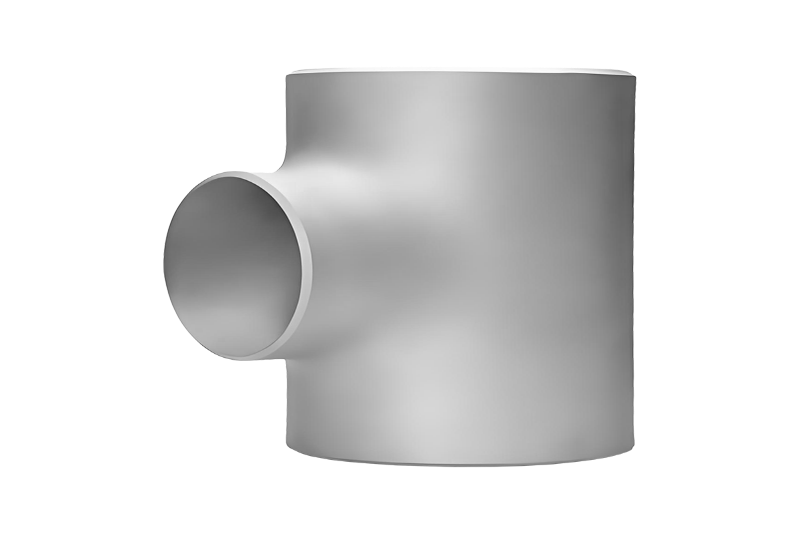
Material Selection for Butt Weld Fittings Choosing the right material is the first step in selecting...
Ultimate Guide to Buttweld Fittings: Everything You Need to Know

Content
- 1 What Are Butt Weld Pipe Fittings
- 2 Common Types of Butt Weld Fittings
- 3 Materials Used in Butt Weld Fitting Manufacturing
- 4 Understanding Wall Thickness and Schedule Ratings
- 5 Key Advantages of Butt Weld Fittings Over Other Connection Types
- 6 Installation and Quality Control Considerations
- 7 Selecting the Right Butt Weld Fitting for Your Project
What Are Butt Weld Pipe Fittings
Butt weld pipe fittings are components used to connect, redirect, or terminate sections of pipe within a piping system by welding them directly to the pipe ends, creating a permanent, leak-resistant joint. Unlike threaded or socket weld fittings, butt weld fittings are beveled at the edges to allow the welder to fuse the fitting and pipe together in a single continuous weld, resulting in a smooth internal surface with minimal flow disruption.
This connection method is widely favored in high-pressure and high-temperature industrial applications, including oil and gas pipelines, power generation facilities, and chemical processing plants, where joint integrity under extreme conditions is non-negotiable. Because the weld itself becomes part of the pipe structure rather than a separate mechanical connection, butt weld fittings generally offer superior strength and reliability compared to alternative jointing methods.
Common Types of Butt Weld Fittings
Butt weld fittings come in several standardized shapes, each designed to serve a specific function within a piping layout. Understanding these types helps engineers and procurement teams specify the correct component for each application.
Elbows
Elbows change the direction of pipe flow, typically available in 45-degree and 90-degree configurations, as well as long radius and short radius variations. Long radius elbows are more common in general piping systems because they create a gentler flow transition, reducing pressure drop and turbulence compared to short radius alternatives.
Tees
Tees allow a pipeline to branch into two directions, either as an equal tee, where all three openings share the same diameter, or a reducing tee, where the branch outlet is smaller than the main run. Tees are essential in systems requiring flow distribution or the integration of secondary lines into a main pipeline.
Reducers
Reducers connect pipe sections of different diameters, allowing a system to transition smoothly from a larger to a smaller pipe size, or vice versa. Concentric reducers maintain a centered axis between both pipe ends, while eccentric reducers offset one side, often used when maintaining a level top or bottom surface is necessary for drainage or equipment alignment.
Caps
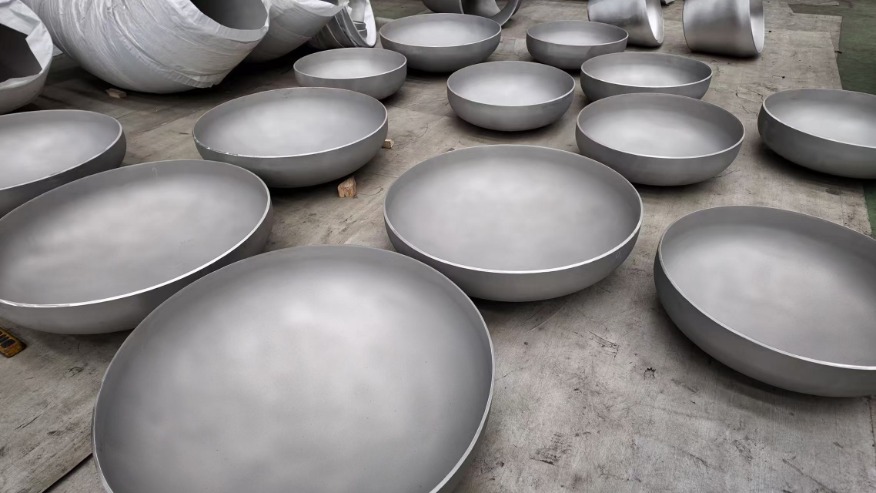
Caps are used to seal the end of a pipeline, providing a permanent closure that withstands the same pressure and temperature conditions as the rest of the system. These are commonly used at line terminations or during system testing phases before further sections are added.
Materials Used in Butt Weld Fitting Manufacturing
Material selection significantly affects the performance, cost, and application suitability of butt weld fittings. The table below outlines common materials and their typical use cases within industrial piping systems.
| Material | Key Property | Typical Application |
| Carbon Steel | High strength, cost-effective | General industrial piping |
| Stainless Steel | Corrosion resistance | Chemical, food, pharmaceutical processing |
| Alloy Steel | High temperature tolerance | Power plants, refineries |
| Nickel Alloy | Extreme corrosion resistance | Offshore, highly corrosive environments |
Understanding Wall Thickness and Schedule Ratings
Butt weld fittings are manufactured to match specific pipe schedules, which indicate the wall thickness of the fitting relative to its outer diameter. Common schedules include Schedule 10, 40, and 80, with higher schedule numbers indicating thicker walls capable of withstanding greater internal pressure. Selecting the correct schedule is critical, as mismatched wall thickness between the fitting and connecting pipe can create weak points at the weld joint, compromising overall system integrity.
Engineers typically calculate required schedule ratings based on the system's operating pressure, temperature, and the specific material's mechanical properties, often referencing standards such as ASME B16.9, which governs dimensional and tolerance requirements for factory-made butt weld fittings.
Key Advantages of Butt Weld Fittings Over Other Connection Types
Butt weld fittings offer several practical advantages that make them the preferred choice for demanding industrial applications compared to threaded or flanged alternatives.
- Superior joint strength due to the fully fused connection between fitting and pipe.
- Reduced risk of leaks compared to threaded connections, which can loosen under vibration or thermal cycling.
- Smooth internal bore that minimizes turbulence and pressure drop across the fitting.
- Better suited for high-temperature and high-pressure systems where mechanical joints may fail.
- Lower long-term maintenance requirements once properly welded and inspected.
Installation and Quality Control Considerations
Proper installation of butt weld fittings requires skilled welders and careful attention to joint preparation, including accurate beveling and alignment before welding begins. Any misalignment or inconsistent gap between the fitting and pipe can result in weld defects that compromise the joint's structural integrity, particularly in high-pressure applications where failure could have serious safety consequences.
Quality control measures such as radiographic testing, ultrasonic inspection, and dye penetrant testing are commonly used to verify weld integrity after installation, especially in critical systems like power generation or petrochemical processing where undetected weld flaws could lead to catastrophic failure over time.
Selecting the Right Butt Weld Fitting for Your Project
Choosing the correct butt weld fitting involves evaluating multiple factors together, including the pipe's operating pressure, temperature range, fluid or gas being transported, and the surrounding environmental conditions. Working closely with a knowledgeable supplier and referencing applicable industry standards ensures that the selected fittings, materials, and schedule ratings align precisely with the demands of the specific piping system, ultimately supporting long-term reliability and safety across the entire installation.
Latest News
News And Blogs
Stay Informed About Our Recent Events