Language
 English
 中文简体
中文简体 русский
 Español
 عربى
عربى
Material Selection for Butt Weld Fittings Choosing the right material is the first step in selecting...
Home / News / Industry News / Why Is the Forged Thread Coupling a Preferred Choice for Low-Pressure Pipe Connections?
Why Is the Forged Thread Coupling a Preferred Choice for Low-Pressure Pipe Connections?

Content
- 1 What Is a Forged Thread Coupling?
- 2 Materials and Manufacturing Standards
- 3 Key Design Features and How They Function
- 4 Comparing Forged Thread Couplings to Alternative Joining Methods
- 5 Industries and Applications That Rely on Forged Thread Couplings
- 6 Installation Best Practices for Long-Term Reliability
- 7 Selecting the Right Forged Thread Coupling for Your System
What Is a Forged Thread Coupling?
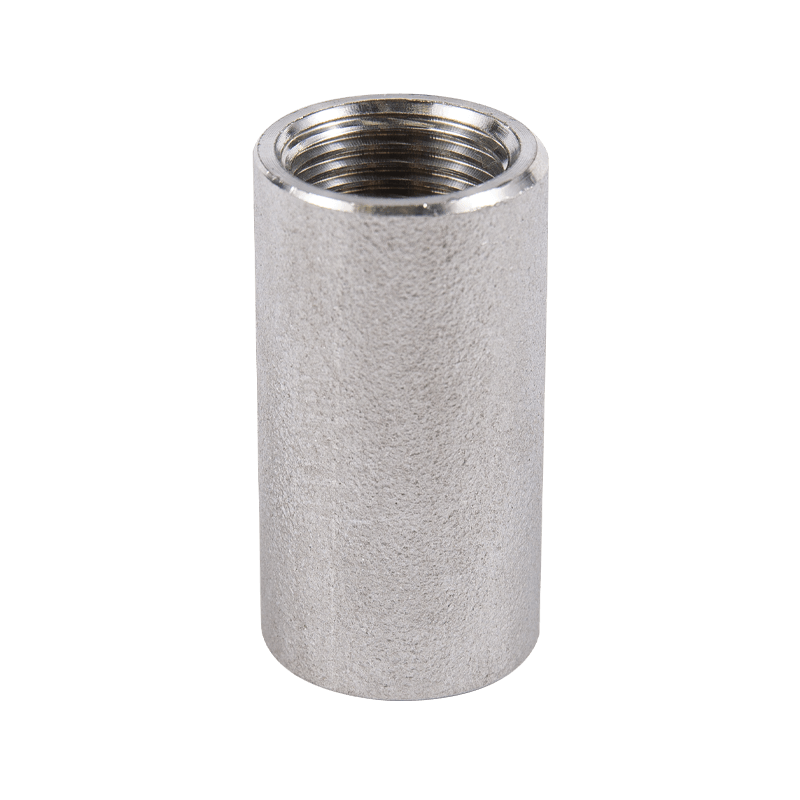
A forged thread coupling is a pipe fitting designed to join two sections of pipe end-to-end using precision-machined threads on both the interior and exterior surfaces of the coupling body. Unlike cast fittings, which are shaped by pouring molten metal into a mold, forged thread couplings are manufactured by applying compressive force to heated steel billets, aligning the grain structure of the metal and producing a denser, stronger component with superior mechanical properties. This forging process eliminates the porosity and micro-voids common in cast products, resulting in a fitting that can reliably contain fluids and gases under pressure without risk of seepage through the body wall.
The coupling's threaded interface allows two pipe ends — each carrying matching external threads — to be screwed into opposite ends of the coupling, creating a mechanically secure and leak-resistant connection. This simplicity of assembly is one of the primary reasons forged thread couplings are widely used in low-pressure piping systems across a broad range of industries. No welding, flanging, or specialized tooling is required; a pipe wrench or strap wrench is sufficient for installation, making these fittings accessible for both factory assembly and field maintenance.
Materials and Manufacturing Standards
The performance of a forged thread coupling depends heavily on the material from which it is forged and the standards governing its production. Different applications place different demands on corrosion resistance, tensile strength, temperature tolerance, and pressure rating, making material selection a critical engineering decision rather than a commodity choice.
The most commonly specified materials for forged thread couplings include:
- Forged carbon steel (ASTM A105): The standard choice for general industrial piping, offering high tensile strength, good machinability, and cost efficiency. Suitable for ambient and moderately elevated temperatures in non-corrosive service conditions. Commonly used in hydraulic systems, oil and gas gathering lines, and mechanical piping.
- Forged stainless steel (ASTM A182 F304, F316): Provides excellent corrosion resistance in the presence of water, dilute acids, chlorides, and food-grade chemicals. Grade 316 offers superior protection in chloride environments due to its molybdenum content. Widely specified for food processing, pharmaceutical, and marine applications.
- Forged alloy steel (ASTM A182 F11, F22): Used in elevated-temperature and high-pressure service where carbon steel alone cannot meet the required mechanical properties. Common in power generation and petrochemical refining systems.
- Forged brass or bronze: Selected for plumbing, water distribution, and low-pressure pneumatic systems where moderate corrosion resistance and easy machinability are priorities. Particularly common in residential and commercial building services.
Manufacturing standards that govern forged thread couplings include ASME B16.11 for forged fittings in socket weld and threaded configurations, MSS SP-83 specifically for pipe unions and couplings, and ASME B1.20.1 for the NPT (National Pipe Taper) thread form used in North American markets. European and international specifications frequently reference ISO 7-1 for taper pipe threads and EN 10241 for steel threaded pipe fittings. Compliance with these standards ensures dimensional interchangeability, predictable pressure ratings, and compatibility with standard pipe schedules.
Key Design Features and How They Function
The design of a forged thread coupling is deceptively simple on the surface but incorporates several engineered features that together ensure reliable, long-term performance in service.
Tapered Thread Profile
Most forged thread couplings use a tapered thread profile — NPT in North America or BSP taper (BSPT) in international markets — rather than straight threads. The taper causes the thread flanks to compress against each other as the pipe is tightened into the coupling, creating a metal-to-metal interference fit that progressively seals the joint. As engagement depth increases, the contact pressure between mating threads rises, reducing the gap through which fluid could escape. Thread sealant compounds such as PTFE tape or anaerobic thread sealant are applied to fill any remaining microscopic voids and further ensure a leak-free assembly. This self-sealing geometry is what makes tapered thread couplings suitable for fluid and gas containment without requiring a separate gasket or O-ring.
Full-Bore and Reduced-Bore Variants
Forged thread couplings are available in both full-bore (also called full-port) and reducing configurations. A full-bore coupling maintains the same internal diameter throughout its length, minimizing pressure drop and turbulence as fluid passes through the joint. Reducing couplings — sometimes called reducing couplings or reducers — allow two pipes of different nominal sizes to be connected, with the internal bore stepping down from the larger pipe end to the smaller. This eliminates the need for a separate reducer fitting in many system designs, reducing the total component count and potential leak points in the piping network.
Wall Thickness and Pressure Classes
Under ASME B16.11, forged threaded fittings are classified by pressure class — Class 2000, Class 3000, and Class 6000 — corresponding to increasing wall thickness and pressure capacity. For threaded end couplings, Class 2000 is most commonly used in low-pressure service and pairs with Schedule 80 pipe, while Class 3000 aligns with Schedule 160 pipe for higher-pressure applications. The wall thickness of the coupling body at the thread root is the critical dimension that determines burst and hydrostatic test pressure, and forging — with its refined grain structure — allows thinner walls to achieve equivalent strength compared to cast alternatives.
Comparing Forged Thread Couplings to Alternative Joining Methods
Understanding where forged thread couplings excel — and where other joining methods may be preferable — helps engineers make informed decisions during system design. The following table provides a direct comparison across the most common pipe joining methods:
| Joining Method | Installation Skill | Pressure Suitability | Disassembly | Typical Cost |
| Forged Thread Coupling | Low | Low to Medium | Fully reversible | Low to Medium |
| Socket Weld Fitting | High (welding) | Medium to High | Requires cutting | Medium to High |
| Butt Weld Fitting | Very High | High to Very High | Requires cutting | High |
| Flanged Connection | Medium | Medium to High | Fully reversible | High |
| Compression Fitting | Low | Low | Partially reversible | Medium |
This comparison highlights that forged thread couplings occupy a practical sweet spot: they are faster and simpler to install than welded or flanged joints, fully reversible for maintenance and system modification, and cost-effective at the component and installation labor level — advantages that make them the logical default choice in low-pressure systems where weld inspection, heat permits, or hot-work procedures would otherwise add significant cost and complexity.
Industries and Applications That Rely on Forged Thread Couplings
The versatility of the forged thread coupling means it appears across a remarkably diverse range of sectors. Its combination of robust construction, easy installation, and full disassembly capability makes it indispensable wherever piping systems must be assembled quickly, modified frequently, or maintained without specialized crews.
- Hydraulic machinery: Forged carbon steel threaded couplings connect hydraulic lines in machine tools, presses, and lifting equipment, where compact dimensions and vibration resistance are critical. The forged body's fatigue resistance handles the cyclic pressure fluctuations inherent in hydraulic circuits far better than cast equivalents.
- Pneumatic systems: Compressed air distribution networks in manufacturing plants, automotive workshops, and pneumatic conveying systems use forged thread couplings to connect supply lines, branch tees, and instrument air connections. Stainless steel grades are preferred where moisture condensation or process chemicals could cause corrosion over time.
- Agricultural irrigation: Surface and subsurface irrigation networks use forged brass or galvanized steel threaded couplings to connect lateral lines, risers, and emitter assemblies. The ease of seasonal assembly and disassembly is particularly valued in portable and semi-permanent irrigation installations where field crews reassemble systems each growing season.
- Food processing and beverage production: Sanitary-grade stainless steel forged thread couplings connect CIP (clean-in-place) lines, ingredient transfer pipes, and utility water systems in food plants. FDA-compliant materials and smooth internal bores that minimize microbial harboring points are specified to meet food safety regulations.
- Water treatment facilities: Chemical dosing lines, backwash piping, and instrumentation connections in water and wastewater treatment plants use forged thread couplings for their corrosion resistance and resistance to the aggressive treatment chemicals — chlorine, fluoride, and coagulants — present in these environments.
- Automotive and vehicle servicing: Workshop air lines, coolant systems, and fuel transfer equipment rely on forged threaded fittings for quick connection and disconnection during service operations. The compact profile of threaded couplings fits neatly in the confined engine bays and underbody areas typical of modern vehicles.
Installation Best Practices for Long-Term Reliability
Even the highest-quality forged thread coupling will underperform if installed incorrectly. Following established installation practices ensures that the connection achieves its rated pressure capacity and remains leak-free throughout its service life.
- Thread preparation: Inspect pipe threads for burrs, nicks, or damage before assembly. Damaged threads cannot form a proper seal regardless of sealant application. Use a thread gauge to verify that thread pitch and taper conform to the specified standard before installation.
- Sealant application: Apply PTFE tape clockwise on male threads, wrapping two to three layers tightly into the thread root, or use a compatible anaerobic thread sealant for systems involving vibration or high-frequency pressure cycling. Never use sealant on female threads, as excess material can be pushed into the bore and contaminate downstream components.
- Engagement depth: Thread NPT connections to the hand-tight position first, then advance two to three additional turns with a wrench. Over-tightening can crack the coupling body or distort threads; under-tightening leaves gaps in the thread contact zone that sealant alone cannot bridge under pressure.
- Support and alignment: Ensure that connected pipes are properly supported so that no bending moment is transferred to the coupling body. Forged thread couplings are designed to handle axial and torsional loads from assembly but are not intended to carry the weight of unsupported pipe runs.
- Pressure testing: After assembly, conduct a hydrostatic or pneumatic pressure test at 1.5 times the system operating pressure before placing the system into service. Inspect all couplings and joints for seepage during the test hold period, and re-tighten or reseal any connections showing moisture before commissioning.
Selecting the Right Forged Thread Coupling for Your System
Procurement and engineering teams should evaluate forged thread couplings against a defined set of system parameters rather than selecting by price alone. The nominal pipe size and schedule determine the required coupling size and pressure class. The fluid or gas being conveyed — its chemistry, temperature, and purity requirements — determines the appropriate material grade. The operating pressure and any surge or water hammer conditions determine whether Class 2000 or Class 3000 ratings are necessary. And the regulatory environment — food safety, fire codes, pressure vessel codes — may mandate specific standards compliance that narrows the field of acceptable products further.
Requesting mill test reports and material certifications from suppliers confirms that the forged couplings delivered to the project site are genuinely manufactured from the specified alloy and comply with the dimensional tolerances of the referenced standard. In safety-critical applications, third-party inspection and positive material identification (PMI) testing at goods receipt provide an additional verification layer. For standard industrial applications, selecting couplings from manufacturers who hold ISO 9001 quality management certification and whose products are marked with heat number traceability provides a reliable baseline for quality assurance without excessive procurement overhead.
Latest News
News And Blogs
Stay Informed About Our Recent Events