Language
 English
 中文简体
中文简体 русский
 Español
 عربى
عربى
Material Selection for Butt Weld Fittings Choosing the right material is the first step in selecting...
Home / News / Industry News / Raised Face vs Flat Face Flange: What Are the Key Differences and How Do You Choose the Right One?
Raised Face vs Flat Face Flange: What Are the Key Differences and How Do You Choose the Right One?

Content
- 1 Why Flange Face Type Matters in Piping System Design
- 2 What Is a Raised Face Flange
- 3 What Is a Flat Face Flange
- 4 Direct Comparison: Raised Face vs Flat Face Flanges
- 5 Gasket Selection: How Face Type Drives Gasket Design
- 6 Application Environments Where Each Face Type Is Specified
- 7 Common Installation Mistakes and How to Avoid Them
- 8 Making the Right Choice for Your Piping System
Why Flange Face Type Matters in Piping System Design
In any piping system — whether in oil and gas processing, chemical plants, water treatment facilities, or power generation — flanges are the mechanical connectors that join pipe sections, valves, pumps, and equipment together to form a complete, leak-free fluid pathway. While engineers often focus on flange material, pressure class, and bore size when specifying connections, the flange face type is equally critical and frequently misunderstood. The face is the contact surface of the flange — the area that compresses against a gasket to create the seal. Two of the most common face types in industrial use are the raised face (RF) and the flat face (FF), and while they may appear similar to the untrained eye, their differences in geometry, sealing mechanism, pressure capability, and application suitability are significant enough that using the wrong type in a given system can result in gasket failure, joint leakage, equipment damage, or serious safety incidents.
Understanding exactly how raised face and flat face flanges differ — and under what conditions each should be specified — is practical knowledge that piping engineers, procurement specialists, and maintenance technicians need to make correct decisions at both the design stage and during field installation and replacement work.
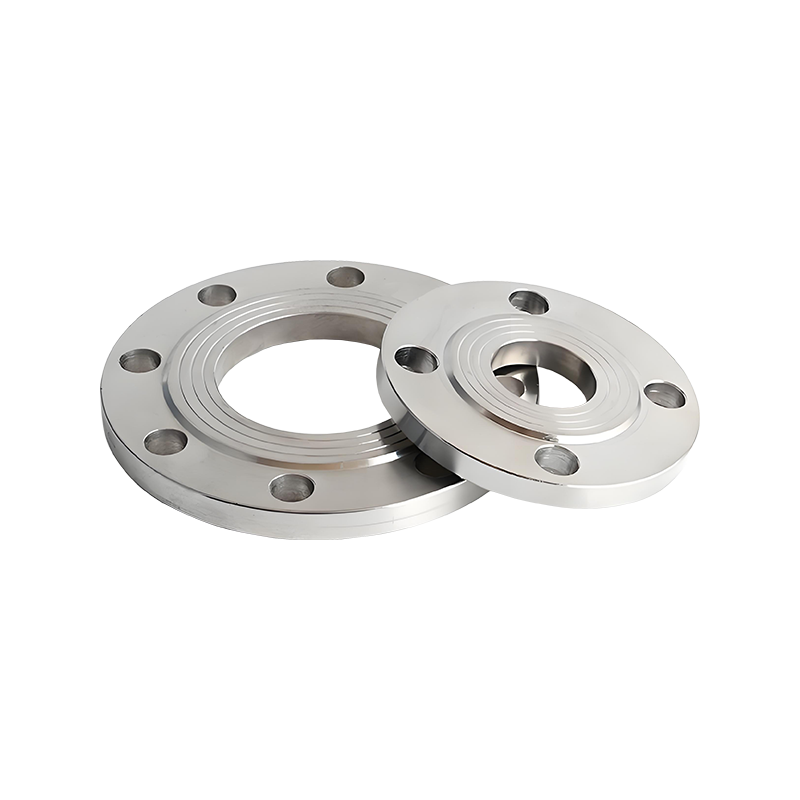
What Is a Raised Face Flange
A raised face flange features a circular, elevated sealing surface that protrudes above the bolt circle face of the flange body. This raised portion — typically raised by 1.6 mm (1/16 inch) for Class 150 and Class 300 flanges, and by 6.4 mm (1/4 inch) for Class 400 and higher pressure classes per ASME B16.5 — concentrates the bolt load onto a smaller contact area. Because the clamping force from the bolts is applied over a reduced surface area rather than the entire flange face, the contact stress on the gasket is substantially higher for a given bolt torque. This elevated gasket stress is what creates a tight, reliable seal even under high-pressure operating conditions.
The raised face surface is typically finished with a specific surface finish — commonly a 125–250 AARH (arithmetic average roughness height) spiral serrated or concentric serrated finish — that mechanically interlocks with the gasket material during compression, further enhancing sealing performance and preventing gasket blowout under pressure surges. Raised face flanges are the default face type specified under ASME B16.5 for steel flanges in most industrial applications and are compatible with a wide range of gasket materials including spiral wound gaskets, ring type joints, and various soft-material sheet gaskets.
What Is a Flat Face Flange
A flat face flange has a sealing surface that is flush and continuous across the entire face of the flange, from the bore to the outer edge of the bolt holes. There is no raised seating surface — the gasket contacts the full face of the flange, including the area surrounding the bolt holes. This full-face contact design distributes the bolt load over a much larger area, resulting in lower gasket contact stress compared to a raised face flange tightened to the same bolt torque.
Flat face flanges are mandated in specific applications — most importantly when connecting to flanged equipment made from cast iron, ductile iron, or other brittle materials. Cast iron flanges are manufactured flat face as standard, and this is not simply a matter of convention. If a raised face steel flange is bolted against a flat face cast iron flange, the bolt load concentrates on only the raised portion of the steel flange, creating an uneven bending moment across the cast iron flange face. This bending stress can crack the cast iron flange — a failure mode that is especially dangerous in systems carrying hot fluids or hazardous chemicals. Using full-face gaskets and flat face flanges distributes the load evenly, protecting the brittle component from this bending stress.
Direct Comparison: Raised Face vs Flat Face Flanges
The table below summarizes the most important differences between raised face and flat face flanges across key technical and application parameters:
| Parameter | Raised Face (RF) | Flat Face (FF) |
| Sealing surface geometry | Elevated central ring above bolt circle | Flush across entire face including bolt holes |
| Gasket contact area | Smaller (between bore and bolt circle) | Larger (full face, bore to bolt holes) |
| Gasket contact stress | Higher for given bolt load | Lower for given bolt load |
| Pressure rating suitability | All classes, especially Class 150 and above | Primarily low-pressure, Class 150 and below |
| Typical gasket type | Ring gasket (spiral wound, ring joint) | Full-face gasket |
| Mating material compatibility | Steel-to-steel connections | Required when mating with cast iron or brittle materials |
| Standard reference | ASME B16.5 default for steel flanges | ASME B16.1 for cast iron flanges |
| Risk if mismatched | Gasket leakage if paired with FF on soft equipment | Cast iron cracking if RF flange bolted against FF cast iron |
Gasket Selection: How Face Type Drives Gasket Design
The relationship between flange face type and gasket selection is not optional — it is a direct engineering dependency. Using the wrong gasket type with a given flange face configuration will result in either inadequate sealing stress, gasket extrusion, or mechanical damage to the flange or mating equipment.
Gaskets for Raised Face Flanges
Raised face flanges use ring-type gaskets that sit within the raised seating area, between the bore and the inner edge of the bolt circle. Common gasket types for raised face applications include spiral wound gaskets with an outer centering ring (which prevents the gasket from being displaced during bolt-up), solid metal ring gaskets for very high-pressure applications, and compressed non-asbestos fiber (CNAF) sheet gaskets cut to ring dimensions for lower-pressure, lower-temperature services. The centering ring on spiral wound gaskets is specifically designed to register against the raised face outer diameter, ensuring precise gasket positioning and preventing over-compression of the winding.
Gaskets for Flat Face Flanges
Flat face flanges require full-face gaskets that extend across the entire flange face, with bolt holes punched through the gasket material to match the flange bolt circle. This full-face design is essential — it ensures that bolt load is distributed evenly across the entire face, preventing the bending moments that would occur if only a ring gasket were used. Full-face gaskets are typically made from softer, more compressible materials such as rubber (EPDM, neoprene, nitrile), PTFE, or compressed fiber sheet, which can achieve adequate sealing stress at the lower contact pressures available in flat face connections. The material must be soft enough to seal at low bolt loads but durable enough to resist the process fluid, temperature, and mechanical relaxation over time.
Application Environments Where Each Face Type Is Specified
The selection between raised face and flat face flanges is largely determined by the application environment — the fluid service, pressure and temperature conditions, and the materials of the connecting equipment. Understanding these application contexts makes selection decisions straightforward in most cases.
- High-Pressure Steam and Process Piping: Raised face flanges with spiral wound gaskets are the standard specification for steam lines, hydrocarbon process piping, and high-temperature services in refineries and chemical plants. The concentrated sealing stress of the RF design is essential for maintaining joint integrity under thermal cycling and pressure fluctuations.
- Connections to Cast Iron Pumps and Valves: Flat face flanges with full-face gaskets are mandatory when connecting steel piping to cast iron pump casings, valve bodies, or other brittle equipment. This is one of the most frequently violated rules in field installations, where workers mistakenly bolt standard steel RF flanges directly to cast iron equipment without converting to flat face and full-face gaskets.
- Water and Low-Pressure Utility Services: Flat face flanges are common in water supply, HVAC, and low-pressure utility systems where the connected equipment is cast iron or ductile iron and operating pressures remain below Class 150 limits. These systems typically use rubber full-face gaskets that provide reliable sealing at modest bolt loads.
- Fiberglass Reinforced Plastic (FRP) Piping Systems: FRP flanges are manufactured flat face and require flat face mating flanges and full-face gaskets for the same reason as cast iron — the material is brittle and cannot withstand the bending stress imposed by a raised face connection without risk of cracking or delamination.
- Subsea and High-Integrity Applications: Raised face flanges, and in the most demanding cases Ring Type Joint (RTJ) flanges, are specified for subsea pipelines and other critical high-integrity pressure-containing systems where the consequences of leakage are severe and frequent maintenance access is not possible.
Common Installation Mistakes and How to Avoid Them
Misapplication of flange face types is one of the most common causes of flange joint leakage and equipment damage in industrial facilities. Many of these errors occur during maintenance and expansion work, when new steel piping is connected to existing cast iron equipment without proper attention to face type compatibility. The following are the most frequently encountered mistakes and the correct practices that prevent them.
- Bolting RF Steel Flanges to FF Cast Iron Equipment: This is the most dangerous misapplication. The correct solution is to either specify the connecting steel flange as flat face, or — if the steel flange has already been delivered as raised face — to machine the raised face down to flat face before installation. Never use a ring gasket in this configuration, as it will not distribute load properly across the cast iron face.
- Using Ring Gaskets on Flat Face Flanges: Installing a ring gasket between two flat face flanges leaves the outer bolt-hole area unsupported, allowing the flanges to dish inward under bolt load. This distorts the sealing surface, concentrates stress at the inner edge, and almost always results in leakage. Always use full-face gaskets with flat face flanges.
- Incorrect Bolt Torque for Face Type: Because raised face and flat face flanges have different effective gasket seating areas, the bolt torque required to achieve adequate gasket stress differs between the two configurations even at the same pressure class and flange size. Always use the torque values calculated for the specific face type, gasket material, and gasket dimensions — not generic bolt torque tables that do not account for these variables.
- Neglecting Surface Finish Inspection: The raised face seating surface must be inspected before gasket installation for radial scratches, pitting, or corrosion damage that could provide leak paths through the gasket. Damage that runs radially across the seating surface — perpendicular to the sealing direction — is particularly serious and typically requires flange face machining or flange replacement before reassembly.
Making the Right Choice for Your Piping System
The decision between raised face and flat face flanges is not a matter of preference — it is an engineering requirement determined by the materials, pressure class, fluid service, and equipment involved in each specific connection. In the majority of industrial steel piping systems operating above low pressure, raised face flanges with spiral wound gaskets represent the correct and proven standard specification. For any connection that involves cast iron, ductile iron, FRP, or other brittle flanged components, flat face flanges with full-face gaskets are non-negotiable from both a mechanical integrity and safety standpoint.
When in doubt during the design or procurement phase, consult the equipment manufacturer's flange specifications and the applicable piping standard — ASME B16.5 for steel flanges, ASME B16.1 or B16.42 for cast iron and ductile iron flanges, and ASME B16.21 for gasket dimensions. These standards provide definitive guidance on face type compatibility and gasket selection for every combination of flange class and material, and adhering to them is the most reliable way to ensure long-term joint integrity across the full range of operating conditions your system will encounter.
Latest News
News And Blogs
Stay Informed About Our Recent Events