Language
 English
 中文简体
中文简体 русский
 Español
 عربى
عربى
Material Selection for Butt Weld Fittings Choosing the right material is the first step in selecting...
What Makes Butt Weld 180 Degree Elbows Essential in Piping Systems?

Content
- 1 What Is a Butt Weld 180 Degree Elbow?
- 2 Types of Butt Weld 180 Degree Elbows
- 3 Common Materials Used
- 4 Key Dimensional Standards and Specifications
- 5 How Butt Weld 180 Degree Elbows Are Manufactured
- 6 Installation Considerations and Best Practices
- 7 Typical Applications Across Industries
- 8 How to Select the Right Butt Weld 180 Degree Elbow
What Is a Butt Weld 180 Degree Elbow?
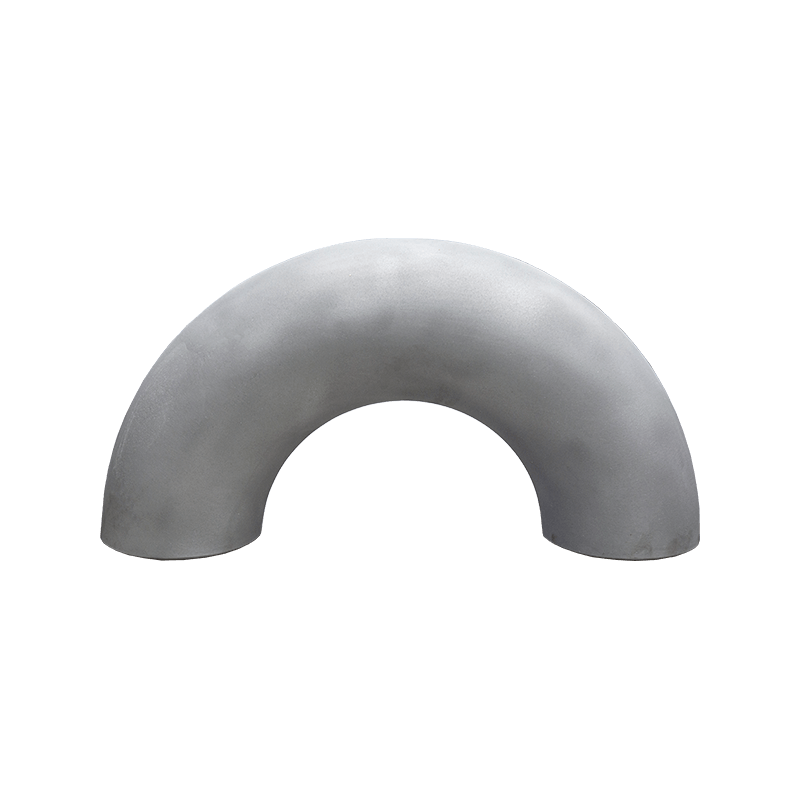
A butt weld 180 degree elbow is a pipe fitting designed to redirect fluid flow in the complete opposite direction — essentially making a U-turn within a piping system. Unlike standard 45° or 90° elbows, the 180° variant allows the pipeline to reverse course without requiring additional fittings or complex routing. This makes it invaluable in compact installations where space is limited but directional reversal is necessary.
The term "butt weld" refers to the method of joining: the fitting's ends are matched flush against the pipe ends and welded together, creating a seamless, high-strength connection. This welding technique eliminates mechanical joints, reducing the risk of leakage and enhancing the overall structural integrity of the pipeline. Butt weld 180 degree elbows are widely used in industries such as oil and gas, chemical processing, power generation, and water treatment.
Types of Butt Weld 180 Degree Elbows
These elbows are primarily classified by their radius of curvature, which directly affects flow characteristics, pressure drop, and the space required for installation. Understanding the differences helps engineers and procurement specialists select the correct fitting for each application.
Long Radius (LR) 180 Degree Elbow
The long radius 180° elbow has a centerline radius equal to 1.5 times the nominal pipe diameter (1.5D). This larger sweep reduces turbulence and pressure loss as fluid travels through the fitting, making it the preferred choice for systems transporting high-velocity fluids, gases, or slurries. The smoother change in direction also minimizes erosion on the inner walls of the elbow, extending service life.
Short Radius (SR) 180 Degree Elbow
The short radius 180° elbow has a centerline radius equal to the nominal pipe diameter (1D). It occupies less space than the long radius type, making it suitable for installations where layout constraints are tight. However, the tighter bend increases turbulence and pressure drop, so it is generally used in low-velocity or low-pressure systems where flow efficiency is less critical.
Common Materials Used
Butt weld 180 degree elbows are manufactured from a wide range of materials to accommodate different media, temperatures, and corrosion environments. Selecting the right material is as important as selecting the right size or radius type.
| Material | Grade Examples | Typical Applications |
| Carbon Steel | ASTM A234 WPB, WPC | Oil, gas, water pipelines |
| Stainless Steel | ASTM A403 WP304, WP316 | Chemical, food, pharmaceutical |
| Alloy Steel | ASTM A234 WP5, WP9, WP11 | High-temperature, high-pressure |
| Duplex Steel | UNS S31803, S32205 | Marine, offshore, chloride environments |
| Nickel Alloy | Inconel 625, Hastelloy C276 | Extreme corrosion and heat resistance |
Carbon steel remains the most widely used material due to its balance of strength, weldability, and cost-effectiveness. Stainless steel grades, especially 304 and 316, are chosen when corrosion resistance is paramount. Alloy steel versions are engineered for elevated temperature service in refineries and power plants, while duplex and super duplex steels offer exceptional resistance to stress corrosion cracking in aggressive chloride-laden environments.
Key Dimensional Standards and Specifications
Butt weld 180 degree elbows are manufactured according to internationally recognized standards to ensure dimensional accuracy, material consistency, and compatibility with existing piping components. The most commonly referenced standards include:
- ASME B16.9 — The primary American standard covering factory-made wrought butt-welding fittings, including 180° elbows in sizes from ½ inch to 48 inches.
- ASME B16.28 — Specifically addresses short radius butt-welding fittings, providing dimensional requirements for SR 180° elbows.
- MSS SP-43 — Covers lightweight stainless steel butt-welding fittings often used in process and instrument piping.
- EN 10253 — The European equivalent standard for butt-welding pipe fittings, widely referenced in European industrial projects.
- DIN 2605 — A German standard governing dimensions and tolerances for butt-welding elbows, including the 180° return bend configuration.
Wall thickness schedules — such as Schedule 10, 40, 80, 120, 160, and XXS — must match or exceed those of the connected pipe to maintain system pressure ratings. The schedule number directly influences the wall thickness and therefore the pressure-temperature capacity of the fitting.
How Butt Weld 180 Degree Elbows Are Manufactured
The manufacturing process for these fittings significantly affects their mechanical properties and suitability for demanding service conditions. The most common production methods include:
Hot Forming (Induction Bending)
Hot forming involves heating a pipe segment to a specific temperature and then bending it over a mandrel or die to achieve the desired 180° curvature. This process is well-suited for larger diameter elbows and results in a fitting with uniform wall thickness and good grain structure. Post-forming heat treatment, such as normalizing or solution annealing, is often applied to relieve internal stresses and restore mechanical properties.
Cold Forming (Press and Push Bench Method)
Cold forming is used for smaller diameter elbows and involves pushing or pressing pipe material through dies without the application of heat. It produces fittings with tight dimensional tolerances and smooth surface finishes. However, cold-worked materials may retain residual stresses unless subsequently heat-treated, which is typically required for stainless steel and alloy steel grades.
Seamless vs. Welded Construction
Seamless elbows are formed from a solid billet or pipe without any longitudinal weld seam, offering superior strength and consistency — making them the standard choice for high-pressure and high-temperature applications. Welded elbows, fabricated from plate or seam-welded pipe, are more economical for large diameters and lower-pressure services, though they require rigorous weld inspection and testing.
Installation Considerations and Best Practices
Proper installation of butt weld 180 degree elbows is critical to achieving a leak-free, long-lasting connection. Here are the key considerations professionals should follow:
- Pipe Preparation: Pipe ends must be cleanly cut, beveled to the correct angle (typically 37.5°), and free from burrs, scale, or contaminants before fitting alignment.
- Alignment and Fit-Up: Ensure the elbow and pipe are concentrically aligned with minimal root gap variations. Misalignment causes uneven weld penetration and stress concentrations at the joint.
- Welding Procedure: Use a qualified welding procedure specification (WPS) appropriate for the base material. TIG (GTAW) welding is preferred for root passes in stainless and alloy steel, while SMAW or FCAW may be used for fill and cap passes in carbon steel.
- Preheat and Post-Weld Heat Treatment (PWHT): Certain materials — particularly carbon steel above 19mm wall thickness and alloy steels — require preheating before welding and PWHT after welding to reduce hardness and residual stress.
- Inspection and Testing: After welding, joints should be inspected using non-destructive testing (NDT) methods such as radiography (RT), ultrasonic testing (UT), or dye penetrant testing (PT), depending on service criticality and project specifications.
- Support and Stress Relief: Because a 180° elbow introduces a significant directional change, adequate pipe supports must be positioned near the fitting to prevent sagging, vibration-induced fatigue, or thermal expansion stress.
Typical Applications Across Industries
The butt weld 180 degree elbow finds application across a broad spectrum of industrial sectors, each with distinct performance requirements:
- Oil and Gas: Used in refineries, offshore platforms, and pipeline manifolds where hydrocarbons must be routed through compact equipment layouts under high pressure.
- Chemical Processing: Stainless steel and alloy variants handle aggressive acids, solvents, and corrosive reagents in reaction vessels and heat exchanger circuits.
- Power Generation: High-pressure steam lines in boilers and turbine systems rely on alloy steel 180° elbows to manage thermal cycling and elevated operating pressures.
- Shipbuilding and Marine: Duplex stainless steel elbows are installed in ballast water systems, cooling circuits, and fuel lines aboard vessels exposed to seawater.
- HVAC and Utilities: Carbon steel elbows serve heating and cooling water circuits in large commercial buildings and industrial facilities where directional reversals are needed within mechanical rooms.
How to Select the Right Butt Weld 180 Degree Elbow
Choosing the correct elbow requires a systematic evaluation of several technical parameters to ensure the fitting performs reliably throughout its service life. Engineers should assess the following factors before specifying a fitting:
- Nominal Pipe Size (NPS) and Schedule: The elbow must match the outside diameter and wall thickness of the connected pipe.
- Radius Type: Choose long radius for flow-critical systems and short radius where space constraints override efficiency concerns.
- Material Compatibility: Match the elbow material to the pipe material and verify chemical resistance against the transported medium.
- Pressure and Temperature Ratings: Confirm that the selected schedule and material grade meet or exceed the maximum allowable working pressure (MAWP) at operating temperature.
- Applicable Standards: Specify the required dimensional and material standards (ASME B16.9, ASTM material grades, etc.) in procurement documents to ensure quality compliance.
- Third-Party Certification: For critical service applications, require mill test reports (MTR), heat numbers, and third-party inspection certificates such as those from DNV, Lloyd's Register, or Bureau Veritas.
By carefully evaluating each of these parameters, project engineers and piping designers can confidently specify butt weld 180 degree elbows that deliver reliable, code-compliant performance across even the most demanding industrial environments.
Latest News
News And Blogs
Stay Informed About Our Recent Events