Language
 English
 中文简体
 русский
 Español
 عربى
Material Selection for Butt Weld Fittings Choosing the right material is the first step in selecting...
Home / News / Industry News / Abrasion Resistant Pipe: Materials, Fittings, and Lasting Wear Protection
Abrasion Resistant Pipe: Materials, Fittings, and Lasting Wear Protection

Content
Ask ten engineers what an abrasion resistant pipe is and you will get ten different answers: a hardened steel line coming out of a ball mill, a ceramic-lined slurry run, a polymer pipe in a tailings circuit. All of them are right. The phrase describes a job rather than a single product, and the job is moving solids, slurries, ash or dust-laden gas without wearing a hole through the wall in a year or two.
We have spent more than three decades manufacturing butt weld fittings, flanges and forged components for pressure piping, and the wear conversations we have with customers almost never start with the straight pipe. They start with the elbow that failed in eleven months, the tee that keeps washing out, or the reducer nobody thought to upgrade.
What an Abrasion Resistant Pipe Is Really Doing
Wear inside a pipeline is rarely one phenomenon. Four mechanisms account for most of the failures we are asked to look at:
- Sliding abrasion — particles dragged along the bottom of a horizontal run, slowly thinning the invert.
- Impact abrasion — high-velocity particles striking a surface at a steep angle, which is why bends and branches go first.
- Erosion-corrosion — mechanical wear stripping away the protective oxide layer so the chemical attack underneath can keep going.
- Cavitation and flashing — common around slurry pumps and their suction lines, and frequently misdiagnosed as plain abrasion.
Each mechanism points to a different countermeasure. Surface hardening helps enormously against sliding abrasion, helps less when the impact angle is steep, and does almost nothing if the real problem is chloride attack on a stainless weld. Getting that distinction right early saves a great deal of money later.
Where Wear Concentrates in a Piping System
Straight pipe is forgiving. Damage usually shows up wherever the flow changes direction, speeds up or splits:
- Elbows — the outer radius absorbs the impact. In a slurry line a 90 degree elbow can wear several times faster than the pipe beside it.
- Tees and laterals — the branch creates both a dead zone and a reattachment point, and both are wear hot spots.
- Reducers and expanders — acceleration through a concentric reducer raises velocity, and the turbulence downstream finishes the job.
- Weld seams and heat-affected zones — a slight bore mismatch or a rough root can start a localised groove that grows quickly.
- Deadlegs and bypasses — stagnant pockets that fill with solids and then get flushed at full speed.
This is why we usually suggest treating the fittings and the pipe as one wear system, matched in material class, wall thickness margin and inspection interval. Upgrading the pipe while leaving standard-wall elbows in place simply moves the failure a metre downstream.
Matching the Material to the Wear Mechanism
There is no universal winner, only a best fit for a given particle size, velocity, temperature and chemistry. The table below is the short version of how we usually frame the conversation.
| Option | Strongest against | Typical service | Points to watch |
|---|---|---|---|
| Induction-hardened carbon steel | Sliding abrasion, shallow-angle impact | Ash handling, mill discharge, dry solids | Hardened layer is relatively thin; cutting and field welding need care |
| Ceramic or basalt-lined pipe | Severe sliding and impact abrasion | Slurry transport, tailings, cyclone feeds | Heavy, limited pressure and temperature rating, flanged spools |
| UHMWPE / HDPE | Fine-particle abrasion, sticky or scaling solids | Tailings, low-temperature slurry | Pressure and temperature ceilings; not for high heads |
| Duplex and super duplex stainless | Erosion-corrosion, chloride-bearing slurries | Seawater duties, chemical slurry, desalination | Demanding welding procedure and qualified welders |
| Nickel alloys | Combined abrasion and aggressive chemistry | Hot, acidic or chlorinated service | Cost and lead time; specify early |
| 316L and 321H stainless | Moderate abrasion with hygiene or heat demand | Food powder, high-temperature exhaust, chemical lines | Not a wear material on its own; work-hardens under cutting |
A useful rule of thumb: if the pipe needs an upgrade, the fittings need a larger one. Wall thickness margin that is adequate for straight run is usually marginal at the extrados of a bend.
Fittings Deserve the Same Attention as the Pipe
Because we build components rather than lining systems, we tend to see the wear problem from the fitting side. Three observations come up again and again.
First, thickening the whole line is often wasteful. A heavier wall at the bend, or a bend with a larger radius to spread the impact over more surface, frequently buys the same service life for a fraction of the cost. Second, geometry matters as much as metallurgy: a lateral tee with a smoother branch transition generates less turbulence than a sharp one, and a concentric reducer accelerates flow in a way an eccentric reducer does not. Third, material grade should follow the chemistry, not just the abrasiveness — a chloride-bearing slurry will punish a carbon steel fitting long before abrasion does.
That is why we keep both dimensions of the problem in view, offering heavy-wall pipe bends for the impact zones and corrosion-resistant grades such as duplex steel fittings for chemical duty where the fluid is aggressive as well as abrasive.
For most wear circuits the practical starting points are the components that fail first:
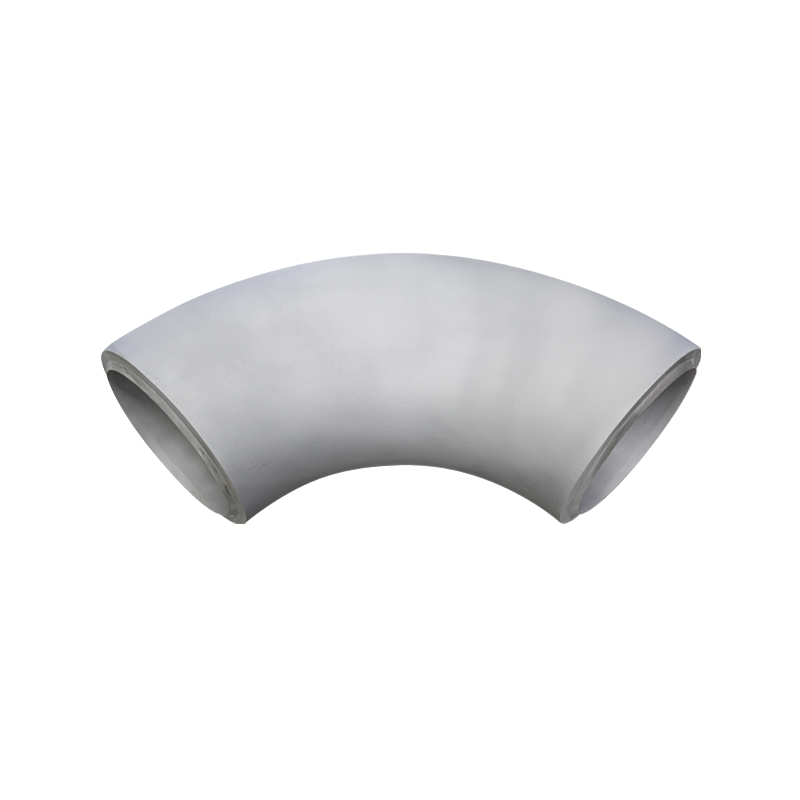 Butt Weld 90 Degree ElbowA practical starting point for wear circuits: 90° butt weld elbow for pipeline direction changes in demanding high-pressure, high-temperature, or corrosive service.View Product →
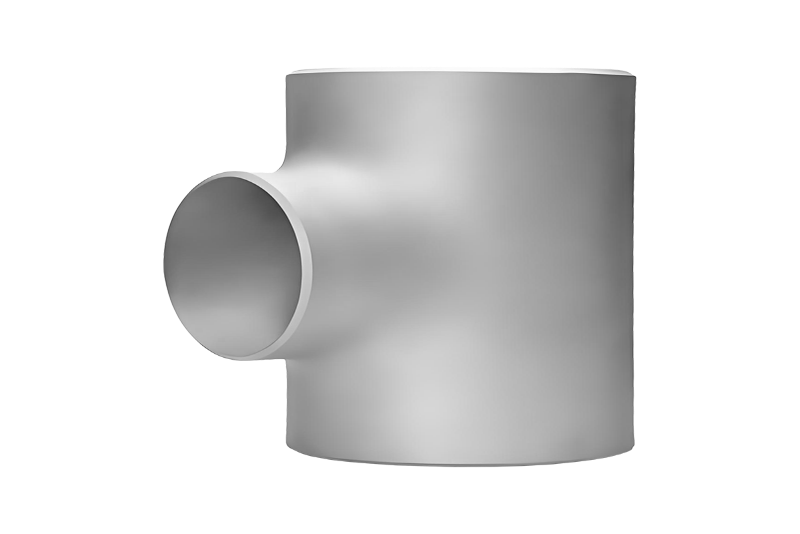
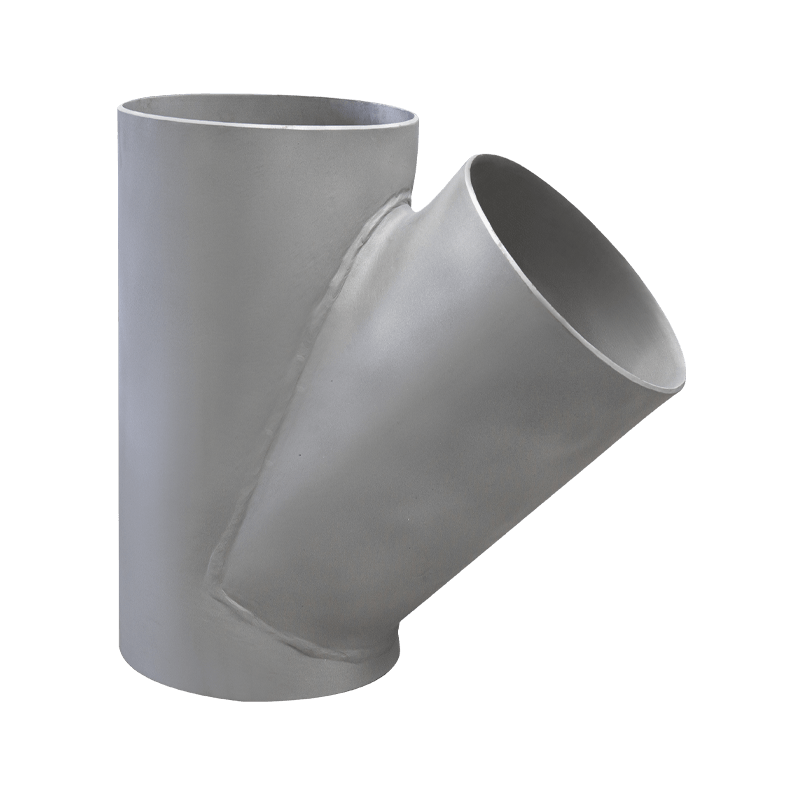 45° Butt Weld Lateral TeeA starting point for wear circuits: 45° lateral tee for branch connections needing reduced fluid resistance and reliable high-pressure sealing.View Product →
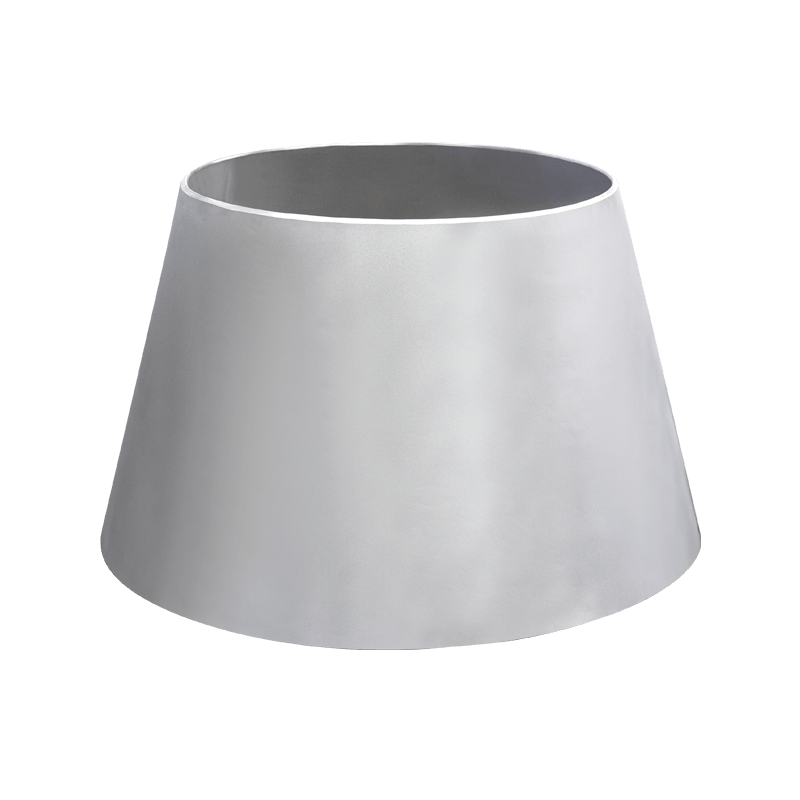 Concentric Butt Weld Pipe ReducerA starting point for wear circuits: concentric reducer for connecting different pipe diameters while maintaining centerline alignment and limiting flow turbulence.View Product →
A Selection Checklist You Can Take to a Meeting
When a customer sends us a wear problem, these are the questions we ask before quoting anything:
- What is the particle size, shape and hardness of the solids being carried?
- What is the actual flow velocity, and where does it peak?
- Is the damage pattern predominantly sliding, impact, or corrosion-assisted?
- What are the design pressure and temperature, including upset conditions?
- Which components failed previously, and how long did they last?
- What is the maintenance window — can the line be shut down for a spool replacement, or does it need to run longer between stops?
- Which welding procedures and qualifications are available on site?
The answers usually narrow the field to two or three sensible options, and often reveal that the cheapest fix is a geometry change rather than a more exotic alloy.
Installation and Maintenance Habits That Add Years
Fit-up and welding
Internal misalignment is a wear generator. A root bead protruding into the flow creates a small step that erodes into a groove, so align on the bore rather than the outside diameter where the specification allows, and keep the internal profile as smooth as practical.
Support and handling
Wear-resistant materials are not always tough materials. Ceramic-lined spools and hardened pipe dislike impact from handling, and a poorly supported line that flexes under thermal cycling will open gaps at flanges and accelerate local erosion.
Monitoring
Ultrasonic thickness readings taken at fixed points on the extrados of bends, the branch of tees and just downstream of reducers will tell you far more than a visual inspection at shutdown. Record the readings against operating hours and you will eventually be able to predict replacement instead of reacting to a leak.
Abrasion resistant pipe works best when it is treated as a system: the right mechanism identified, the right material at each location, geometry that keeps velocity and turbulence under control, and inspection points that actually get measured. If you are working through a wear problem now, send us the duty conditions and the failure history — we are always happy to talk through which fitting or grade we would put where, and just as happy to tell you when the answer is not a fitting at all.
Latest News
News And Blogs
Stay Informed About Our Recent Events