Language
 English
 中文简体
中文简体 русский
 Español
 عربى
عربى
Material Selection for Butt Weld Fittings Choosing the right material is the first step in selecting...
Butt Weld 180 Degree Elbow vs 90 Degree Elbow: What’s the Difference?

Content
- 1 What Is a Butt Weld 180 Degree Elbow?
- 2 What Is a Butt Weld 90 Degree Elbow?
- 3 Flow Direction and Hydraulic Performance Comparison
- 4 Installation Space and Layout Considerations
- 5 Pressure, Temperature, and Mechanical Stress
- 6 Material Options and Manufacturing Standards
- 7 Application Scenarios: When to Use Each Type
- 8 Comparison Table: Butt Weld 180 Degree vs 90 Degree Elbow
- 9 Cost and Procurement Considerations
- 10 Conclusion: Making the Right Elbow Selection
In industrial piping systems, elbows are essential fittings used to change the direction of fluid flow. Among them, the butt weld 180 degree elbow and the butt weld 90 degree elbow are two commonly used configurations. Although both serve directional purposes, their structural design, flow behavior, installation requirements, and application scenarios differ significantly. Understanding these differences is crucial for engineers, procurement teams, and project managers who aim to optimize system performance, safety, and cost.
Both fittings are joined to pipes using butt welding, which creates a smooth, continuous internal bore. This welding method is widely preferred in high-pressure, high-temperature, and critical service pipelines. However, the angle of redirection—180 degrees versus 90 degrees—results in different technical and operational implications that should not be overlooked.
What Is a Butt Weld 180 Degree Elbow?
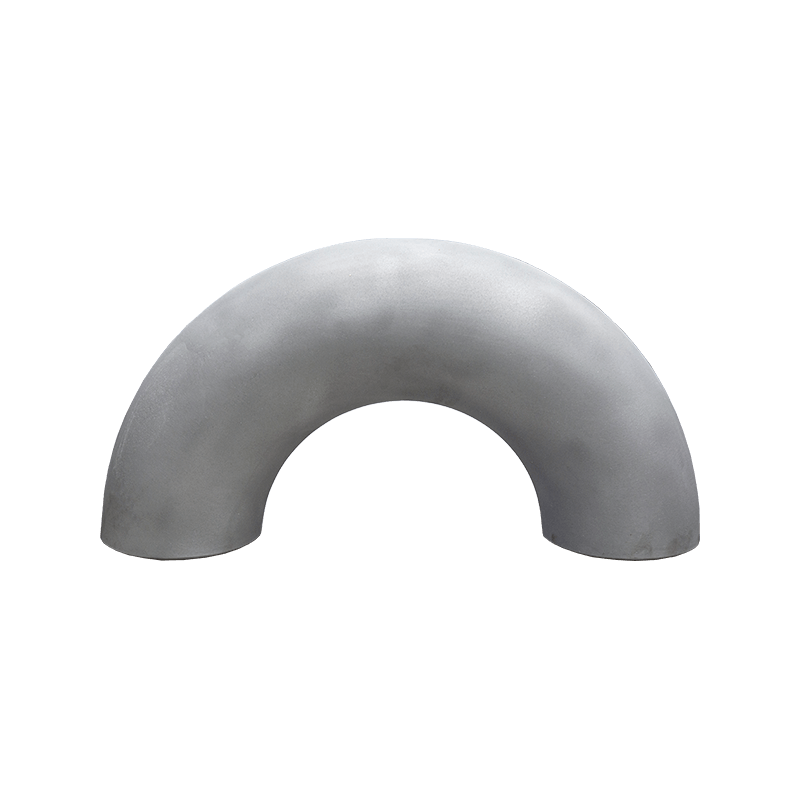
A butt weld 180 degree elbow is a pipe fitting that reverses the flow direction by 180 degrees, effectively creating a U-shaped turn. This type of elbow allows the fluid to flow back in the opposite direction, often within a compact space. It is typically manufactured in long radius or short radius designs, depending on the center-to-end distance and system requirements.
These elbows are commonly used in heat exchangers, process skids, and systems where pipeline routing must be compact or where thermal expansion needs to be accommodated. Due to the complete flow reversal, the fitting must be carefully designed to minimize turbulence, erosion, and pressure loss.
Key Characteristics of 180 Degree Elbows
- Full reversal of flow direction within a single fitting
- Often used where space constraints limit straight pipe runs
- Typically applied in lower-velocity or controlled-flow systems
What Is a Butt Weld 90 Degree Elbow?
A butt weld 90 degree elbow changes the direction of flow by 90 degrees, making it the most widely used elbow in piping systems. It enables pipelines to turn corners efficiently while maintaining a relatively smooth flow path. These elbows are available in long radius (LR) and short radius (SR) versions, with long radius being more common in industrial applications.
Due to its versatility, the 90 degree elbow is used across industries such as oil and gas, chemical processing, power generation, water treatment, and HVAC. Its balanced design makes it suitable for both high-pressure and high-flow systems.
Key Characteristics of 90 Degree Elbows
- Changes flow direction at a right angle
- Lower pressure loss compared to sharper directional changes
- Suitable for a wide range of pipe sizes and materials
Flow Direction and Hydraulic Performance Comparison
The most fundamental difference between a butt weld 180 degree elbow and a 90 degree elbow lies in flow direction. A 90 degree elbow gently redirects the flow, while a 180 degree elbow forces the fluid to reverse its direction completely. This distinction has a direct impact on pressure drop, turbulence, and energy consumption.
In most cases, a 180 degree elbow generates higher pressure loss than a single 90 degree elbow due to the sharper directional change. However, compared to using two separate 90 degree elbows connected by a short pipe, a single 180 degree elbow can sometimes offer a more compact and structurally efficient solution.
Installation Space and Layout Considerations
Space constraints often play a decisive role in elbow selection. Butt weld 180 degree elbows are especially useful in confined layouts where pipelines must return in the opposite direction without extending the overall footprint of the system. This is common in skid-mounted equipment and modular process units.
On the other hand, 90 degree elbows offer greater flexibility in routing complex piping networks. They allow designers to gradually navigate around obstacles and equipment, making them more suitable for large-scale plants with multiple directional changes.
Pressure, Temperature, and Mechanical Stress
Both 180 degree and 90 degree butt weld elbows are designed to handle high pressure and temperature when manufactured according to standards such as ASME B16.9. However, the stress distribution within the fitting differs. A 180 degree elbow may experience higher localized stress due to flow reversal, particularly in high-velocity or abrasive service.
For this reason, material selection and wall thickness are critical when specifying a 180 degree elbow. In contrast, 90 degree elbows generally exhibit more uniform stress distribution, making them suitable for a broader range of operating conditions.
Material Options and Manufacturing Standards
Both types of elbows are available in a wide range of materials, including carbon steel, stainless steel, alloy steel, and special alloys. The choice depends on factors such as corrosion resistance, temperature rating, and media compatibility.
Common standards governing butt weld elbows include ASME B16.9, ASTM A234, ASTM A403, and ASTM A420. Compliance with these standards ensures dimensional accuracy, mechanical strength, and weldability for both 180 degree and 90 degree elbows.
Application Scenarios: When to Use Each Type
Choosing between a butt weld 180 degree elbow and a 90 degree elbow depends largely on application requirements. A 180 degree elbow is ideal for applications where flow must return in the opposite direction within a limited space, such as heat exchangers, cooling coils, and certain chemical process loops.
In contrast, 90 degree elbows are better suited for general pipeline routing, vertical-to-horizontal transitions, and systems requiring gradual directional changes. Their widespread availability and ease of installation also make them a preferred choice for most industrial projects.
Comparison Table: Butt Weld 180 Degree vs 90 Degree Elbow
| Feature | 180 Degree Elbow | 90 Degree Elbow |
| Flow Direction Change | 180° (full reversal) | 90° (right angle) |
| Pressure Loss | Higher | Moderate |
| Space Efficiency | High in compact layouts | Flexible routing |
| Typical Applications | Heat exchangers, coils | General piping systems |
Cost and Procurement Considerations
From a cost perspective, 90 degree elbows are generally more economical due to higher production volumes and standardization. Butt weld 180 degree elbows may carry a higher unit cost, especially in larger sizes or special materials, but they can reduce overall system cost by minimizing pipe length and weld joints.
Procurement teams should evaluate not only the fitting price but also installation complexity, welding time, inspection requirements, and long-term maintenance when comparing these two options.
Conclusion: Making the Right Elbow Selection
The difference between a butt weld 180 degree elbow and a 90 degree elbow goes far beyond the angle itself. Each fitting serves a distinct purpose in piping system design, influencing flow behavior, space utilization, mechanical stress, and overall efficiency. By understanding these differences, engineers and buyers can make informed decisions that align with technical requirements and project goals.
In practice, the optimal choice depends on system layout, operating conditions, and cost considerations. A well-selected elbow not only ensures reliable operation but also contributes to the long-term performance and safety of the entire piping system.
Latest News
News And Blogs
Stay Informed About Our Recent Events