Language
 English
 中文简体
中文简体 русский
 Español
 عربى
عربى
Material Selection for Butt Weld Fittings Choosing the right material is the first step in selecting...
Home / News / Industry News / Class 600 Flange Pressure Rating: ASME B16.5 Ratings, Materials & Selection
Class 600 Flange Pressure Rating: ASME B16.5 Ratings, Materials & Selection

Content
A Class 600 flange has no single pressure rating. Under ASME B16.5, the Class 600 rating is a pressure-temperature curve, and that curve changes with the flange material. For a carbon steel flange in Group 1.1, the same Class 600 flange that carries 1,480 psig at 100°F is limited to 890 psig once the design temperature reaches 650°F. Engineers who treat "600" as a fixed pressure limit end up either oversizing the joint or specifying a flange that cannot hold the operating condition. In short: 1,480 psig at ambient and 890 psig at 650°F are the two carbon steel reference points; the rest depends on the service and the material.
What Class 600 Means Under ASME B16.5
ASME B16.5 divides flanges and flanged fittings into seven pressure classes: 150, 300, 400, 600, 900, 1500, and 2500. The number is a class designation, not a pressure limit and not a physical weight. A flange labelled "600 lb" is not rated for 600 psi and does not weigh 600 pounds. The class fixes the flange geometry and bolting, and with that geometry ASME B16.5 assigns a specific set of pressure-temperature ratings.
The table below shows the ambient-temperature working pressure for each class in Group 1.1 carbon steel, the same family as ASTM A105. These are the first numbers specifiers compare.
| Pressure class | 150 | 300 | 400 | 600 | 900 | 1500 | 2500 |
|---|---|---|---|---|---|---|---|
| Rating (psig) | 285 | 740 | 990 | 1480 | 2220 | 3705 | 6170 |
At 1,480 psig (about 10.2 MPa gauge), Class 600 more than doubles the capacity of Class 300 and offers a logical step before the heavier Class 900. The standard applies to flanges and flanged fittings from NPS 1/2 to NPS 24; larger Class 600 flanges fall under ASME B16.47.
Class 600 Pressure Ratings by Temperature
The number that matters in design is the rating at the maximum design temperature, not at ambient. As temperature rises, allowable stress in the material falls, and the same flange loses working pressure. For Group 1.1 carbon steel, ASME B16.5 assigns Class 600 the following working pressures.
| Temperature (°F) | 100 | 200 | 300 | 400 | 500 | 600 | 650 | 700 | 800 |
|---|---|---|---|---|---|---|---|---|---|
| Rating (psig) | 1480 | 1480 | 1480 | 1480 | 1350 | 1040 | 890 | 840 | 700 |
| Approx. (MPa gauge) | 10.2 | 10.2 | 10.2 | 10.2 | 9.3 | 7.2 | 6.1 | 5.8 | 4.8 |
The pattern is straightforward: the rating holds flat through roughly 400°F, then declines steadily. The figure most often quoted for Class 600 carbon steel is 890 psig at 650°F (about 6.1 MPa gauge), simply because 650°F is a common design point for steam and hot-oil systems. At 800°F the same flange is down to 700 psig, less than half of its ambient rating.
Above about 800°F, plain carbon steel loses creep resistance quickly. For hotter Class 600 circuits, engineers switch to alloy steels such as P91 or 15CrMo, and the rating is read from a different material group. That is the territory where P91 weld neck flanges for high-temperature power plants are normally specified.
How the Material Group Changes the Rating
ASME B16.5 does not publish one rating per class. It groups materials by their allowable-stress behavior, with carbon steels in Group 1.1, chrome-moly alloy steels in Group 1.9 and related groups, and stainless steels in Group 2.x, then publishes a separate pressure-temperature table for each group. Two flanges with identical Class 600 markings are not equal once the temperature moves away from ambient.
A Class 600 flange in 316 stainless steel, for example, uses the same envelope dimensions as one in A105 carbon steel but carries a lower working pressure at a given temperature, because the stainless grade has a lower design stress. At low temperatures, where carbon steel loses impact toughness, a WPL6 low-temperature grade is required; at high temperatures, an alloy grade such as P91 takes over.
The practical rule is short: the class sets the envelope, the material group sets the numbers, and the temperature chooses the row. A quotation that states a "Class 600 rating" without naming the material group and the design temperature is incomplete.
Class 600 vs Class 300 vs Class 900: How to Choose
Selection is a direct comparison. Take the maximum design pressure and the maximum design temperature of the duty, find the correct row in the rating table for the proposed material group, and choose the lowest class whose rating still sits above the duty point.
Example: a process line in A105 carbon steel with a maximum operating pressure of 1,100 psig at 400°F. Class 300 is out, because its rating at 400°F sits well below the duty. Class 600 holds at 1,480 psig at 400°F with margin to spare. Class 900 would also work at 2,220 psig, but the heavier hub and bolting add cost without adding benefit. Class 600 is the engineering answer.
- Compare against the maximum design temperature, not the normal operating temperature. A flange that is valid at 500°F can be overstressed at 650°F.
- Fix the material group before the class. A class without a material group cannot be rated.
- Remember that Class 600 requires a thicker pipe wall and larger bolting than Class 300, so the system cost, not the flange cost, decides the most economical class.
Class 600 serves the high-pressure tier of industrial piping. It is the standard choice for oil and gas processing, steam systems, chemical plants, and power generation, where Class 150 and Class 300 are too light and a full Class 900 design is unnecessary. For gas transmission with high surge pressures, ASME B16.5 weld neck flanges for high-pressure oil and gas pipelines are commonly specified with a Class 600 minimum.
When do you step up to Class 900? When the duty point falls above the Class 600 row for the chosen material, for example a water injection system at 2,000 psig, or a high-temperature steam line where the carbon steel rating has dropped below the operating pressure. In those cases the higher class is justified by the calculation, not by preference.
For most Class 600 circuits, the default flange type is the weld neck. Its tapered hub is welded directly to the pipe, keeping the joint strong under bending and pressure cycling. That is why new high-pressure systems are quoted with a Class 600 weld neck flange at every process connection.
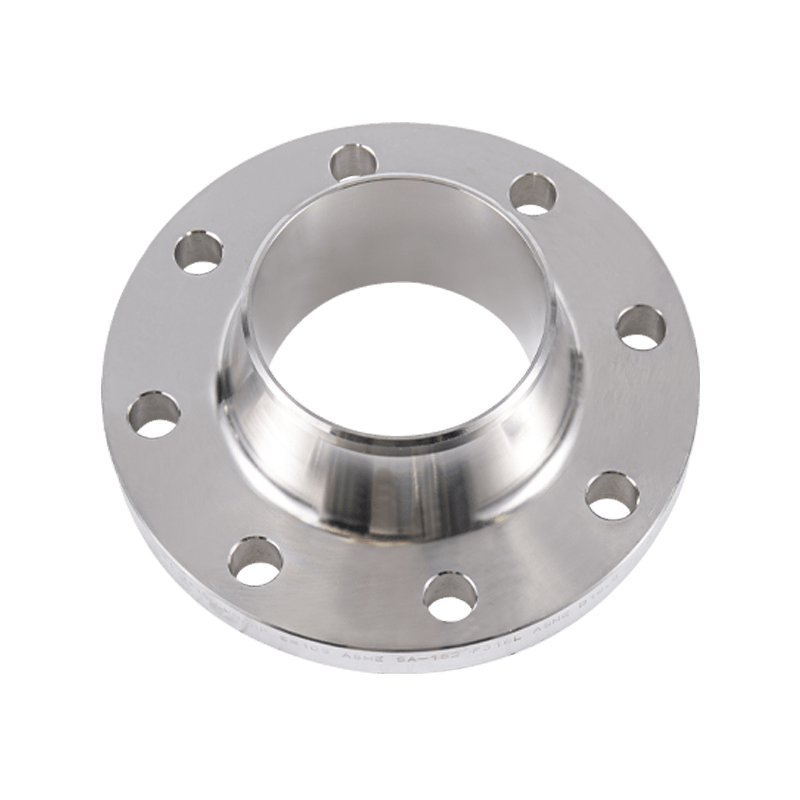 Weld Neck Flange Suppliers, Custom CompanyGaoxin Pipe Fittings is China stainless steel Weld Neck Flange Suppliers, Custom carbon/alloy steel Weld Neck Flange Company, Diamete...View Product →
What Else to Check When Buying Class 600 Flanges
Flange type
The weld neck is the default but not the only option. A slip-on flange costs less to fit and is acceptable for moderate Class 600 duties at lower temperatures; the trade-off is a shorter fatigue life, because the weld sits at the flange face instead of the hub. Lines with vibration, thermal cycling, or frequent pressure swings should stay with the weld neck. Where a project needs to control capital cost on moderate duties, a slip-on flange is the component typically substituted, and the engineering decision is whether the fatigue penalty is acceptable.
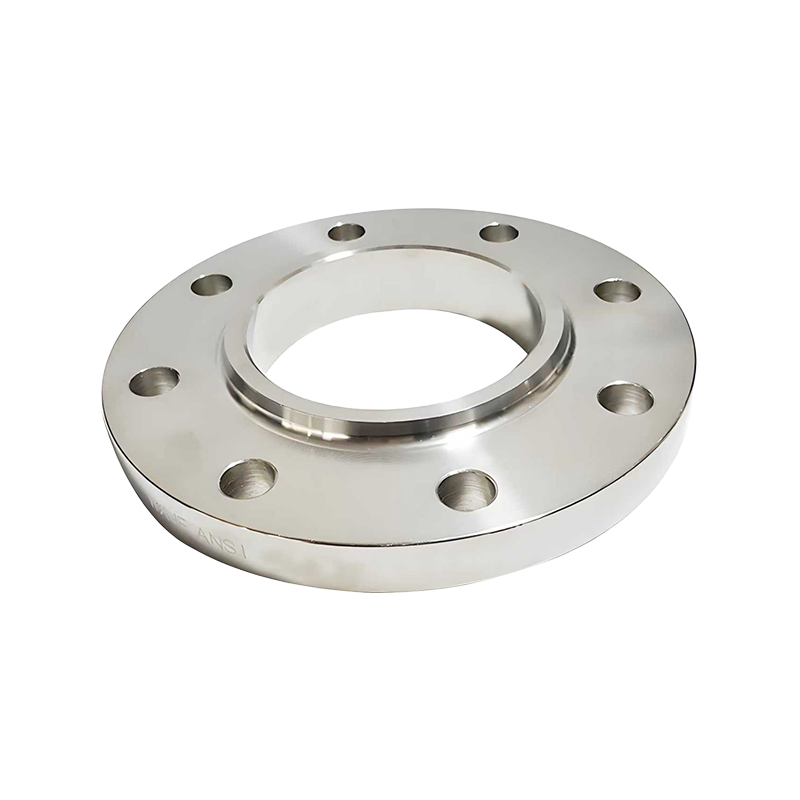 Slip On Flange Suppliers, Custom CompanyGaoxin Pipe Fittings is China stainless steel Slip On Flange Suppliers, Custom carbon/alloy steel Slip On Flange Company, Diameter ran...View Product →
Facing and sealing
Class 600 flanges are available in several facings. The raised face (RF) is the most common and works with spiral-wound gaskets across most oil, gas, steam, and chemical duties. For higher pressures and gas service, the ring-type joint (RTJ) facing uses a metal ring compressed into a machined groove and gives a tighter metal-to-metal seal. RTJ is the typical choice where leakage control is critical; for that reason, alloy steel RTJ flanges for high-pressure gas transmission are almost always specified in Class 600 or above. Check the facing on both sides of the joint before ordering, because mixing RF and RTJ in one connection is a common field error.
Testing and isolation
Class 600 circuits are hydrostatically tested above the design rating, and blind flanges are the standard way to close lines, vessels, and test headers during that process. A blind flange carries the same pressure-temperature rating as the rest of the joint and must be specified in the same class and material group. Keeping a Class 600 blind flange in the line material is the practical way to give future maintenance and isolation the same integrity as the operating system.
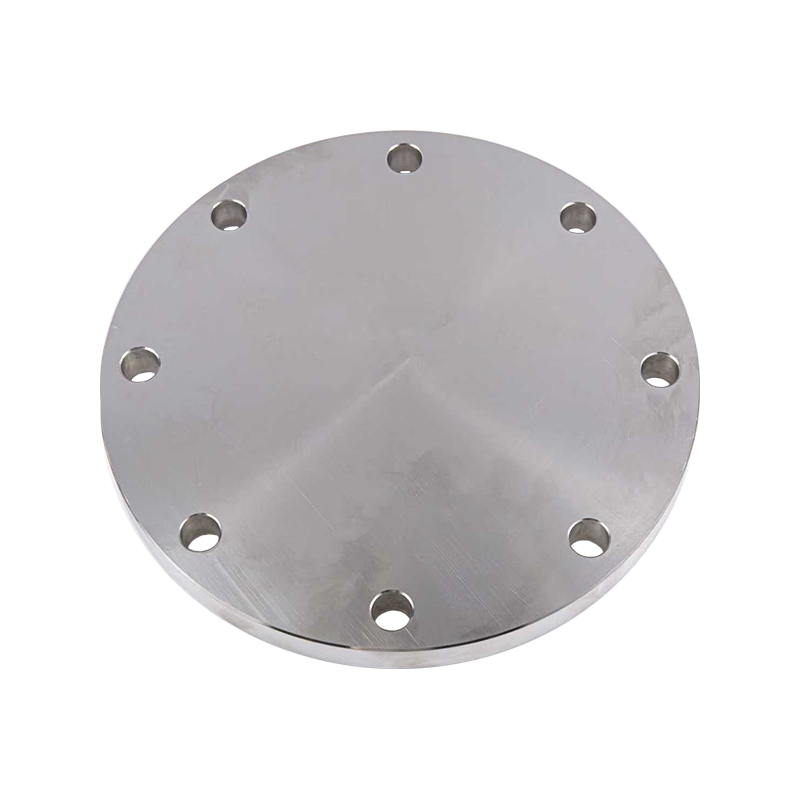 Blind Flange Suppliers, Custom CompanyGaoxin Pipe Fittings is China stainless steel Blind Flange Suppliers, Custom carbon/alloy steel Blind Flange Company, Diameter DN15...View Product →
Documentation and verification
Finally, verify the rating row against the current edition of ASME B16.5 before placing the order, and request material certificates with the delivery. For sour or high-pressure gas service, state hardness and NDT requirements on the purchase order. This verification is quick when the manufacturer carries the class in stock across carbon, alloy, and stainless grades.
The Bottom Line on Class 600
Class 600 is not a fixed number. It is a flange envelope defined by ASME B16.5, with pressure ratings that depend on temperature and on material group. The two reference points worth remembering for carbon steel are 1,480 psig at 100°F and 890 psig at 650°F.
Before ordering, confirm the design temperature, material grade, class, facing, and flange type, and verify the rating row. If a specification simply says "600 lb flanges" without a material grade or a design temperature, treat it as incomplete. A manufacturer that produces Class 600 flanges across carbon, alloy, and stainless grades and keeps common sizes in stock will make the verification faster and the delivery shorter, which matters more than any single figure in the datasheet.
Latest News
News And Blogs
Stay Informed About Our Recent Events