Language
 English
 中文简体
中文简体 русский
 Español
 عربى
عربى
Material Selection for Butt Weld Fittings Choosing the right material is the first step in selecting...
Home / News / Industry News / How Do You Select and Specify the Right Butt Weld 90 Degree Elbow for Your Pipeline?
How Do You Select and Specify the Right Butt Weld 90 Degree Elbow for Your Pipeline?

Content
- 1 What Is a Butt Weld 90 Degree Elbow and Where Is It Used?
- 2 Long Radius vs. Short Radius: Understanding the Two Standard Types
- 3 Key Dimensions and How They Are Specified
- 4 Common Material Grades and Their Applications
- 5 Manufacturing Methods and Their Effect on Elbow Quality
- 6 Inspection, Testing, and Certification Requirements
- 7 Practical Selection Guide: Choosing the Right Butt Weld 90 Degree Elbow
What Is a Butt Weld 90 Degree Elbow and Where Is It Used?
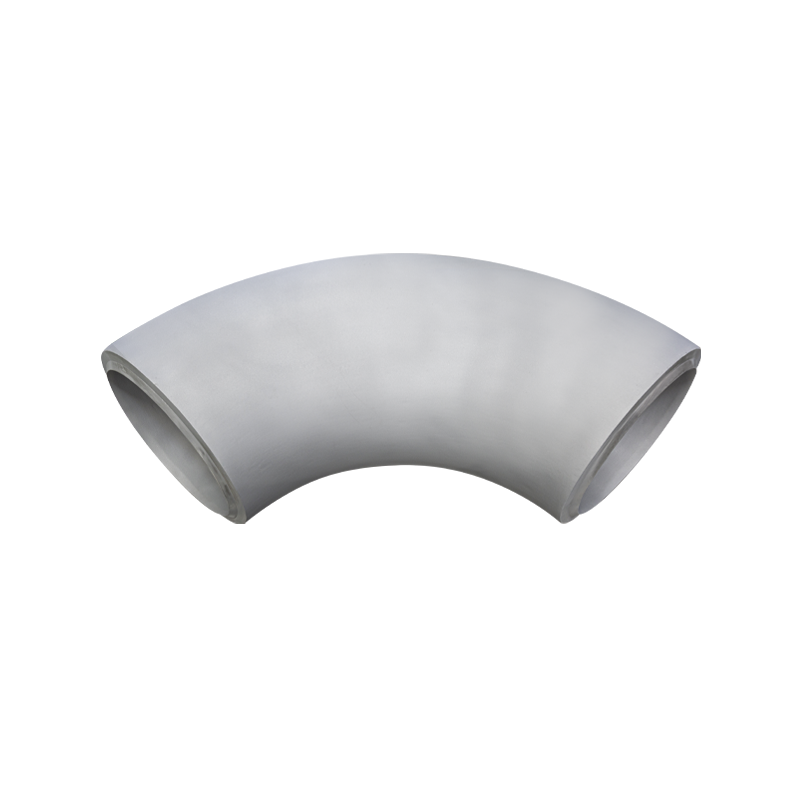
A butt weld 90 degree elbow is a pipe fitting designed to change the direction of flow in a piping system by exactly 90 degrees, joining to adjacent pipe sections by butt welding — a process in which the pipe ends and the fitting ends are brought together at the same outer diameter, beveled, and welded around the full circumference to form a continuous, flush joint with no mechanical fasteners, threads, or socket recesses. The result is a welded pipeline connection that is structurally continuous from pipe to fitting to pipe, with a joint capable of withstanding the full mechanical, pressure, and thermal loads that act on the pipeline itself.
Butt weld 90 degree elbows are the standard direction-change fitting in high-pressure, high-temperature, and structurally demanding piping applications across the oil and gas, petrochemical, power generation, chemical processing, shipbuilding, and industrial manufacturing sectors. In process piping governed by ASME B31.3, pressure vessel piping under ASME B31.1, or offshore pipeline systems under DNV or API standards, butt weld fittings are mandated or strongly preferred over socket weld or threaded alternatives above certain pressure ratings and pipe diameters because the butt weld joint eliminates the crevice corrosion initiation sites and mechanical stress concentrations associated with other joining methods.
Long Radius vs. Short Radius: Understanding the Two Standard Types
The most fundamental classification of butt weld 90 degree elbows is by bend radius — the radius of curvature of the centerline arc through the elbow. Two standard bend radii are defined by ASME B16.9, the primary dimensional standard for factory-made wrought butt welding fittings:
Long Radius (LR) 90 Degree Elbow
The long radius elbow has a centerline bend radius equal to 1.5 times the nominal pipe diameter (1.5D). For a 4-inch nominal pipe size (NPS 4) elbow, the centerline radius is therefore 6 inches. This geometry produces a gradual change in flow direction that minimizes pressure drop and turbulence-induced erosion at the bend. Long radius elbows are by far the most commonly specified type in process piping, recommended by ASME B31.3 as the default where layout space permits. The gentler curve of the LR elbow reduces the velocity gradient across the inside and outside of the bend, which directly reduces the erosion wear rate at the extrados (outer wall of the bend) — a critical consideration in piping carrying abrasive slurries, wet steam, or high-velocity gas with entrained particulates.
Short Radius (SR) 90 Degree Elbow
The short radius elbow has a centerline bend radius equal to 1.0 times the nominal pipe diameter (1.0D). For a NPS 4 elbow, the centerline radius is 4 inches. The SR elbow occupies less space than an LR equivalent, making it valuable in compact piping arrangements where routing constraints prevent the use of the longer-radius fitting. However, the tighter bend produces higher pressure drop, greater turbulence, and significantly higher erosion rates at the extrados compared to LR elbows at equivalent flow velocities. Short radius elbows are generally avoided in high-velocity liquid lines, gas lines with entrained liquids, and any service where erosion-corrosion is a design concern. They are accepted for low-velocity liquid service and in utility piping where space constraints justify the performance trade-off.
Key Dimensions and How They Are Specified
Specifying a butt weld 90 degree elbow correctly requires defining five key dimensional and material parameters. Each parameter maps to a specific column of a fitting purchase order or material requisition and must be stated precisely to avoid receiving a fitting that does not match the adjacent piping or the design requirements of the system.
| Parameter | Definition | How It Is Expressed |
| Nominal Pipe Size (NPS) | The designator that identifies the fitting size in the ASME pipe schedule system | NPS ½ through NPS 48 and above |
| Schedule / Wall Thickness | The wall thickness category matched to adjacent pipe schedule | SCH 40, SCH 80, SCH 160, XXS, etc. |
| Bend Radius Type | Long radius (1.5D) or short radius (1.0D) | LR or SR; LR is default if unspecified |
| Material Grade | The ASTM material specification and grade | e.g., ASTM A234 WPB, ASTM A403 WP316L |
| End Preparation | The bevel configuration on the fitting ends for welding | Beveled End (BE) per ASME B16.25 |
The wall thickness of a butt weld elbow must match or exceed the schedule of the connecting pipe to ensure that the weld joint does not create a thin-section discontinuity in the pressure boundary. ASME B16.9 fittings are manufactured with sufficient wall thickness to be compatible with the pipe schedule of the same NPS designation — however, some fitting schedules have thicker nominal walls than the matching pipe schedule to account for the forming processes that reduce wall thickness at the extrados of the bend during manufacturing. Always verify the actual minimum wall thickness at the extrados of the supplied elbow against the design minimum thickness for the operating pressure of the system before qualifying the fitting for installation.
Common Material Grades and Their Applications
Butt weld 90 degree elbows are manufactured in a comprehensive range of material grades to suit the temperature, pressure, and corrosion environment of diverse piping systems. The ASTM material specification system links elbow material grades to the pipe material grades they are designed to match, ensuring chemical compatibility for welding and similar mechanical properties across the welded joint.
- ASTM A234 WPB (Carbon Steel): The most widely used butt weld elbow material, matching ASTM A106 Grade B and ASTM A53 Grade B pipe for general-purpose carbon steel piping in moderate-temperature service (up to approximately 425°C / 800°F). Used extensively in oil and gas process piping, water injection systems, steam distribution, and utility services where the fluid is not corrosive to carbon steel.
- ASTM A234 WP11 / WP22 (Alloy Steel): Chromium-molybdenum alloy steel grades for elevated temperature service in steam lines, boiler feedwater piping, and hydrocracker and reformer piping where creep resistance at temperatures above 425°C is required. WP11 contains 1.25% Cr and 0.5% Mo; WP22 contains 2.25% Cr and 1% Mo — the higher alloy content of WP22 provides better creep strength for the highest-temperature applications.
- ASTM A403 WP304 / WP316 (Austenitic Stainless Steel): Standard austenitic stainless steel elbows for corrosion-resistant piping in chemical processing, food and pharmaceutical manufacturing, and marine applications. WP316 adds 2–3% molybdenum over WP304, providing significantly improved resistance to chloride pitting and crevice corrosion in seawater and chloride-containing process streams.
- ASTM A403 WP304L / WP316L (Low Carbon Stainless Steel): The low-carbon "L" grades restrict carbon to 0.035% maximum, preventing sensitization during welding and eliminating the need for post-weld heat treatment in austenitic stainless steel piping. L grades are the default specification in most stainless steel process piping today, and are required for service involving prolonged elevated temperature exposure or aggressive corrosive media where sensitized grain boundaries would be vulnerable to intergranular attack.
- ASTM A815 WP2205 (Duplex Stainless Steel): Duplex stainless steel elbows for applications requiring superior resistance to chloride stress corrosion cracking and pitting compared to standard austenitic grades — particularly offshore oil and gas piping, desalination plant piping, and chemical plant piping handling concentrated chloride streams. The dual austenite-ferrite microstructure of duplex grades provides approximately twice the yield strength of standard austenitic grades, allowing thinner wall specifications and weight savings in high-pressure applications.
Manufacturing Methods and Their Effect on Elbow Quality
Butt weld 90 degree elbows are manufactured by three main processes — hot forming (hot induction bending or hot push forming), cold forming, and seamless extrusion — with the manufacturing method affecting the material properties, dimensional consistency, and qualification status of the finished fitting.
Hot Push Forming
Hot push forming is the most common manufacturing process for carbon and alloy steel butt weld elbows in the NPS 1/2 to NPS 24 range. A length of seamless or welded pipe is heated to the forming temperature (typically 900–1,100°C for carbon steel), then pushed over a mandrel that simultaneously flares and bends the pipe section into the elbow geometry. The process naturally thickens the wall at the intrados (inner radius of the bend) and thins it at the extrados, which is why ASME B16.9 elbows carry a thicker nominal wall than the matching pipe schedule — to ensure minimum required wall remains at the extrados after forming. Following forming, elbows are heat-treated (normalized, normalized and tempered, or solution annealed for stainless grades) to restore the mechanical properties affected by the elevated-temperature forming process, and ends are machined to the weld bevel profile specified in ASME B16.25.
Seamless Forged Elbow
For heavy-wall, high-pressure elbows in smaller sizes — particularly NPS 1/2 to NPS 4 in schedule 80, 160, and XXS — seamless forged elbows are produced from solid bar or billet stock by hot forging and subsequent machining. Forged elbows have a fully wrought microstructure with no pipe seam weld and offer excellent repeatability of wall thickness and geometry. They are the standard fitting type in high-pressure hydraulic, instrumentation, and subsea piping where dimensional precision and full-wall integrity are paramount.
Inspection, Testing, and Certification Requirements
Quality assurance for butt weld 90 degree elbows is governed by the applicable fitting standard (typically ASME B16.9 for factory-made wrought fittings) and the supplementary inspection and testing requirements of the project specification, client standards, and applicable design code. The following inspections and certifications are routinely required for elbows used in process piping and pressure systems:
- Mill Test Report (MTR) to EN 10204 Type 3.1 or 3.2: The MTR documents the chemical composition, mechanical test results (tensile strength, yield strength, elongation, impact toughness where required), heat treatment condition, and dimensional inspection results for each heat of material used. Type 3.1 certification is countersigned by the manufacturer's quality representative; Type 3.2 requires independent third-party inspection witness — the latter is standard for critical service applications and nuclear piping.
- Dimensional inspection per ASME B16.9: Wall thickness measurement by ultrasonic testing (UT) at the extrados, intrados, and flank positions verifies that minimum wall requirements are met throughout the fitting. Outside diameter, center-to-end dimensions, and end bevel geometry are checked against the ASME B16.9 tolerance tables for the specified NPS and schedule.
- Positive Material Identification (PMI): X-ray fluorescence (XRF) or optical emission spectroscopy (OES) verification of the alloy composition on each fitting is mandatory for stainless steel, alloy steel, and high-alloy fittings in most process plant projects, preventing the accidental installation of a carbon steel fitting in an alloy or stainless service line — a mix-up that has caused multiple catastrophic pipeline failures in the industry.
- Non-Destructive Examination (NDE): Liquid penetrant testing (PT) or magnetic particle testing (MT) of the fitting surface detects surface-breaking cracks, laps, and seams introduced during forming. Volumetric examination by radiographic testing (RT) or ultrasonic testing may be required for heavy-wall fittings in critical service to detect internal defects in the fitting wall.
- Hydrostatic pressure test: Batch hydrostatic testing of elbows at 1.5 times the rated working pressure is required by some project specifications and design codes for Class 600 and higher fittings, verifying that the fitting body and any seam welds are leak-tight under sustained pressure loading.
Practical Selection Guide: Choosing the Right Butt Weld 90 Degree Elbow
Translating the technical parameters of a piping design into a correct fitting specification requires working through a logical selection sequence that addresses each decision point in order. The following checklist summarizes the key questions that determine the correct butt weld 90 degree elbow specification for a given application:
- What is the pipe nominal size and schedule? The elbow NPS and schedule must match the connecting pipe exactly. For reducing elbows (where the inlet and outlet sizes differ), specify the larger NPS first followed by the smaller NPS (e.g., NPS 6 × NPS 4).
- Is there adequate space for a long radius elbow? Calculate the face-to-face envelope of an LR elbow in the piping layout. If space permits, always prefer LR over SR for lower pressure drop and erosion resistance. Use SR only when the layout genuinely cannot accommodate LR dimensions.
- What is the design temperature and operating fluid? Temperature and fluid chemistry determine the material grade. Carbon steel WPB covers most general-purpose applications to 425°C. Above 425°C, use alloy steel WP11 or WP22. For corrosive aqueous service, select the appropriate stainless or duplex grade based on the specific corrosive species present.
- What design code and project specification governs the piping? ASME B31.3, B31.1, B31.4, B31.8, and offshore codes each have specific requirements for fitting standards, inspection levels, and documentation. Confirm whether ASME B16.9 dimensions and EN 10204 3.1 certification are sufficient, or whether the project specification requires additional NDE, PMI, or third-party inspection.
- Are supplementary requirements needed? Impact testing (Charpy V-notch) is required for low-temperature service below -29°C. NACE MR0175 / ISO 15156 material compliance is required for sour (H₂S-containing) hydrocarbon service. Confirm these requirements against the design specification before finalizing the material requisition.
A butt weld 90 degree elbow is a straightforward component in appearance but a critical pressure boundary element in practice. Taking the time to specify it completely and correctly — and to verify the supplied fitting against all specification requirements before installation — protects the integrity of the piping system and avoids costly rework or safety incidents that arise from seemingly minor material or dimensional errors discovered only after welding is complete.
Latest News
News And Blogs
Stay Informed About Our Recent Events