Language
 English
 中文简体
 русский
 Español
 عربى
Material Selection for Butt Weld Fittings Choosing the right material is the first step in selecting...
Home / News / Industry News / Nominal Pipe Diameter Explained: NPS, DN and NB Sizes for Piping Systems
Nominal Pipe Diameter Explained: NPS, DN and NB Sizes for Piping Systems

Content
- 1 Nominal Pipe Diameter Is a Name, Not a Measured Dimension
- 2 NPS, DN and NB: One Size, Several Names
- 3 Where Wall Thickness and Pipe Schedule Fit In
- 4 What Nominal Size Means When You Buy Fittings
- 5 How to Read a Pipe Specification in Five Steps
- 6 Mistakes We Still See on Site
- 7 Confirming the Size Before the Order Is Released
"What is nominal pipe diameter?" sounds like a beginner's question, but we answer it almost every week from engineers who have been specifying piping for years. The confusion is understandable. The number that identifies a pipe is not the number a tape measure shows, and once you start ordering fittings, elbows and flanges, that difference matters a great deal.
Put simply, nominal pipe diameter is a standardised size label used to identify a pipe, fitting or flange so that parts made in different factories, in different countries, at different times, will still bolt or weld together. It describes a size family, not a physical dimension you can measure with a caliper. Everything else in piping design — wall thickness, pressure rating, bore, flow area — is built on top of that shared label.
Nominal Pipe Diameter Is a Name, Not a Measured Dimension
The word "nominal" is the key. It means "in name only." In North America the designation is NPS, short for Nominal Pipe Size, and it is defined by ASME B36.10M for carbon and alloy steel pipe and ASME B36.19M for stainless steel pipe. When a drawing says NPS 2, it is naming a standard size; it is not claiming that any surface of the pipe measures two inches.
In fact, an NPS 2 pipe has an outside diameter of 2.375 inches, or 60.3 mm. An NPS 4 pipe measures 4.500 inches across, not 4.000. This is not a manufacturing tolerance oddity — it is deliberate. Pipe was standardised around the outside diameter so that a single nominal size would always present the same outer surface. Threads, weld bevels, socket bores and fitting ends could then be made to one fixed dimension, while the wall thickness inside that envelope changed freely to suit different pressures and temperatures.
There is a rough logic hiding in the numbers, and it is worth remembering. From NPS 1/8 up to NPS 12, the nominal size approximately matches the bore of a Schedule 40 pipe, which was the common wall thickness of the era when the system settled. From NPS 14 upward, the nominal size equals the outside diameter in inches. That is why the small sizes feel "about right" when you look down the bore and the large sizes do not.
NPS, DN and NB: One Size, Several Names
Because piping is an international business, the same size carries more than one label. DN, from the French "diamètre nominal," is the metric designation defined by ISO 6708 and is used widely in Europe, the Middle East and Asia. NB, or nominal bore, is the inch-based term still common in the United Kingdom and Commonwealth markets. All three describe the same size family — DN 50, NPS 2 and NB 2 inch are the same pipe.
The conversion is not a straight multiplication, because the DN series is a rounded set of preferred numbers rather than an exact metric equivalent. The table below shows a few common sizes with the actual outside diameter, which is the number you will need when you measure or inspect pipe on site.
| NPS | DN | Nominal bore | Outside diameter (in) | Outside diameter (mm) |
|---|---|---|---|---|
| 1/2 | 15 | 1/2" | 0.840 | 21.3 |
| 1 | 25 | 1" | 1.315 | 33.4 |
| 2 | 50 | 2" | 2.375 | 60.3 |
| 4 | 100 | 4" | 4.500 | 114.3 |
| 6 | 150 | 6" | 6.625 | 168.3 |
| 12 | 300 | 12" | 12.750 | 323.9 |
| 24 | 600 | 24" | 24.000 | 610.0 |
Where Wall Thickness and Pipe Schedule Fit In
If the outside diameter is fixed by the nominal size, the only thing left to vary is the wall. That is exactly what the schedule number does. Two NPS 6 pipes, one Schedule 40 and one Schedule 80, share the same 168.3 mm outside diameter, but the first has a 7.11 mm wall and the second a 10.97 mm wall. Their bores differ by roughly eight millimetres, and so does their flow capacity, weight and pressure capability.
Older specifications still use the legacy names STD, XS and XXS, which correspond to standard, extra strong and double extra strong walls. These do not map neatly onto every schedule number across every size, so when a purchase order mixes schedule numbers with legacy designations, it is always worth pausing to confirm which wall is actually intended.
What Nominal Size Means When You Buy Fittings
This is where the practical value of the concept becomes clear. Butt weld fittings are designated by the nominal size of the pipe they join, because the weld bevel is machined to the pipe's outside diameter. A 4-inch 90-degree elbow is made to fit NPS 4 pipe with a 114.3 mm outer surface, whatever schedule of pipe is used. The fitting's wall is normally matched to the pipe schedule so the two ends align cleanly for welding.
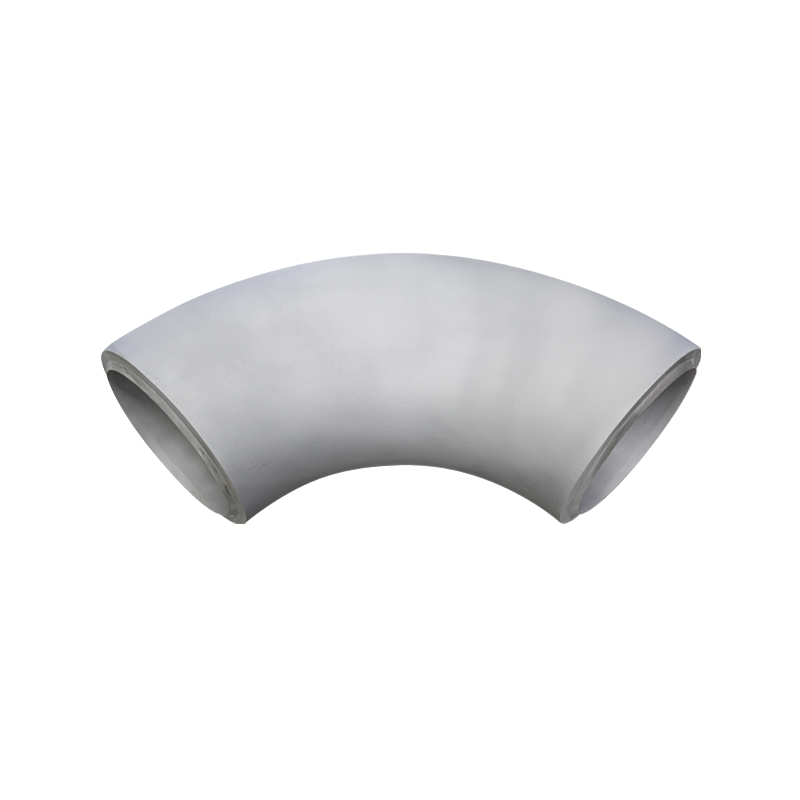 Butt Weld 90 Degree ElbowA 90-degree butt weld elbow sized by pipe nominal size, with wall matched to schedule for clean weld alignment.View Product →
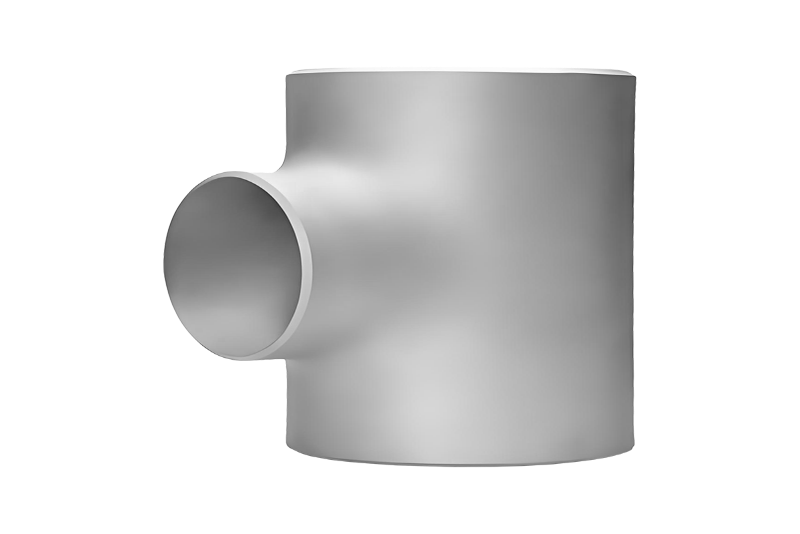
The same principle runs through the whole fitting family. An equal tee carries the full nominal size on both the run and the branch; a reducing tee carries the run size and the branch size as two separate nominal designations. Large bore assemblies follow the same rules — an NPS 24 line calls for NPS 24 fittings, not a measured 610 mm approximation.
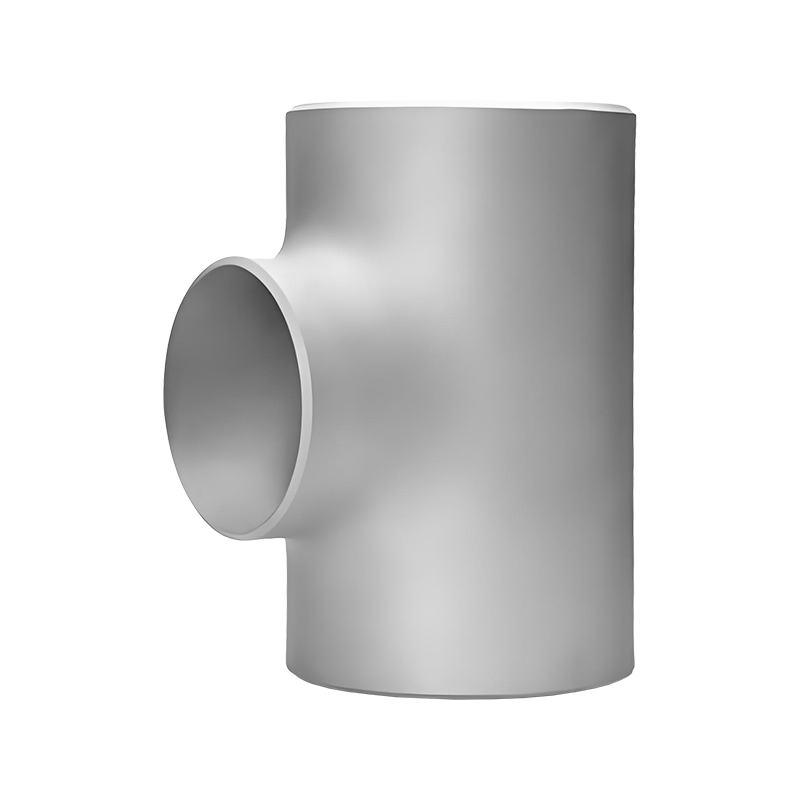 Butt Weld Equal Tee for Balanced FlowEqual tee keeps all three openings at consistent pipe diameter, supporting balanced pressure and flow division in demanding systems.View Product →
Flanges work identically. A weld neck flange for NPS 6 pipe has a bore sized for that pipe's wall and a flange face sized by its pressure class, such as Class 150 or Class 300 under ASME B16.5. The nominal size identifies the pipe connection; the class identifies the pressure containment. Getting either one wrong is a costly discovery at the hydrotest stage. You can review our range of ASME B16.9 butt weld fittings to see how nominal sizes are presented on real product specifications.
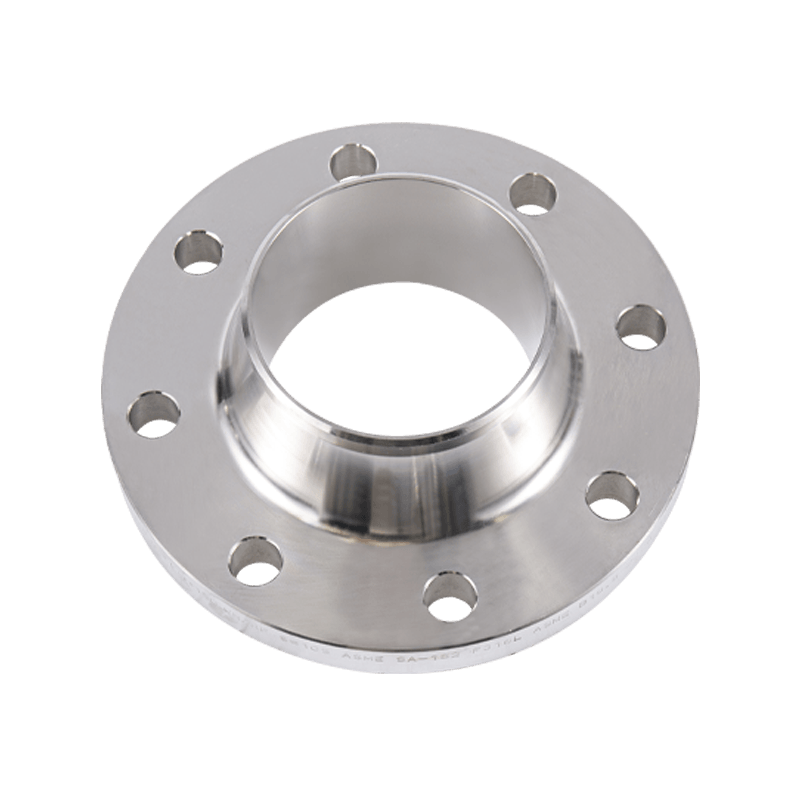 Weld Neck Flange for High-Pressure PipingFull-penetration butt weld and tapered neck create a strong joint for high-pressure, high-temperature service with reduced stress concentration.View Product →
How to Read a Pipe Specification in Five Steps
When a line item reaches us, we work through it in a fixed order, and we would suggest the same habit to anyone building a bill of materials.
- Find the nominal size and note which convention is used — NPS, DN or NB — so the size is not misread as a physical measurement.
- Identify the dimensional standard, for example ASME B36.10M for the pipe or ASME B16.9 for the fittings, since standards set the actual dimensions behind the label.
- Read the schedule or wall thickness, and check whether a legacy STD, XS or XXS designation is being used instead of a number.
- Confirm the material grade, because grade governs allowable stress, corrosion allowance and weld procedure, even though it does not change the nominal size.
- Check the connection type and pressure class — butt weld, socket weld, threaded or flanged — so the ends match the adjoining components.
Mistakes We Still See on Site
- Measuring the inside diameter and treating it as the pipe size. Scale and variation make the bore an unreliable identifier; the outside diameter is the dependable reference.
- Assuming one inch equals 25 mm exactly. An NPS 1 pipe is 33.4 mm across, and DN 25 is a label rather than a dimension.
- Mixing pipe and tube. Tube is generally ordered by its actual outside diameter, so a 1-inch tube really does measure 1.000 inch, which is not true of a 1-inch pipe.
- Comparing sizes without checking the schedule. The outside diameter may match perfectly while the bore is far too small for the required flow.
- Reading a size from a painted or worn surface instead of the mill stamping, which often sits just below the coating.
Confirming the Size Before the Order Is Released
The field method is straightforward. Measure the outside diameter with a caliper or a proper pipe gauge at a clean, round section, then compare the reading with a nominal size chart. A reading near 60.3 mm points to NPS 2; a reading near 114.3 mm points to NPS 4. Cross-check the stamping on the pipe, and where the wall thickness matters, measure it with an ultrasonic gauge rather than inferring it from the schedule listed on an old drawing.
If the measurement falls between chart values, stop and investigate. It usually means the component is tube, a non-standard item, or a pipe that has been deformed in handling. Our own team has walked through this logic for more than three decades, and we still confirm the nominal size and schedule on every drawing before a fitting is released to the shop.
Nominal pipe diameter, then, is a shared language rather than a dimension. It tells a fabricator, a designer and a purchasing officer that they are all talking about the same size family, while the outside diameter, wall thickness and pressure class carry the engineering detail. Once that distinction is clear, specifications become far easier to read and ordering mistakes become far less frequent.
We have been producing pressure piping components since 1993, supplying butt weld fittings, forged fittings and flanges in carbon steel, stainless steel, alloy steel, duplex and nickel alloys to projects in 56 countries. If you are working through a size list and want a second pair of eyes on it, send us the specification and we will check the nominal sizes, schedules and connection details against your drawings before anything is cut. Our practical guide to choosing butt weld fittings is a useful starting point for the questions that usually come up first.
Latest News
News And Blogs
Stay Informed About Our Recent Events