Language
 English
 中文简体
中文简体 русский
 Español
 عربى
عربى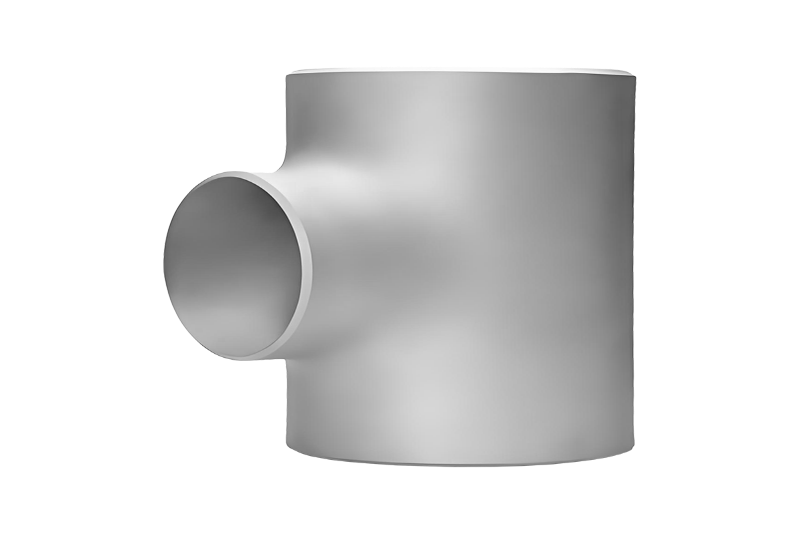
Material Selection for Butt Weld Fittings Choosing the right material is the first step in selecting...
What Are Forged Fittings and What Types Should You Know?

Content
- 1 What Are Forged Fittings?
- 2 Common Types of Forged Fittings
- 3 Material Selection: Carbon Steel Forged Fittings
- 4 Stainless Steel Forged Fittings and Their Grades
- 5 Duplex Stainless Steel: Performance in Aggressive Environments
- 6 Alloy Steel Forged Fittings for High-Temperature Service
- 7 Special and Exotic Materials: Nickel Alloys, Hastelloy, and Titanium
- 8 Key Standards Governing Forged Fittings
What Are Forged Fittings?
Forged fittings are pipe connection components manufactured through a forging process, in which metal is shaped under high pressure and heat to produce a dense, strong, and reliable product. Unlike cast fittings, which are formed by pouring molten metal into molds, forged fittings are worked while solid, resulting in a refined grain structure that dramatically improves mechanical performance. This manufacturing method eliminates internal voids and porosity, making forged fittings far superior for applications involving high pressure, high temperature, or corrosive environments.
Forged fittings are widely used in industries such as oil and gas, petrochemical processing, power generation, pharmaceutical manufacturing, and shipbuilding. They are available in a broad range of materials, sizes, and pressure ratings, making them versatile across demanding industrial scenarios. Understanding the basic types and material options is essential for engineers, procurement specialists, and project managers who need to make informed decisions about pipeline systems.
Common Types of Forged Fittings
Forged fittings come in a variety of forms, each serving a specific function within a pipeline system. The most commonly used types include:
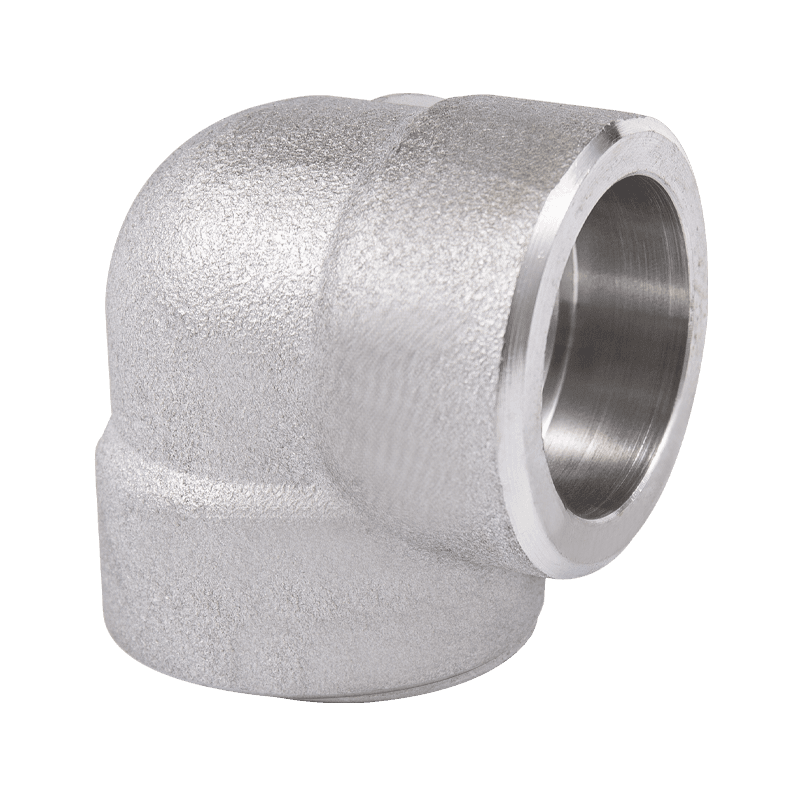
- Elbows: Used to change the direction of flow in a pipeline. Available in 45° and 90° angles, elbows are essential when routing pipes around obstacles or making turns in a system layout.
- Tees: Allow a single flow to be split into two directions or two flows to be combined. Equal tees have the same diameter at all three outlets, while reducing tees accommodate different pipe sizes.
- Couplings: Connect two pipes of the same diameter in a straight line. Full couplings extend connections, while half couplings are used for branch connections on a pipe.
- Unions: Similar to couplings but allow for easy disconnection without disturbing the pipeline. Useful in systems that require regular maintenance or equipment replacement.
- Caps: Seal the end of a pipe. Forged caps provide a leak-proof termination point in high-pressure lines.
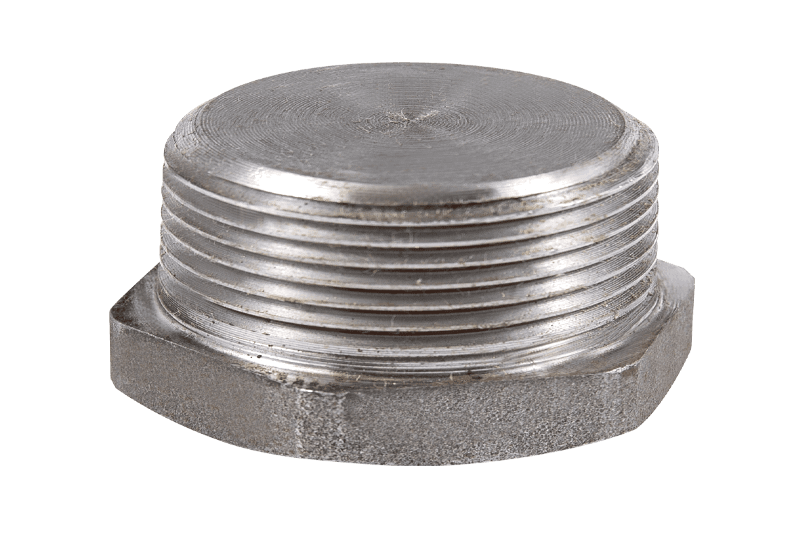
- Plugs and Bushings: Plugs close off the openings of fittings, while bushings reduce one fitting size to accommodate a smaller pipe.
- Crosses: Four-way fittings that allow flow to branch in three directions from a main line. Less common but critical in complex distribution networks.
- Nipples: Short pieces of pipe threaded on both ends, used to connect two fittings in close proximity.
Each fitting type is available in several end connection styles, including socket weld (SW) and threaded (NPT/BSP), to suit different installation methods and pressure classes per ASME B16.11 standards.
Material Selection: Carbon Steel Forged Fittings
Carbon steel is the most commonly specified material for forged fittings in general industrial piping. The most widely used grade is ASTM A105, known commercially as WPB, which is suitable for ambient and elevated temperature service up to approximately 425°C (800°F). For low-temperature applications, ASTM A350 LF2 (WPL6) is preferred, as it maintains toughness down to -46°C (-50°F), making it appropriate for cryogenic and cold-weather environments.
Chinese standard carbon steel grades such as 20# (equivalent to ASTM A105 in many applications) are also widely used in domestic projects, particularly in power plant and chemical processing pipelines. These grades offer good machinability, weldability, and cost-effectiveness, making them the default choice when elevated corrosion resistance or extreme temperatures are not primary concerns.
Stainless Steel Forged Fittings and Their Grades
Stainless steel forged fittings are selected when corrosion resistance is a priority. The material grade must be matched to the specific corrosive media and service temperature. Below is a summary of the most important grades:
| Grade | Key Feature | Typical Application |
| 304 / 304L | General corrosion resistance; 304L has lower carbon to prevent sensitization | Food processing, water treatment, general chemical service |
| 316 / 316L | Molybdenum addition improves resistance to chlorides and pitting | Marine, pharmaceutical, chloride-containing environments |
| 321 / 321H | Titanium-stabilized; resists sensitization at elevated temperatures | High-temperature service in refineries and chemical plants |
| 347 / 347H | Niobium-stabilized; excellent creep resistance at high temperatures | Boiler superheaters, heat exchangers, power generation |
The "H" suffix (e.g., 321H, 347H) indicates a higher carbon content within the specified range, which improves creep strength and long-term performance at elevated temperatures. These grades are especially critical in power plant steam lines and refinery furnace headers.
Duplex Stainless Steel: Performance in Aggressive Environments
Duplex stainless steels feature a two-phase microstructure of austenite and ferrite, offering approximately twice the yield strength of standard austenitic grades while maintaining excellent resistance to stress corrosion cracking (SCC) and pitting. This combination makes them the preferred choice for offshore oil platforms, subsea pipelines, desalination plants, and chemical processing units handling chloride-rich fluids.
The most common duplex grades include S32205 (also known as S31803), which is the industry-standard duplex grade with a PREN (Pitting Resistance Equivalent Number) of approximately 35. For even more demanding environments, super duplex grades such as S32750 and S32760 are used, achieving PREN values above 40. S31254 (also called 254 SMO) and S32507 offer exceptional resistance to seawater and highly concentrated chloride media. These materials require careful fabrication to preserve their dual-phase structure and must not be used at temperatures above 300°C (572°F) for extended periods, as sigma phase precipitation can occur.
Alloy Steel Forged Fittings for High-Temperature Service
In power generation and high-temperature process plants, alloy steel forged fittings are specified to handle the combination of elevated temperatures and pressures that carbon steel cannot manage safely over long service periods. Three grades dominate this segment:
- P11 (ASTM A182 F11): A chromium-molybdenum alloy suitable for service up to approximately 540°C (1000°F). It offers good oxidation resistance and is commonly used in steam lines and heat exchanger headers.
- P22 (ASTM A182 F22): Contains higher chromium and molybdenum content than P11, extending service temperatures and improving creep resistance. Widely used in boiler systems and pressure vessel construction.
- P91 (ASTM A182 F91): A modified 9Cr-1Mo-V alloy that represents a significant advancement in high-temperature capability. P91 fittings are used in ultra-supercritical (USC) power plants and advanced steam systems where temperatures can exceed 600°C (1112°F). They require strict pre- and post-weld heat treatment protocols to achieve the specified mechanical properties.
Improper heat treatment of P91 is one of the most critical failure risks in modern power plant piping. Engineers must ensure that certified heat treatment records accompany every P91 forged fitting to validate the required hardness and microstructure.
Special and Exotic Materials: Nickel Alloys, Hastelloy, and Titanium
When standard steels reach their performance limits, engineers turn to specialized high-performance alloys. These materials are considerably more expensive but are indispensable in the most demanding service conditions.
Nickel-Based Alloys
Nickel alloys such as Inconel 625 (UNS N06625) and Inconel 825 (UNS N08825) offer outstanding resistance to oxidation, carburization, and a wide range of aggressive chemicals. Inconel 625 maintains strength at temperatures up to 980°C (1800°F) and is used in flue gas desulfurization systems, aerospace components, and subsea umbilical fittings. Incoloy 825 provides excellent resistance to sulfuric and phosphoric acids, making it a staple in the chemical and oil refining industries.
Hastelloy
Hastelloy grades, particularly Hastelloy C-276 (UNS N10276) and Hastelloy C-22 (UNS N06022), are among the most corrosion-resistant materials available for forged fittings. They resist wet chlorine gas, hypochlorite, chlorine dioxide, and a broad spectrum of oxidizing and reducing acids. These alloys are commonly used in pollution control equipment, pulp and paper bleaching systems, and pharmaceutical reactors where contamination and corrosion must be controlled simultaneously.
Titanium Alloys
Titanium forged fittings (typically Grade 2 for pure titanium and Grade 5/Ti-6Al-4V for higher strength) are specified in applications where extreme corrosion resistance combined with low weight is essential. Titanium is virtually immune to seawater corrosion and performs well against chlorine, nitric acid, and many organic compounds. It is widely used in desalination plants, offshore heat exchangers, and marine applications. Titanium's relatively low density (approximately 60% that of steel) also makes it attractive in weight-sensitive projects.
Key Standards Governing Forged Fittings
Forged fittings are manufactured and tested according to internationally recognized standards that define dimensions, pressure ratings, material requirements, and inspection criteria. The most important standards include ASME B16.11 for socket weld and threaded forged fittings, ASTM A105 and A350 for carbon steel, ASTM A182 for alloy and stainless steel, and MSS SP-79, SP-83, and SP-95 for supplementary dimensional requirements. Compliance with these standards ensures interchangeability, traceability, and safety across global supply chains. Always request material test reports (MTRs) and third-party inspection certificates when procuring forged fittings for critical service applications.
Latest News
News And Blogs
Stay Informed About Our Recent Events