Language
 English
 中文简体
中文简体 русский
 Español
 عربى
عربى
Material Selection for Butt Weld Fittings Choosing the right material is the first step in selecting...
What Are Threaded Pipe Flanges and How Do They Work?

Content
- 1 What Is a Threaded Pipe Flange?
- 2 How the Threaded Connection Works
- 3 Threaded Flange vs. Other Flange Types
- 4 Where Threaded Flanges Are Most Commonly Used
- 5 Pressure and Temperature Ratings: What You Need to Know
- 6 Installation Guidelines for Threaded Flanges
- 7 Common Mistakes and How to Avoid Them
- 8 Specifying Threaded Flanges Correctly
What Is a Threaded Pipe Flange?
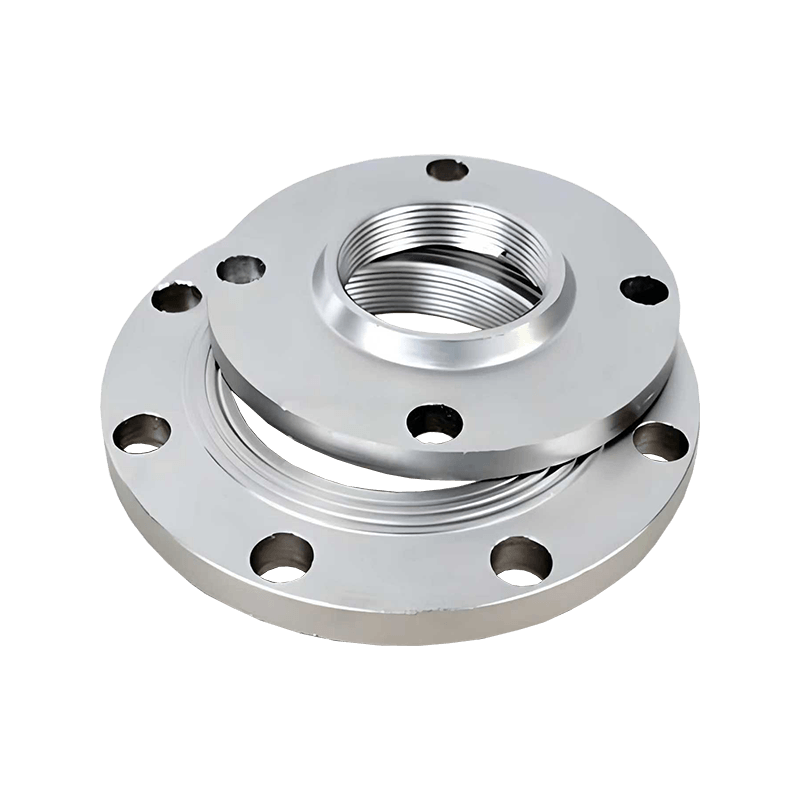
A threaded pipe flange — also called a screwed flange — is a type of pipe flange that connects to a pipe using internal threads machined into the flange bore, rather than through welding or mechanical compression. The pipe's male threads engage directly with the female threads inside the flange hub, creating a mechanically secure connection that can be assembled and disassembled using standard hand tools. This design eliminates the need for on-site welding equipment, a certified welder, or heat permits, which makes threaded flanges particularly valuable in environments where open flames or high temperatures pose safety or compliance risks.
Threaded flanges are manufactured to international standards including ASME B16.5, ASME B16.47, and DIN standards, and are available in a wide range of pressure classes — most commonly Class 150, 300, 600, and 900. They are produced in carbon steel, stainless steel (304, 316), alloy steel, and duplex grades to suit corrosive or high-temperature service conditions. Nominal pipe sizes typically range from ½ inch to 4 inches, reflecting the practical limitations of threading larger diameter pipes while maintaining structural integrity under pressure.
How the Threaded Connection Works
The mechanical principle behind a threaded flange connection is straightforward. The pipe end is cut with tapered or parallel external threads — NPT (National Pipe Taper) in North American applications, or BSP (British Standard Pipe) in many international systems. The flange bore is machined with matching internal threads. When the pipe is screwed into the flange, the thread engagement creates a friction-locked joint that resists axial pull-out under normal operating conditions.
Tapered NPT threads are the most widely used because the taper — 1/16 inch per inch of thread — causes the threads to wedge together as they are tightened, progressively compressing the thread flanks and reducing void pathways for fluid leakage. For additional sealing assurance, thread sealant compounds such as PTFE tape or anaerobic pipe dope are applied to the male threads before assembly. These compounds fill microscopic gaps between thread crests and roots, blocking liquid and gas migration along the thread helix. Once the flange face is bolted to its mating flange with a gasket in place, the entire connection — pipe-to-flange thread joint plus the bolted flange-to-flange face seal — forms a two-stage barrier against leakage.
The threaded connection allows rapid installation and disassembly, empowering maintenance teams to troubleshoot or upgrade systems without specialized equipment, reducing downtime in critical operations like chemical processing, oil and gas distribution, or pharmaceutical production. A maintenance technician can remove a flanged valve, strainer, or instrument connection by unbolting the flange faces and unscrewing the pipe — a process that typically takes minutes rather than the hours required to cut out and reweld a fixed connection.
Threaded Flange vs. Other Flange Types
Understanding where threaded flanges fit in the broader family of flange types helps clarify when to specify them and when an alternative is more appropriate. The table below compares the most common flange connection methods across key selection criteria:
| Flange Type | Connection Method | Welding Required | Best For |
| Threaded (Screwed) | NPT / BSP threads | No | Low pressure, small bore, weld-restricted zones |
| Slip-On | Fillet weld inside and outside | Yes | General piping, moderate pressure |
| Weld Neck | Full penetration butt weld | Yes | High pressure, high temperature, critical service |
| Socket Weld | Fillet weld at socket | Yes | Small bore, high pressure |
| Blind | Bolted closure, no pipe | No | Line termination, future tie-in points |
Threaded flanges occupy a specific niche: they excel where welding is impractical or prohibited, and where the pipe size and pressure class fall within their design envelope. They are not a universal substitute for weld neck or socket weld flanges in high-pressure or cyclic-load applications, and engineering judgment is required when specifying them for service conditions near their rated limits.
Where Threaded Flanges Are Most Commonly Used
Threaded flanges appear across a diverse range of industries, typically in utility piping, instrumentation, and auxiliary systems rather than in main process lines carrying high-temperature or high-pressure fluids. Their most frequent applications include:
- Instrument taps and pressure gauge connections in oil and gas facilities, where small-bore threaded flanges allow instruments to be isolated and removed for calibration without interrupting the main flow line.
- Water and compressed air distribution systems in manufacturing plants, where low to moderate operating pressures make threaded connections safe and the frequent need for reconfiguration makes weld-free assembly highly practical.
- Chemical processing plants where fire and explosion hazards create hot-work permit requirements, and threaded flanges allow piping modifications in restricted areas without welding approval delays.
- Pharmaceutical and food-grade systems where stainless steel threaded flanges provide hygienic, cleanable connections for small-diameter utility lines supplying steam, water for injection, or process gases.
- Remote or temporary installations — pipeline skids, modular process units, and field instrumentation panels — where the equipment must be assembled off-site and commissioned rapidly at the installation location.
Pressure and Temperature Ratings: What You Need to Know
Threaded flanges carry pressure-temperature ratings defined by ASME B16.5 for the flange body itself, but the threaded joint introduces an additional structural variable that is absent in welded connections. The thread engagement length and the pipe wall thickness at the threaded section both affect the joint's ability to handle internal pressure and bending loads. For this reason, ASME B31.3 — the Process Piping Code — restricts the use of threaded joints in certain high-severity services, including systems carrying flammable fluids above specified pressure thresholds and lines subject to severe cyclic conditions.
In practice, threaded flanges are well-suited to Class 150 and Class 300 applications in moderate-temperature service. As pressure class and temperature increase, weld neck or socket weld flanges become the preferred choice because their welded connections eliminate the thread root stress concentration and provide a continuous metal path between pipe and flange. Engineers should always consult the applicable piping code and the fluid service classification — normal, Category D, or Category M under ASME B31.3 — before finalizing a threaded flange specification.
Installation Guidelines for Threaded Flanges
Correct installation is essential for achieving a leak-free, long-service threaded flange connection. The following practices apply to most industrial threaded flange assemblies and reflect both manufacturer recommendations and field experience.
Thread Preparation and Sealant Application
Inspect the pipe threads and flange bore threads for burrs, cross-threading, or damaged thread flanks before assembly. Even minor thread damage can prevent full engagement and create leak paths. Clean the threads with a wire brush and apply the appropriate thread sealant — PTFE tape for general service, or anaerobic thread compound for higher pressures and temperatures. Wrap PTFE tape clockwise (when viewed from the pipe end) so the tape tightens rather than loosens as the flange is screwed on. Apply two to three wraps minimum, starting from the second thread and overlapping each pass by approximately half the tape width.
Assembly and Torque
Start the flange by hand to confirm thread engagement before applying tool torque. NPT threads should engage smoothly for the first two to three turns; resistance that appears immediately suggests misalignment or cross-threading. Tighten the flange using a pipe wrench or strap wrench, applying steady torque until the flange face is correctly oriented for bolt-hole alignment and the thread engagement meets the minimum turns specified for the pipe size. Do not over-tighten in an attempt to reposition the bolt holes — if alignment is critical, use a flange that can be rotated freely, such as a swivel ring flange, rather than forcing the threaded connection past its optimal engagement point.
Common Mistakes and How to Avoid Them
Several recurring errors account for the majority of threaded flange failures and leak incidents observed in industrial piping systems. Awareness of these issues at the design and installation stage prevents costly rework and unplanned shutdowns.
- Specifying threaded flanges in high-vibration services without considering fatigue at the thread root. Vibration-induced loosening and thread fatigue cracking are the leading causes of threaded joint failure in pump discharge and compressor outlet lines. Socket weld or weld neck flanges are more appropriate for these applications.
- Using incompatible thread standards — for example, attempting to mate an NPT-threaded pipe with a BSP-threaded flange. NPT and BSP have different thread angles (60° vs. 55°) and pitch values; they cannot be interchanged without leakage and potential thread damage.
- Omitting thread sealant on the assumption that the flange face gasket alone will prevent leakage. The gasket seals the flange face interface, not the pipe-to-flange thread path. Both sealing points must be addressed independently.
- Selecting a carbon steel threaded flange for corrosive fluid service to reduce cost. Carbon steel threads corrode rapidly in acidic or chloride-bearing fluids, causing galling and seizure that makes disassembly destructive. Stainless steel or alloy grades should be specified whenever corrosion is a credible service risk.
Specifying Threaded Flanges Correctly
A complete threaded flange specification should define the nominal pipe size, pressure class, facing type (raised face, flat face, or ring type joint), material grade, thread type (NPT or BSP), and the applicable dimensional standard. For stainless steel grades, specify the exact alloy (304 vs. 316) based on the fluid's chloride content and temperature, since 304 is susceptible to stress corrosion cracking in warm chloride environments where 316 performs reliably. Always cross-reference the flange material against the pipe material and the process fluid to confirm compatibility — galvanic corrosion between dissimilar metals at a threaded joint can be as damaging as chemical attack from the process fluid itself.
When threaded flanges are used correctly — within their rated pressure-temperature envelope, in appropriate fluid services, and with proper installation technique — they deliver genuine value: fast assembly, tool-accessible maintenance, and proven leak integrity. The key is matching the connection type to the actual service demands rather than defaulting to it as a convenient shortcut in applications where a welded alternative would be structurally superior.
Latest News
News And Blogs
Stay Informed About Our Recent Events