Language
 English
 中文简体
中文简体 русский
 Español
 عربى
عربى
Material Selection for Butt Weld Fittings Choosing the right material is the first step in selecting...
What is the difference between RF and FF flanges?

Content
- 1 Understanding RF and FF Flanges in Piping Systems
- 2 What Is a Raised Face (RF) Flange?
- 3 What Is a Flat Face (FF) Flange?
- 4 Flat Welding Flange Compatibility with RF and FF Faces
- 5 Sealing Performance Differences
- 6 Gasket Selection for RF and FF Flanges
- 7 Pressure and Temperature Ratings
- 8 Installation Considerations and Best Practices
- 9 RF vs FF Flange Comparison Table
- 10 How to Choose Between RF and FF for Flat Welding Flanges
- 11 Conclusion
Understanding RF and FF Flanges in Piping Systems
In industrial piping systems, flange face design plays a critical role in sealing performance, pressure resistance, and long-term reliability. Among the most commonly used designs are Raised Face (RF) flanges and Flat Face (FF) flanges. These two types are especially relevant when selecting or installing a flat welding flange, where surface contact and gasket compression must be carefully controlled. Understanding their differences helps engineers and procurement teams avoid leakage, flange damage, and unnecessary maintenance.
What Is a Raised Face (RF) Flange?
A Raised Face flange features a sealing surface that is elevated above the bolt circle. This raised portion concentrates gasket pressure on a smaller contact area, improving sealing efficiency under higher pressures. RF flanges are widely used in steel piping systems and are common in flat welding flange configurations for industrial service.
Key Characteristics of RF Flanges
- Raised sealing surface machined above the flange body
- Higher gasket seating stress due to reduced contact area
- Commonly paired with spiral wound or ring-type gaskets
- Standard face type in ASME B16.5 flat welding flanges
What Is a Flat Face (FF) Flange?
A Flat Face flange has a sealing surface that is flush with the flange body and bolt circle. The gasket covers the entire face area, resulting in a more evenly distributed load. FF flanges are commonly used with cast iron equipment and low-pressure piping systems where flange stress must be minimized.
Key Characteristics of FF Flanges
- Flat sealing surface across the full flange face
- Lower gasket seating stress
- Typically used with full-face soft gaskets
- Preferred for fragile materials such as cast iron or PVC
Flat Welding Flange Compatibility with RF and FF Faces
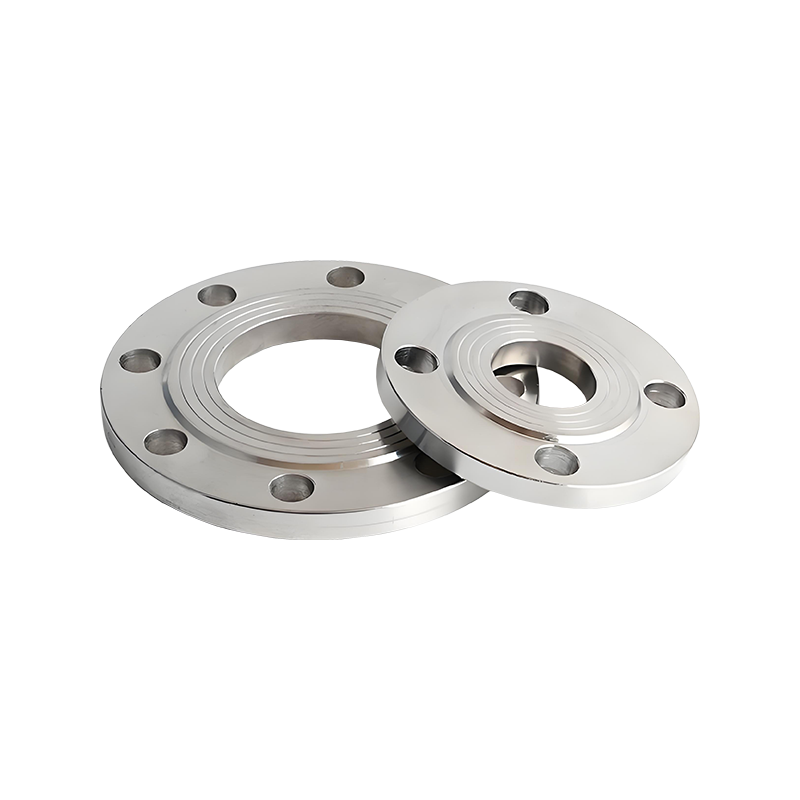
Flat welding flanges are welded to pipes using fillet welds, making them suitable for low to medium pressure applications. These flanges can be manufactured with either RF or FF faces, depending on system requirements. Choosing the correct face type ensures proper sealing and prevents flange deformation during tightening.
In steel pipelines, flat welding flanges most often use RF faces because they match industry standards and perform better under pressure. However, FF flat welding flanges are selected when connecting to flat-faced equipment such as pumps, valves, or cast iron components.
Sealing Performance Differences
The primary functional difference between RF and FF flanges lies in how they seal. RF flanges apply greater compressive force on the gasket, allowing them to withstand higher internal pressures. This makes RF faces more suitable for demanding industrial environments.
FF flanges, on the other hand, distribute force evenly across the gasket surface. While this reduces sealing efficiency under high pressure, it protects flange integrity in systems where excessive stress could cause cracking or warping.
Gasket Selection for RF and FF Flanges
Correct gasket selection is essential for both RF and FF flat welding flanges. Using the wrong gasket type can lead to leakage or flange damage, even if the flange faces are properly machined.
Typical Gaskets for RF Flanges
- Spiral wound gaskets
- Metal ring gaskets with soft fillers
- Non-asbestos compressed fiber gaskets
Typical Gaskets for FF Flanges
- Full-face rubber gaskets
- PTFE full-face gaskets
- Soft fiber sheet gaskets
Pressure and Temperature Ratings
RF flanges are generally rated for higher pressures and temperatures compared to FF flanges. In flat welding flange applications, RF faces are commonly used in ANSI Class 150 to 600 pressure classes, supporting a wide range of industrial fluids.
FF flanges are typically limited to lower pressure classes. Their design prioritizes safety and compatibility with weaker materials rather than maximum pressure resistance.
Installation Considerations and Best Practices
Improper installation is a common cause of flange leakage. For flat welding flanges, correct alignment and bolt tightening procedures are essential regardless of face type.
- Never mate an RF flange directly with an FF flange without modification
- Use controlled bolt torque and star-pattern tightening
- Ensure gasket material matches media and temperature
RF vs FF Flange Comparison Table
| Feature | RF Flange | FF Flange |
| Sealing Surface | Raised | Flat |
| Pressure Capability | Medium to High | Low |
| Common Gasket Type | Spiral Wound | Full-Face Soft Gasket |
| Typical Materials | Carbon Steel, Stainless Steel | Cast Iron, Plastic, Ductile Iron |
| Flat Welding Flange Usage | Industrial Pipelines | Equipment Connections |
How to Choose Between RF and FF for Flat Welding Flanges
The decision between RF and FF flanges should be based on system pressure, mating equipment, gasket type, and material strength. For most steel piping systems using flat welding flanges, RF faces offer superior sealing and long-term reliability.
FF flanges remain essential where stress-sensitive equipment is involved. Selecting the correct face type reduces maintenance costs and extends the service life of the entire piping system.
Conclusion
Understanding the difference between RF and FF flanges is critical when specifying or installing flat welding flanges. RF flanges provide higher sealing performance and pressure resistance, while FF flanges offer safer load distribution for delicate materials. Choosing the correct flange face ensures system integrity, safety, and efficiency throughout the operational lifecycle.
Latest News
News And Blogs
Stay Informed About Our Recent Events