Language
 English
 中文简体
中文简体 русский
 Español
 عربى
عربى
Material Selection for Butt Weld Fittings Choosing the right material is the first step in selecting...
Which is better seamless or Butt welded pipe fittings?

Content
When designing or upgrading piping systems, engineers and procurement professionals face a critical decision between seamless and butt welded pipe fittings. Both types serve essential functions in connecting pipes, changing flow directions, and adapting to different pipe sizes, yet they differ fundamentally in manufacturing processes, performance characteristics, and cost structures. Understanding these distinctions enables informed decisions that balance technical requirements, budget constraints, and long-term reliability. This comprehensive comparison examines both fitting types across multiple dimensions, providing the detailed insights needed to select the optimal solution for specific applications and operating conditions.
Manufacturing Processes and Structural Differences
The fundamental distinction between seamless and butt welded pipe fittings lies in their manufacturing methodologies, which create different structural characteristics that influence performance throughout their service lives. Seamless fittings are produced from solid billets of steel or other materials through hot or cold forming processes that shape the material without creating any longitudinal seams or welds. The manufacturing typically involves heating a solid cylindrical billet and using mandrels, dies, and forming equipment to create the desired fitting shape—whether elbows, tees, reducers, or caps—while maintaining continuous material structure throughout.
Hot forming represents the most common seamless fitting production method, where billets are heated to temperatures between 1,700 and 2,300 degrees Fahrenheit depending on the material composition. At these elevated temperatures, the metal becomes plastic and malleable, allowing forming equipment to bend, expand, or reshape it into fitting configurations. The hot forming process produces fittings with uniform wall thickness and grain structure, though some minor variations may occur during the forming operations. After forming, the fittings undergo controlled cooling, heat treatment, and finishing operations to achieve specified mechanical properties and dimensional tolerances.
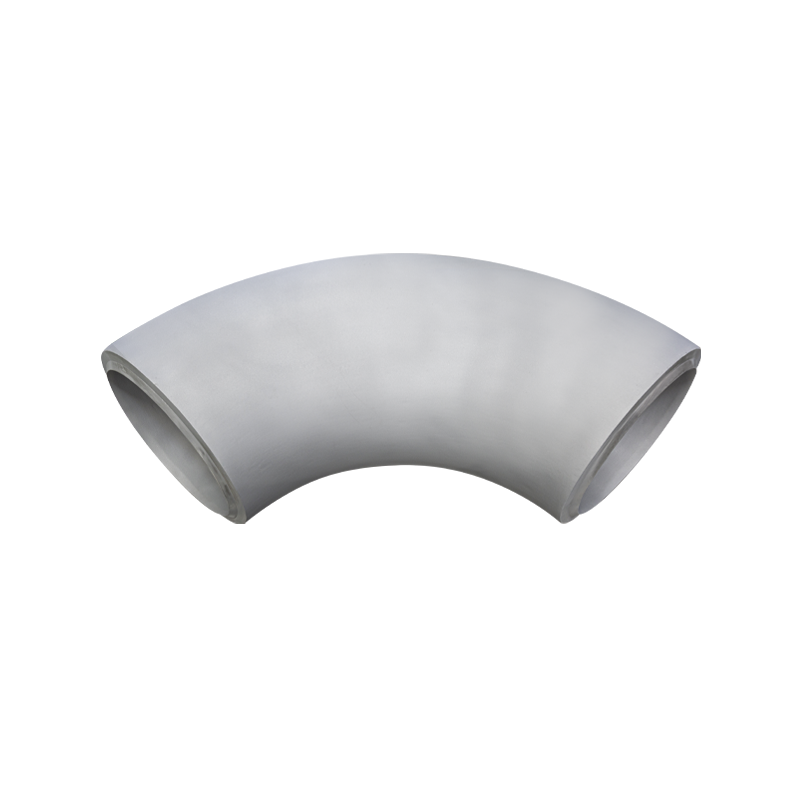
Butt welded fittings, by contrast, are fabricated from flat steel plates or formed sections that are shaped into the desired configuration and then joined along longitudinal seams using welding processes. The manufacturing begins with cutting appropriately sized pieces from steel plate or coil, forming these pieces into the required shapes through pressing or rolling operations, and then welding the edges together to create the complete fitting. The weld seam runs longitudinally along the fitting, representing a fusion zone where the base metal has been melted and resolidified with or without filler material addition.
Modern butt welded fitting production employs advanced welding technologies including submerged arc welding, gas tungsten arc welding, or laser welding to create high-quality, consistent weld joints. Post-weld heat treatment often follows the welding operation to relieve residual stresses, homogenize the microstructure in the heat-affected zone, and restore mechanical properties that may have been altered during welding. Quality control procedures include visual inspection, dimensional verification, and non-destructive testing such as radiographic or ultrasonic examination to ensure weld integrity meets specification requirements.
Mechanical Properties and Pressure Ratings
The structural differences between seamless and butt welded fittings translate into variations in mechanical properties and pressure-handling capabilities that influence their suitability for different service conditions. Seamless fittings benefit from continuous material structure without welds, eliminating potential weak points or discontinuities that could compromise strength. The uniform grain structure throughout seamless fittings provides consistent mechanical properties in all directions, offering predictable performance under internal pressure, external loads, and thermal stresses.
Material homogeneity in seamless fittings contributes to excellent resistance against fatigue failure, particularly important in applications involving pressure cycling, thermal cycling, or vibration. The absence of weld seams eliminates concerns about heat-affected zone properties, weld defects, or incomplete fusion that occasionally affect welded construction. This structural integrity makes seamless fittings particularly suitable for high-pressure services, critical applications, and situations where failure consequences are severe. Many engineers specify seamless fittings for pressures exceeding 2,500 PSI or in services where reliability is paramount.
Butt welded fittings, when properly manufactured with quality welding procedures and adequate post-weld heat treatment, achieve mechanical properties approaching or matching those of seamless fittings. Modern welding technology and metallurgical understanding enable production of weld joints with strength equal to or exceeding the base metal strength. The weld seam, rather than representing a weakness, can actually demonstrate higher hardness and strength than surrounding material, though this may come with reduced ductility if not properly heat treated.
However, the quality of butt welded fittings depends critically on manufacturing process control, welding procedure qualification, and inspection rigor. Variations in welding parameters, inadequate fusion, porosity, or inclusion defects can create localized weaknesses that reduce overall fitting strength and reliability. Reputable manufacturers implement comprehensive quality systems including procedure qualification, welder certification, and non-destructive testing to ensure consistent, high-quality production. For moderate pressure applications below 2,000 PSI and non-critical services, properly manufactured butt welded fittings provide adequate strength and reliability at lower cost than seamless alternatives.
| Characteristic | Seamless Fittings | Butt Welded Fittings |
| Material Continuity | Continuous, no seams | Longitudinal weld seam |
| Typical Pressure Rating | Up to 10,000+ PSI | Up to 3,000 PSI typically |
| Grain Structure | Uniform throughout | HAZ may differ from base metal |
| Fatigue Resistance | Excellent | Good to Excellent (varies by quality) |
| Corrosion Resistance | Consistent | Potential variation at weld |
Cost Considerations and Economic Factors
Economic factors significantly influence the choice between seamless and butt welded fittings, with cost differences varying based on size, material, quantity, and market conditions. Understanding the complete cost picture beyond initial purchase price reveals the true economic implications of each option over the system lifecycle.
Seamless fittings generally command premium prices compared to butt welded alternatives, reflecting their more complex manufacturing processes and superior material utilization. The hot forming operations required for seamless production demand specialized equipment, higher energy consumption, and more extensive process control than welded fitting fabrication. Material yield rates for seamless fittings tend to be lower, as the forming process may generate more scrap material that must be recycled. These manufacturing cost factors translate into purchase prices typically twenty to forty percent higher than equivalent butt welded fittings, with the premium varying by size, schedule, and material specification.
The cost differential becomes more pronounced for larger diameter fittings and heavy wall schedules where seamless manufacturing becomes increasingly challenging and material-intensive. For fittings above 24 inches in diameter or wall thicknesses exceeding one inch, seamless production may become prohibitively expensive or technically impractical, making butt welded construction the only viable option. Conversely, for smaller fittings in standard schedules, the absolute cost difference may be modest, making seamless selection more economically feasible even for budget-conscious projects.
Butt welded fittings offer significant cost advantages, particularly for large-diameter or heavy-wall applications where seamless manufacturing costs escalate dramatically. The fabrication process for welded fittings scales more economically to larger sizes, as forming and welding operations don't face the same physical limitations as seamless hot forming. Material utilization in welded fitting production can be optimized through precise cutting and forming, potentially reducing scrap rates and material costs. The lower manufacturing complexity and broader supplier base for welded fittings create competitive market conditions that benefit purchasers through favorable pricing and availability.
However, comprehensive cost analysis must consider factors beyond initial purchase price. Installation costs generally remain similar for both fitting types, as connection methods and labor requirements don't differ significantly. Maintenance and reliability considerations may favor seamless fittings in critical applications where the cost of unplanned downtime, product loss, or safety incidents far exceeds any initial purchase price savings. For less critical systems or applications with moderate operating conditions, the reliability difference may not justify the seamless fitting premium, making welded fittings the economically rational choice.
Application-Specific Selection Guidelines
Optimal fitting selection depends heavily on specific application requirements, operating conditions, and performance priorities. Certain applications strongly favor one fitting type over the other based on technical requirements, regulatory mandates, or industry best practices developed through decades of operational experience.
High-pressure services including steam systems above 600 PSI, hydraulic systems, and high-pressure process applications typically specify seamless fittings to maximize safety margins and reliability. The petrochemical, oil and gas, and power generation industries commonly mandate seamless fittings for critical process streams, particularly those handling hazardous materials, operating at elevated temperatures, or subject to pressure cycling. The continuous material structure of seamless fittings provides confidence in long-term integrity under demanding service conditions where fitting failure could result in catastrophic consequences.
Corrosive environments present another application area where seamless fittings often prove superior. The weld seam in butt welded fittings can develop microstructural differences or residual stresses that make it more susceptible to localized corrosion, stress corrosion cracking, or preferential attack compared to the uniform base metal. While proper material selection, welding procedures, and post-weld heat treatment mitigate these concerns, seamless fittings eliminate the weld zone as a potential vulnerability. Chemical processing, offshore platforms, and sour gas service frequently specify seamless fittings to maximize corrosion resistance and service life.
Conversely, large-diameter piping systems including water distribution, wastewater collection, HVAC systems, and low-pressure process piping find butt welded fittings perfectly adequate and far more economical. These applications typically operate at pressures below 300 PSI with non-corrosive or mildly corrosive fluids at moderate temperatures. The mechanical property advantages of seamless fittings provide no practical benefit in these services, making the cost premium unjustifiable. Municipal infrastructure, commercial buildings, and many industrial utility systems successfully employ welded fittings with excellent long-term performance and reliability.
When to Choose Seamless Fittings
- High-pressure applications exceeding 2,500 PSI working pressure
- Critical services where fitting failure creates severe safety or environmental consequences
- Corrosive environments prone to stress corrosion cracking or localized attack
- Severe cyclic loading from pressure fluctuations, thermal cycling, or vibration
- Code requirements or industry standards mandating seamless construction
- Small to medium diameter fittings where cost premium is manageable
When to Choose Butt Welded Fittings
- Large diameter piping systems above 24 inches where seamless options are limited or expensive
- Low to moderate pressure services below 1,500 PSI
- Non-critical applications where cost optimization is prioritized
- Projects with tight budget constraints requiring cost-effective solutions
- Applications with mild service conditions and non-aggressive fluids
- Situations requiring custom sizes or configurations not available in seamless options
Quality Standards and Inspection Requirements
Both seamless and butt welded fittings must comply with applicable industry standards and codes that establish minimum quality requirements, dimensional tolerances, and performance criteria. Understanding these standards and associated inspection requirements helps ensure purchased fittings meet project specifications and will perform reliably throughout their intended service life.
ASME B16.9 represents the primary standard governing factory-made wrought steel butt-welding fittings in North America, covering both seamless and welded construction. This standard specifies dimensions, tolerances, marking requirements, and material specifications for elbows, tees, reducers, caps, and lap joint stub ends. Fittings manufactured to ASME B16.9 must meet defined wall thickness minimums based on pipe schedules, maintain specified dimensional tolerances, and carry proper identification marking indicating manufacturer, material grade, and nominal pipe size.
Material specifications referenced by ASME B16.9 include ASTM standards such as A234 for carbon and alloy steel fittings, A403 for stainless steel fittings, and A420 for low-temperature service fittings. These material standards establish chemical composition requirements, mechanical property minimums, and heat treatment protocols that ensure consistent material performance. Seamless fittings must meet these same material specifications as welded fittings, with additional requirements in some specifications for manufacturing method identification and supplementary testing.
Inspection and testing requirements differ between seamless and butt welded fittings based on their manufacturing methods and potential failure modes. All fittings undergo visual inspection for surface defects, dimensional verification of critical features, and material certification confirming compliance with specified grades. Butt welded fittings require additional inspection of the longitudinal weld seam, typically through non-destructive testing methods such as radiographic examination, ultrasonic testing, or magnetic particle inspection depending on code requirements and criticality of service.
For critical applications or when specified by applicable codes, hydrostatic pressure testing verifies fitting pressure integrity by subjecting them to test pressures exceeding their rated working pressure. This destructive test provides direct confirmation of pressure-containing capability and identifies any manufacturing defects that might compromise performance. Quality documentation including material test reports, non-destructive testing reports, and hydrostatic test certificates accompanies fittings destined for critical services, providing traceability and verification of compliance with project requirements.
Making the Final Selection Decision
The choice between seamless and butt welded pipe fittings ultimately depends on weighing multiple factors specific to each project and application. Rather than declaring one type universally superior, successful specification requires matching fitting characteristics to actual service requirements while balancing technical performance, cost constraints, and availability considerations.
Begin the selection process by clearly defining the operating conditions including maximum pressure, temperature range, fluid characteristics, and expected service life. Identify applicable codes, standards, and regulatory requirements that may mandate specific fitting types or impose minimum quality requirements. Evaluate the criticality of the system and potential consequences of fitting failure, as these factors strongly influence the acceptable balance between cost and reliability. High-consequence applications justify premium seamless fittings, while less critical systems may adequately utilize economical welded options.
Consider the complete lifecycle costs rather than focusing exclusively on initial purchase prices. Factor in installation expenses, maintenance requirements, expected service life, and potential costs of premature failure or unplanned downtime. For some applications, the modest premium for seamless fittings proves economically justified through extended service life and enhanced reliability, while other situations find no practical benefit justifying the additional cost. Budget realities and project economics inevitably influence selection, but false economy through inappropriate cost-cutting can lead to far greater expenses through system failures or reduced performance.
Availability and lead time considerations may also affect the final decision, as seamless fittings in unusual sizes, exotic materials, or heavy wall schedules may face extended delivery times or limited supplier options. Butt welded fittings offer greater flexibility for custom configurations and can often be fabricated more quickly than seamless alternatives when standard stock items don't meet project requirements. Consulting with experienced suppliers, reviewing manufacturer literature, and potentially requesting sample fittings for evaluation helps verify that selected fittings will meet all technical requirements and arrive within project schedules.
Neither seamless nor butt welded fittings claim universal superiority—each excels in appropriate applications when properly specified and manufactured to quality standards. Seamless fittings deliver maximum reliability and performance for demanding, critical applications where their structural advantages justify premium costs. Butt welded fittings provide economical, adequate performance for the vast majority of industrial piping systems operating under moderate conditions. Understanding the genuine differences, recognizing application-specific requirements, and making informed selections based on comprehensive evaluation ensures piping systems that meet performance objectives while optimizing project economics and long-term value.
Latest News
News And Blogs
Stay Informed About Our Recent Events