Language
 English
 中文简体
中文简体 русский
 Español
 عربى
عربى
Material Selection for Butt Weld Fittings Choosing the right material is the first step in selecting...
What is the welding process for Plate Flat Welding Flange?

Content
- 1 Understanding the Plate Flat Welding Flange
- 2 Pre-Welding Preparation: The Foundation of a Quality Joint
- 3 Preheat Requirements Based on Material and Thickness
- 4 Selecting the Right Welding Process for Flat Welding Flanges
- 5 Step-by-Step Welding Procedure for Flat Welding Flanges
- 6 Post-Weld Treatment: Heat and Surface Finishing
- 7 Weld Inspection Methods and Acceptance Criteria
- 8 Common Welding Defects and How to Prevent Them
Understanding the Plate Flat Welding Flange
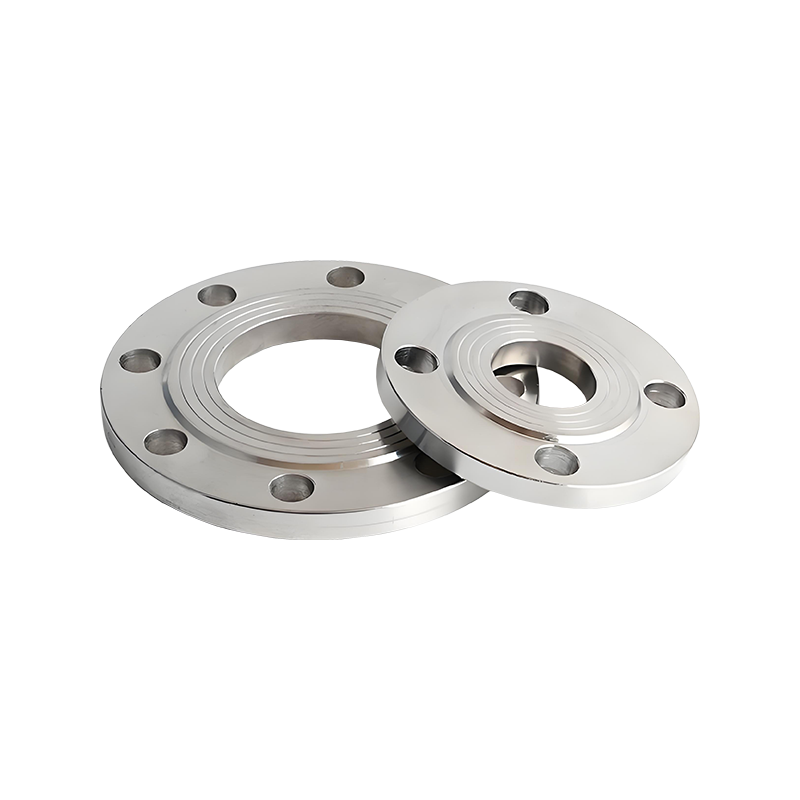
A Plate Flat Welding Flange, also commonly referred to as a slip-on flat welding flange or flat face flange, is one of the most widely used flange types in industrial piping systems. Unlike weld neck flanges that require butt welding, the flat welding flange is designed to slip over the pipe end and be secured through fillet welding — both on the inside bore and around the outer face of the pipe. This design makes it cost-effective, easier to align during assembly, and suitable for low to medium pressure applications across industries such as water treatment, chemical processing, HVAC, and general manufacturing. Understanding the correct welding process for this flange type is essential for ensuring joint integrity, leak resistance, and long-term performance under operational stresses.
The flat welding flange is typically manufactured from carbon steel (A105), stainless steel (304/316), alloy steel, or ductile iron, depending on the service environment. Its flat face sealing surface makes it ideal for mating with equipment that also has flat faces, using full-face gaskets to distribute load evenly and prevent gasket blowout. Because the quality of the welded joint directly determines the reliability of the entire flange connection, every stage of the welding process — from base material preparation to post-weld inspection — must be executed with precision and in accordance with recognized standards such as ASME B16.5, AWS D1.1, and ASME Section IX.
Pre-Welding Preparation: The Foundation of a Quality Joint
Proper preparation before striking the first arc is arguably the most critical phase of flange welding. Inadequate preparation accounts for the majority of weld defects encountered in field and shop environments. For Plate Flat Welding Flanges, preparation involves several interconnected steps that must all be completed before welding begins.
Material Inspection and Verification
Before any fitup work begins, both the flange and the pipe must be inspected against their material test reports (MTRs). Verify that the material grade, heat number, dimensions, and pressure rating all match the engineering specifications. Check for surface defects such as laminations, pits, cracks, or seams that could propagate under weld heat. For carbon steel flanges, confirm that the carbon equivalent (CE) value is within the acceptable range to avoid hydrogen-induced cracking. Flanges with a CE above 0.43 typically require preheat to prevent this type of defect.
Surface Cleaning and Degreasing
All surfaces within at least 25mm (1 inch) of the intended weld zone must be thoroughly cleaned. Use a wire brush, angle grinder with a flap disc, or mechanical cleaning tool to remove mill scale, rust, paint, and oxidation from the pipe outer diameter and the flange bore. Follow this with a solvent wipe using acetone or isopropyl alcohol to eliminate oil, grease, and moisture — all of which are primary sources of porosity and hydrogen cracking in the finished weld. Never begin welding on a wet or damp surface; if ambient humidity is high, apply a flame torch to gently warm the joint area before welding commences.
Fitup and Alignment
Slide the flat welding flange over the pipe end and position it so that the pipe extends slightly beyond the flange face — typically by 1.5mm to 3mm — to allow for proper back-side fillet weld access. Use a precision square or digital level to ensure the flange face is perpendicular to the pipe centerline. Misalignment beyond 1mm per 300mm of pipe diameter is generally unacceptable and will cause stress concentrations at the weld toe. Tack weld the flange in at least three or four equally spaced positions around the circumference to hold alignment before full welding begins.
Preheat Requirements Based on Material and Thickness
Preheat is a controlled process of raising the base metal temperature before welding to reduce the cooling rate, minimize thermal shock, and prevent hydrogen cracking. For Plate Flat Welding Flanges, preheat requirements depend on the material type, wall thickness, and the carbon equivalent of the steel involved.
| Material | Thickness | Minimum Preheat Temperature |
| Carbon Steel (A105) | Up to 25mm | No preheat required (CE ≤ 0.43) |
| Carbon Steel (A105) | 25mm to 50mm | 79°C (175°F) minimum |
| Low Alloy Steel | Any thickness | 150°C to 200°C (300°F to 390°F) |
| Stainless Steel (304/316) | Any thickness | No preheat; limit interpass to 150°C max |
| Duplex Stainless Steel | Any thickness | No preheat; strict heat input control required |
Preheat should be applied using an oxy-fuel torch, induction heating blanket, or resistance heating pads, and the temperature must be verified using contact thermometers or temperature-indicating sticks (Tempilstiks) at a distance of at least 75mm from the weld zone on both components being joined.
Selecting the Right Welding Process for Flat Welding Flanges
The choice of welding process significantly impacts the quality, speed, and mechanical properties of the finished flange weld. For Plate Flat Welding Flanges, the following processes are most commonly employed, each with specific advantages depending on the application environment.
- SMAW (Shielded Metal Arc Welding / Stick Welding): The most versatile and widely used process for flange welding in field conditions. It works well on carbon steel and low alloy flanges, tolerates minor surface contamination, and requires minimal equipment. Use E6013 electrodes for general structural work or E7018 low-hydrogen electrodes for structural-grade carbon steel flanges requiring higher tensile strength and low diffusible hydrogen content.
- GMAW (Gas Metal Arc Welding / MIG Welding): Preferred in shop environments for its higher deposition rate and cleaner welds. Use ER70S-6 wire with 75% Argon / 25% CO₂ shielding gas for carbon steel flanges. GMAW is well-suited for multi-pass fillet welds on larger diameter flanges where productivity is important.
- GTAW (Gas Tungsten Arc Welding / TIG Welding): The highest-quality process, producing exceptionally clean and precise welds with minimal spatter. It is the preferred choice for stainless steel, duplex, and other high-alloy flanges where corrosion resistance must not be compromised. Use ER308L or ER316L filler wire for austenitic stainless steel flat welding flanges.
- FCAW (Flux-Cored Arc Welding): Used when high deposition rates and all-position capability are needed in heavier wall pipe-to-flange applications. Self-shielded FCAW variants work well in outdoor or windy conditions where gas shielding would be disrupted.
Step-by-Step Welding Procedure for Flat Welding Flanges
The actual welding of a Plate Flat Welding Flange involves two primary fillet welds: the outer fillet weld (between the outer face of the pipe and the front face of the flange) and the inner bore fillet weld (inside the bore of the flange, where the pipe inner diameter meets the flange back face). Both welds must be completed to achieve full joint integrity per ASME B31.3 and B16.5 requirements.
Step 1 — Tack Welding and Initial Setup
After aligning the flange on the pipe, apply a minimum of four tack welds equally spaced at 90-degree intervals. Each tack weld should be at least 15mm long and fully fused to avoid cracking under thermal stress during the full weld passes. Inspect tack welds visually before proceeding — any cracked or porous tack welds must be ground out and re-welded before continuing.
Step 2 — Outer Fillet Weld (Front Face)
The outer fillet weld is the primary structural weld of the flat welding flange joint. For most applications under ASME B16.5, the minimum fillet weld size should equal the pipe wall thickness, typically ranging from 6mm to 12mm depending on nominal pipe size. Weld in a continuous pass around the circumference, maintaining consistent travel speed, arc length, and electrode angle (approximately 45 degrees to both the pipe and flange face). Use stringer beads for the first pass to ensure full root fusion, then apply weave passes for fill and cap layers as required by the weld symbol on the engineering drawing. Allow each pass to cool to interpass temperature limits before applying the next pass.
Step 3 — Inner Bore Fillet Weld (Back Face)
The inner bore weld is made on the back side of the flange, welding the pipe outer surface to the flange hub bore from inside. This weld is critical for pressure applications as it provides a secondary seal and structurally locks the flange against axial movement caused by thrust loads. On smaller diameter pipe where access is limited, use a short-arc process (SMAW with 3.2mm electrode) or GTAW with a bent filler rod to reach the interior. Apply at minimum a single-pass fillet weld that achieves full fusion at both weld toes. On stainless steel flanges, use a backing gas (pure argon purge at 5–10 CFH) inside the pipe to protect the bore weld root from oxidation.
Step 4 — Interpass Cleaning and Slag Removal
After each weld pass, thoroughly remove all slag, spatter, and oxidation using a chipping hammer and stainless steel wire brush. On stainless steel flanges, use only dedicated stainless wire brushes to prevent carbon steel contamination that causes surface corrosion. Visually inspect each pass for cracks, porosity, undercut, and lack of fusion before depositing the next layer. Any defects identified during interpass inspection must be ground out completely before welding continues.
Post-Weld Treatment: Heat and Surface Finishing
Post-weld heat treatment (PWHT) may be required for certain material grades and wall thicknesses to relieve residual stresses that develop during the rapid heating and cooling cycles of welding. For carbon steel flat welding flanges in pressure applications per ASME B31.3, PWHT is typically required when wall thickness exceeds 19mm (¾ inch) or when the service involves hydrogen or caustic environments. The standard PWHT temperature for carbon steel is 595°C to 650°C (1100°F to 1200°F), held for one hour per 25mm of thickness, followed by controlled cooling.
For stainless steel flanges, PWHT is generally not recommended as it can cause sensitization — the precipitation of chromium carbides at grain boundaries that drastically reduces corrosion resistance. Instead, pickling and passivation using nitric/hydrofluoric acid solution or citric acid is applied after welding to remove the heat tint zone (oxidation discoloration), restore the passive oxide film, and return the surface to its full corrosion resistance potential. The flange sealing face should be refinished with a flat-face grinder or lapping tool after all heat treatment to ensure flatness within 0.1mm, which is critical for proper gasket seating.
Weld Inspection Methods and Acceptance Criteria
No flange welding job is complete without proper nondestructive examination (NDE) to verify weld integrity. The inspection method applied depends on the service class and material of the flange assembly.
- Visual Inspection (VT): The baseline requirement for all welds. Check for surface cracks, porosity, undercut exceeding 0.8mm, incomplete fusion, overlap, and improper weld profile. The finished weld should have a smooth, uniform surface with a concave or flat face profile and full fusion at both weld toes.
- Liquid Penetrant Testing (PT): Applied to stainless steel and non-ferromagnetic alloy flanges to detect surface-breaking discontinuities. A colored or fluorescent dye is applied, allowed to penetrate, then revealed with developer. Any linear indications longer than 1.5mm are cause for rejection under ASME Section V criteria.
- Magnetic Particle Testing (MT): Used on ferromagnetic carbon steel flanges to detect surface and near-surface defects using magnetic flux leakage and iron particle indicators. More sensitive than VT for detecting tight surface cracks.
- Radiographic Testing (RT): Required for critical pressure service applications. RT provides a permanent film record of the internal weld quality, revealing porosity, inclusions, lack of fusion, and cracks within the weld volume. Acceptance criteria per ASME B31.3 Normal Fluid Service apply.
- Hydrostatic Pressure Testing: The final system-level verification, typically conducted at 1.5 times the design pressure held for a minimum of 10 minutes. A successful hydrostatic test with zero leakage at the flange joint confirms that the welding process has produced a fully pressure-tight assembly.
Common Welding Defects and How to Prevent Them
Even experienced welders encounter defects when welding flat flanges, particularly on difficult-to-access inner bore welds or when working with dissimilar material combinations. Understanding the root causes of the most common defects allows welders and inspectors to implement corrective measures proactively rather than reactively.
Porosity is most often caused by moisture in the electrode coating, contaminated base metal, or loss of shielding gas coverage. It is prevented by using properly stored low-hydrogen electrodes (kept in a rod oven at 120°C), thorough surface cleaning, and verifying shielding gas flow before initiating the arc. Undercut — a groove melted into the base metal along the weld toe — results from excessive heat input, incorrect electrode angle, or too fast a travel speed, and is prevented by controlling these parameters within the qualified WPS (Welding Procedure Specification). Lack of fusion, perhaps the most structurally dangerous defect in flange welding, occurs when the weld metal fails to bond to the base metal or the previous weld layer, typically due to insufficient heat, contamination, or improper technique on the inner bore weld. Correct preheat application, proper electrode/wire angle, and adequate amperage are the primary defenses against this defect. All welding on flat welding flanges in pressure service must be performed by welders qualified under ASME Section IX, using approved and documented WPS and Procedure Qualification Records (PQRs) that have been tested to the specific material, process, and thickness being welded.
Latest News
News And Blogs
Stay Informed About Our Recent Events