Language
 English
 中文简体
中文简体 русский
 Español
 عربى
عربى
Material Selection for Butt Weld Fittings Choosing the right material is the first step in selecting...
Home / News / Industry News / What Makes Butt Weld 180 Degree Elbows the Right Choice for Your Piping System?
What Makes Butt Weld 180 Degree Elbows the Right Choice for Your Piping System?

Content
- 1 What Is a Butt Weld 180 Degree Elbow?
- 2 Long Radius vs. Short Radius: Understanding the Two Main Types
- 3 Common Materials Used in Butt Weld 180 Degree Elbows
- 4 Industry Standards and Dimensional Specifications
- 5 Typical Applications Across Industries
- 6 Installation Guidelines and Welding Considerations
- 7 How to Select the Right Butt Weld 180 Degree Elbow
What Is a Butt Weld 180 Degree Elbow?
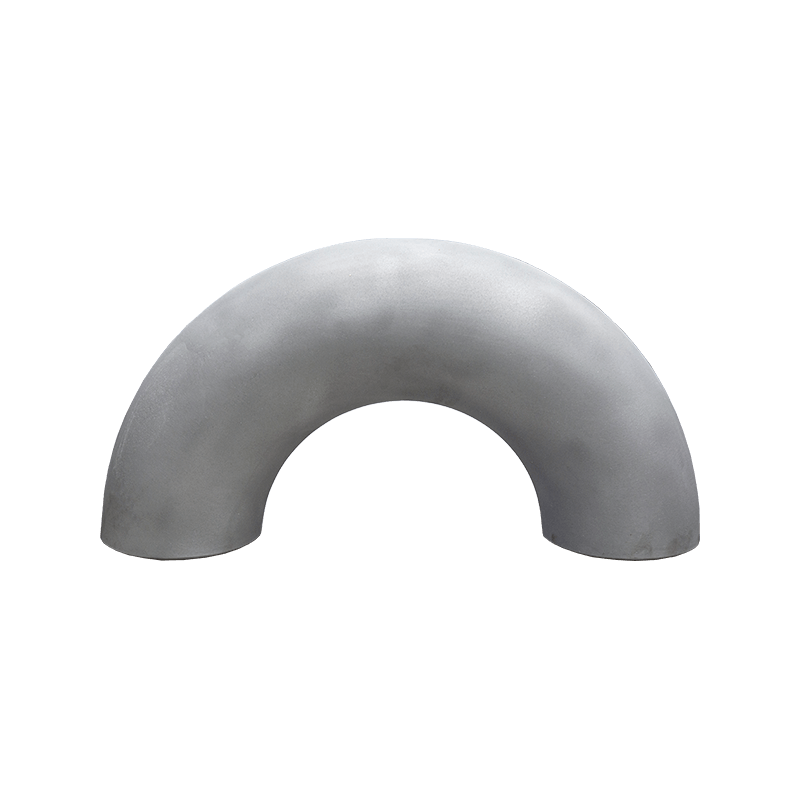
A butt weld 180 degree elbow is a pipe fitting designed to reverse the direction of flow in a piping system by a full 180 degrees, effectively creating a U-shaped turn. Unlike threaded or socket-weld fittings, butt weld fittings are joined to the pipe by welding the ends together — end to end — which produces a strong, leak-resistant, and flush connection. These fittings are essential in systems where tight return bends are needed, such as in heat exchangers, coil systems, and process piping installations where space constraints demand a complete directional reversal within a compact footprint.
The fitting consists of two open ends that align with the pipe's outer diameter, allowing a full-penetration weld to be made around the circumference. This results in a joint that matches or exceeds the strength of the base pipe itself. The internal bore is typically smooth and continuous, minimizing turbulence and pressure drop through the turn — a critical consideration in high-velocity or high-pressure applications.
Long Radius vs. Short Radius: Understanding the Two Main Types
Butt weld 180 degree elbows are manufactured in two primary configurations based on their centerline radius: long radius (LR) and short radius (SR). Choosing between them depends on flow requirements, space availability, and system pressure conditions.
Long Radius (LR) 180 Degree Elbow
In a long radius elbow, the centerline radius equals 1.5 times the nominal pipe diameter (1.5D). This configuration allows fluid to change direction more gradually, significantly reducing turbulence, erosion, and pressure loss. Long radius elbows are preferred in systems carrying high-velocity fluids, gases, or slurries where smooth flow is critical. They are the more commonly specified type in industrial and process piping.
Short Radius (SR) 180 Degree Elbow
Short radius elbows have a centerline radius equal to the nominal pipe diameter (1D). They offer a more compact return bend, making them suitable for tight spaces where layout restrictions do not permit the larger sweep of an LR elbow. However, the tighter bend results in higher pressure drop and greater fluid turbulence, so they are typically used in low-pressure or low-velocity systems, or in drain, vent, and non-critical service lines.
| Feature | Long Radius (1.5D) | Short Radius (1D) |
| Centerline Radius | 1.5 × Nominal Diameter | 1 × Nominal Diameter |
| Pressure Drop | Lower | Higher |
| Space Required | More | Less |
| Typical Application | Process, oil & gas, high-pressure | Drain, vent, low-pressure lines |
| Flow Efficiency | High | Moderate |
Common Materials Used in Butt Weld 180 Degree Elbows
Material selection for butt weld 180 degree elbows is driven by the nature of the transported medium, operating temperature, pressure rating, and corrosion resistance requirements. The following materials are widely used across industries:
- Carbon Steel (ASTM A234 WPB): The most commonly used material for general-purpose applications. It offers high strength, good weldability, and cost-effectiveness, making it suitable for water, oil, gas, and steam lines operating at moderate temperatures.
- Stainless Steel (ASTM A403 WP304/316): Preferred in corrosive environments such as chemical processing, food and beverage, and pharmaceutical industries. Grade 316 offers superior resistance to chloride corrosion compared to 304.
- Alloy Steel (ASTM A234 WP11/WP22): Used in high-temperature and high-pressure services such as power generation and petrochemical plants. Chromium-molybdenum alloys maintain strength and resist oxidation at elevated temperatures.
- Duplex & Super Duplex Stainless Steel: Chosen for highly corrosive offshore, marine, and desalination environments where both strength and corrosion resistance are critical.
- Nickel Alloys (Inconel, Hastelloy): Applied in extreme chemical and thermal environments, such as flue gas desulfurization systems and high-temperature furnace piping.
Industry Standards and Dimensional Specifications
Butt weld 180 degree elbows are manufactured according to internationally recognized standards to ensure dimensional consistency, pressure integrity, and interoperability with piping components from different manufacturers. Key standards include:
- ASME B16.9: The primary standard governing factory-made wrought butt welding fittings, covering dimensions, tolerances, ratings, and testing requirements for sizes from ½ inch to 48 inches.
- ASME B16.28: Specifically covers short radius elbows and returns, providing dimensional data for SR 90 and 180 degree configurations.
- MSS SP-43: Applies to lightweight stainless steel butt welding fittings used in lower-pressure applications.
- EN 10253 (European Standard): Governs butt weld fittings for use within European piping systems, with Part 2 covering non-alloy and ferritic alloy steels and Part 4 covering austenitic stainless steels.
Wall thickness schedules — such as SCH 40, SCH 80, SCH 160, and XXS — must match the connected pipe to ensure weld integrity and consistent pressure ratings throughout the pipeline system. End bevel preparation is also standardized, typically at a 37.5-degree bevel angle with a 1/16-inch root face per ASME B16.25, facilitating full-penetration groove welds.
Typical Applications Across Industries
The butt weld 180 degree elbow sees deployment across a broad range of industrial sectors where a complete flow reversal within a compact and durable connection is required:
- Heat Exchangers and Boilers: Return bends connect parallel tube passes, allowing fluid to travel back and forth through heat exchange bundles without external manifolds.
- Oil and Gas Pipelines: Used in process headers, separator units, and refinery coil configurations where continuous flow direction reversal is part of the system design.
- Chemical Processing Plants: Stainless or alloy steel 180-degree elbows handle aggressive chemicals, acids, and solvents within reactor loops and distillation column piping.
- Power Generation: High-pressure steam lines, feedwater systems, and turbine condensate piping all utilize return elbows to manage complex routing within confined plant areas.
- HVAC and Refrigeration: Refrigerant coils and chilled-water loops employ 180-degree return bends to form serpentine flow paths that maximize heat transfer efficiency.
Installation Guidelines and Welding Considerations
Proper installation of butt weld 180 degree elbows is critical to achieving a safe and durable joint. The following practices should be observed during fabrication and field installation:
End Preparation
Both the pipe end and the elbow end must be beveled to match, cleaned of rust, scale, oil, and paint, and aligned concentrically before tack welding. Misalignment greater than 1.6mm (1/16 inch) is generally unacceptable under most piping codes and can lead to stress concentrations and premature failure.
Welding Process Selection
GTAW (TIG) welding is often used for the root pass, especially on stainless steel and alloy materials, to ensure full penetration and a clean internal bead. SMAW or GMAW may be used for fill and cap passes. The welding procedure specification (WPS) must be qualified in accordance with ASME Section IX or the applicable standard, and welders must hold valid certifications for the joint type and material group.
Post-Weld Treatment
Depending on material and service conditions, post-weld heat treatment (PWHT) may be required to relieve residual stresses, especially in carbon and alloy steel systems above certain wall thicknesses. For stainless steel, passivation or pickling may be necessary to restore corrosion resistance after welding. Non-destructive examination (NDE) methods such as radiographic testing (RT) or ultrasonic testing (UT) are commonly specified to verify weld quality.
How to Select the Right Butt Weld 180 Degree Elbow
Selecting the correct fitting requires evaluating several interconnected parameters. Rushing this process can lead to specification errors that compromise system integrity or result in costly replacements. Key selection criteria include:
- Nominal Pipe Size (NPS) and Schedule: The elbow must match the pipe's outer diameter and wall thickness to ensure proper fit-up and consistent flow bore.
- Radius Type: Confirm whether the system design requires a long radius or short radius based on available space and acceptable pressure drop.
- Material Compatibility: Match the elbow material to the pipe material and ensure it is compatible with the process fluid, temperature range, and corrosive conditions.
- Applicable Standard: Specify the governing dimensional and material standard (e.g., ASME B16.9, ASTM A234) to ensure consistent quality and traceability.
- Heat and Pressure Ratings: Cross-reference the system's design pressure and temperature with the fitting's rated capacity as defined by ASME B16.9 and the applicable material specification.
- Surface Finish and Coating: For corrosive environments, consider fittings with protective coatings, electropolishing, or pickled and passivated finishes as required by the service conditions.
Working closely with a reputable supplier who can provide mill test reports (MTRs), dimensional inspection records, and full material traceability documentation ensures that the fittings meet project specifications and applicable code requirements before installation begins.
Latest News
News And Blogs
Stay Informed About Our Recent Events