Language
 English
 中文简体
中文简体 русский
 Español
 عربى
عربى
Material Selection for Butt Weld Fittings Choosing the right material is the first step in selecting...
Home / News / Industry News / Duplex vs Super Duplex Stainless Steel: Composition, Properties & Selection
Duplex vs Super Duplex Stainless Steel: Composition, Properties & Selection

Content
- 1 Duplex and Super Duplex: Same Family, Different Alloy Levels
- 2 Chemical Composition and the PREN Threshold
- 3 Mechanical Properties and the Weight-Saving Advantage
- 4 Corrosion Resistance in Chloride Service
- 5 Welding and Fabrication Considerations
- 6 Cost and Selection Guidance
- 7 Pipe Fittings and Flanges in Duplex and Super Duplex
A seawater desalination project in the Gulf was originally specified with UNS S32205 (2205) pipe fittings for its intake line. When the final process data was reviewed, the summer seawater temperature showed a worst-case value of 36°C, which pushed the required critical pitting temperature beyond what 2205 can guarantee. The fittings were re-specified to UNS S32750 (2507) before fabrication, adding material cost but avoiding a high-risk retrofit after commissioning. That decision repeats itself across offshore, chemical, and water-treatment projects. The difference between duplex and super duplex is not a minor alloy tweak; it is a change in the corrosion and strength envelope that affects how the piping system is specified, welded, and inspected.
Duplex and Super Duplex: Same Family, Different Alloy Levels
All duplex stainless steels share a two-phase microstructure of ferrite and austenite in roughly equal proportions. That structure separates them from austenitic grades such as 304 and 316L: duplex steels offer roughly twice the yield strength, better resistance to chloride stress corrosion cracking (SCC), and a lower coefficient of thermal expansion. Super duplex is not an unrelated family. It is the higher-alloyed branch of the same duplex concept, developed for service conditions where standard duplex does not deliver enough corrosion margin.
The boundary between the two groups is defined by the pitting resistance equivalent number (PREN), normally calculated as PREN = %Cr + 3.3 x %Mo + 16 x %N. A PREN above 40 classifies a grade as super duplex. The most specified representatives are UNS S32205 (2205) for the duplex side and UNS S32750 (2507) for the super duplex side.
Chemical Composition and the PREN Threshold
Super duplex reaches its higher corrosion performance by increasing the elements that drive pitting resistance: chromium, molybdenum, and nitrogen. The composition ranges of the two benchmark grades show the pattern clearly.
| Element (wt.%) | Duplex UNS S32205 (2205) | Super Duplex UNS S32750 (2507) |
|---|---|---|
| Chromium | 22.0 - 23.0 | 24.0 - 26.0 |
| Nickel | 4.5 - 6.5 | 6.0 - 8.0 |
| Molybdenum | 3.0 - 3.5 | 3.0 - 5.0 |
| Nitrogen | 0.14 - 0.20 | 0.24 - 0.32 |
| PREN (typical) | about 35 | about 42 |
The practical effect is straightforward: each percent of molybdenum adds about 3.3 points to the PREN, and each percent of nitrogen adds 16 points. Because 2507 carries nearly double the nitrogen and a higher molybdenum content, its PREN moves into the low 40s. That shift is what allows super duplex to keep its passive film in chloride service where 2205 would start to pit.
Mechanical Properties and the Weight-Saving Advantage
The strength difference is large enough to change pipe wall thickness calculations. Super duplex provides a minimum yield strength of 550 MPa compared to 450 MPa for standard duplex, and minimum tensile strength of 795 MPa versus 655 MPa.
| Property (minimum) | Duplex S32205 | Super Duplex S32750 |
|---|---|---|
| Yield strength | 450 MPa | 550 MPa |
| Tensile strength | 655 MPa | 795 MPa |
| Elongation | 25% | 15% |
Because allowable stress in piping design codes is a function of yield and tensile strength, 2507 can be designed to a higher stress than 2205 at the same service temperature. The 550 MPa minimum yield is roughly 22 percent higher than 450 MPa. On a long seawater line or a high-pressure flange connection such as a super duplex weld neck flange, that margin can justify a reduced wall thickness. The saved weight then propagates through supporting steel, shipping, and installation. On offshore topsides, where every ton affects the lifting plan, this is a real economic benefit rather than a metallurgical curiosity.
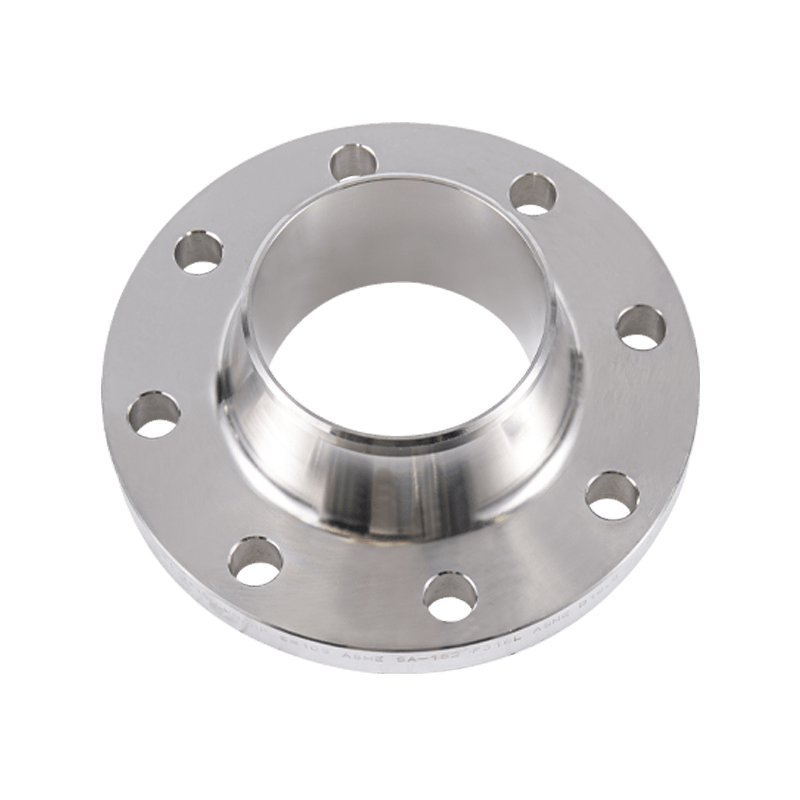 Weld Neck Flange Suppliers, Custom CompanyGaoxin Pipe Fittings is China stainless steel Weld Neck Flange Suppliers, Custom carbon/alloy steel Weld Neck Flange Company, Diamete...View Product →
Corrosion Resistance in Chloride Service
Both duplex and super duplex resist uniform corrosion well in most industrial environments. The meaningful difference appears in localized corrosion. Pitting and crevice corrosion start at surface imperfections or stagnant zones, and both are driven by chloride concentration and temperature. Super duplex has a higher critical pitting temperature and a higher critical crevice corrosion temperature than duplex, which makes it the preferred material for warm seawater, brine, and chloride-rich process streams.
In seawater systems, 2205 has a solid track record in cooler waters, but as water temperature rises or as the system includes crevice-prone details such as flange faces and gasket contact areas, 2507 becomes the common specification. For seawater desalination, duplex 2205 pipe fittings are widely used in the lower-temperature sections, while hotter loops are assigned to super duplex. In chemical plants handling hot chloride media, corrosion-resistant super duplex chemical pipe fittings are the standard answer for the same reason. In oil and gas production, both families serve topsides and subsea equipment, with 2507 preferred when chlorides, carbon dioxide, and hydrogen sulfide combine to push the sour-service envelope.
Welding and Fabrication Considerations
Both duplex and super duplex can be welded with GTAW, SMAW, SAW, and other standard processes, but they tolerate less deviation from qualified parameters than austenitic stainless steels. The weld and heat-affected zone must maintain a balanced ferrite-austenite structure, which depends on heat input, interpass temperature, and filler metal composition. For 2205, the standard filler is ER2209; for 2507, ER2594 is normally used.
Super duplex is more sensitive to overheating because the higher molybdenum and nitrogen content promotes precipitation of sigma phase, chi phase, and secondary austenite when the weld cools too slowly or the interpass temperature runs high. The practical consequence is a narrower welding envelope and a greater need for documented procedures and experienced welders. A shop that welds 316L without procedure qualification should not be handed a 2507 spool without a review. This is a fabrication quality issue as much as an alloy selection issue.
Cost and Selection Guidance
Super duplex costs more per kilogram than duplex because of its higher nickel and molybdenum content. The premium is easy to justify when the alternative is a failed piping system, but it is unnecessary when 2205 meets the full service envelope. The decision should be based on a few practical checks:
- What are the chloride concentration and the operating temperature range of the fluid?
- What PREN margin does the project require after welding and long-term service are considered?
- Can a higher allowable stress reduce the wall thickness and total weight of the piping?
- Does the fabricator have qualified welding procedures for the selected grade?
- Are traceable, certified fittings and flanges available in the required grade and size?
Speaking generally, 2205 is the workhorse for moderate chloride service, and 2507 is the answer when chloride content, temperature, or sour-service conditions exceed that envelope. The higher purchase price of super duplex is a small fraction of the cost of a shutdown caused by pitting in a difficult-to-access pipe.
Pipe Fittings and Flanges in Duplex and Super Duplex
Both material families are produced in all common pressure piping product forms. Butt weld fittings, including elbows, equal and reducing tees, reducers, caps, and crosses, follow ASME B16.9 dimensional standards. Flanges follow ASME B16.5 for nominal pipe sizes up to NPS 24. Forged fittings such as branch outlets, couplings, plugs, and unions cover small-bore and high-pressure connections in accordance with ASME B16.11.
A project team sourcing duplex and super duplex butt weld pipe fittings should confirm that the manufacturing route, including forming, solution annealing, and testing, matches the grade specification, because the corrosion performance of duplex materials depends on proper heat treatment. Small-bore lines, instrumentation connections, and branch take-offs are served by duplex and super duplex forged fittings, and these also need the same level of material traceability as the mainline butt weld components.
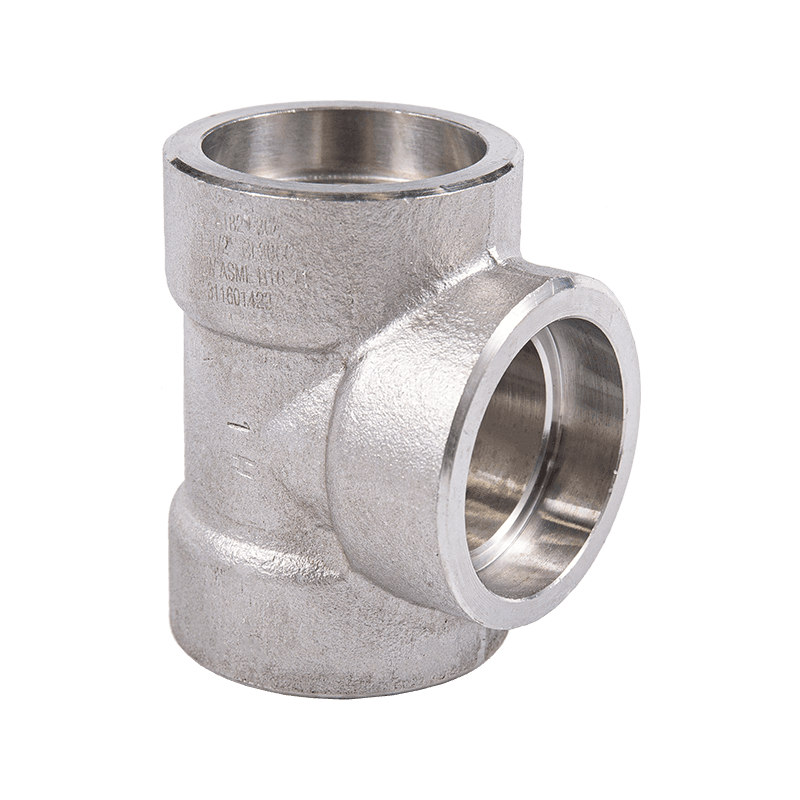 Titanium Alloys Forged Fittings Manufacturers, Alloy Fittings FactoryGaoxin Pipe Fittings is China Wholesale Titanium Alloys Forged Fittings Manufacturers, Alloy Fittings Factory,support Forged Fittings wit...View Product →
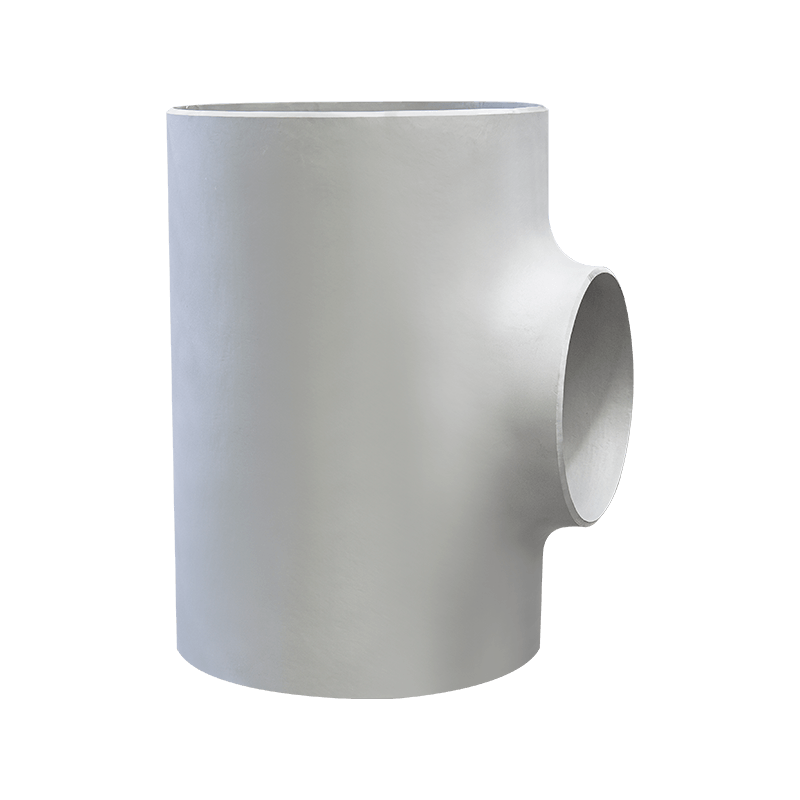 Butt Weld Pipe Fittings Manufacturers, Welded Pipe Fitting FactoryGaoxin Pipe Fittings is China Wholesale Butt Weld Pipe Fittings(has ASME B16.9,EN10253,GOST,DIN 2615 etc.) Manufacturers, Factory,and sup...View Product →
What ultimately matters is traceability. Piping components in duplex and super duplex grades must carry full mill certificates, heat treatment records, and positive material identification. A manufacturer that has produced duplex and super duplex fittings for decades, with qualified welders, internal nondestructive testing capability, and stable material supply, can close the gap between the alloy on the drawing and the fitting on the pipe rack. Ask for the certification before approving the order, not when the shipment arrives.
Latest News
News And Blogs
Stay Informed About Our Recent Events