Language
 English
 中文简体
中文简体 русский
 Español
 عربى
عربى
Material Selection for Butt Weld Fittings Choosing the right material is the first step in selecting...
Home / News / Industry News / What Are the Differences Between Forged and Cast 90 Degree Thread Elbows?
What Are the Differences Between Forged and Cast 90 Degree Thread Elbows?

Content
- 1 Overview of Forged 90 Degree Thread Elbows
- 2 Overview of Cast 90 Degree Thread Elbows
- 3 Manufacturing Process Differences
- 4 Strength and Pressure Performance
- 5 Durability and Service Life
- 6 Dimensional Accuracy and Thread Quality
- 7 Cost Considerations
- 8 Typical Applications Compared
- 9 Standards and Compliance
- 10 How to Choose Between Forged and Cast Elbows
- 11 Conclusion
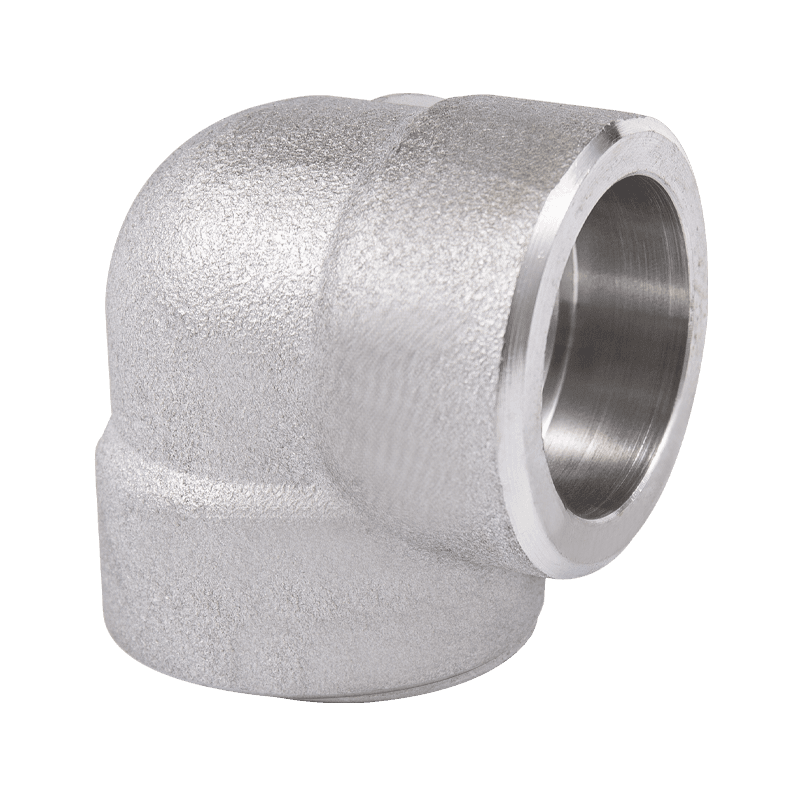
A 90 degree thread elbow is a critical fitting used to change the direction of flow in piping systems by 90 degrees while maintaining a threaded connection. These elbows are widely used in oil and gas, chemical processing, power generation, plumbing, and industrial fluid handling. Among the most common manufacturing methods are forging and casting, each producing elbows with distinct mechanical and performance characteristics.
Understanding the differences between forged and cast 90 degree thread elbows helps engineers, designers, and procurement professionals select fittings that align with pressure requirements, environmental conditions, safety standards, and lifecycle costs.
Overview of Forged 90 Degree Thread Elbows
Forged 90 degree thread elbows are produced by shaping heated metal under high pressure using dies or hammers. This process refines the grain structure of the material, aligning it with the shape of the elbow. The result is a dense, uniform structure with excellent mechanical strength and resistance to fatigue.
Forged elbows are typically manufactured from carbon steel, stainless steel, or alloy steel and are widely used in high-pressure and high-temperature applications where safety and reliability are critical.
Overview of Cast 90 Degree Thread Elbows
Cast 90 degree thread elbows are made by pouring molten metal into a mold and allowing it to solidify. This method allows for complex shapes and is generally more cost-effective for large or intricate designs. Casting is commonly used with materials such as cast iron, ductile iron, and certain stainless steel grades.
While casting offers flexibility in design, the internal structure of cast elbows may contain porosity or micro-defects, which can affect strength and long-term performance in demanding environments.
Manufacturing Process Differences
The manufacturing process is the most fundamental difference between forged and cast elbows. Forging compresses the metal, eliminating voids and enhancing grain flow, while casting relies on controlled cooling of molten metal within a mold.
These process differences directly influence mechanical properties, surface finish, dimensional accuracy, and suitability for specific applications.
Impact on Material Structure
Forged elbows have a continuous grain structure that follows the contour of the fitting, providing superior resistance to cracking and deformation. Cast elbows may have a more random grain structure, which can be sufficient for low-stress applications but less ideal for high-pressure systems.
Strength and Pressure Performance
Forged 90 degree thread elbows generally outperform cast elbows in terms of tensile strength, impact resistance, and pressure handling capability. This makes them suitable for high-pressure pipelines, steam systems, and critical process lines.
Cast elbows, while adequate for many low- to medium-pressure applications, may not offer the same safety margin under extreme operating conditions.
- Forged elbows handle higher working pressures and pressure fluctuations.
- Cast elbows are better suited for stable, low-pressure environments.
- Forged fittings provide greater safety in critical applications.
Durability and Service Life
Durability is a key consideration when selecting threaded elbows. Forged elbows typically offer a longer service life due to their dense structure and resistance to fatigue and vibration. They perform well in systems with frequent pressure cycling or thermal expansion.
Cast elbows may experience earlier wear or cracking under similar conditions, particularly if exposed to mechanical shock or corrosive media without proper material selection or coating.
Dimensional Accuracy and Thread Quality
Thread quality is critical for leak-free connections. Forged 90 degree thread elbows typically offer more precise dimensions and cleaner threads due to post-forging machining. This results in better sealing performance and easier installation.
Cast elbows may require additional machining to achieve acceptable thread tolerances, and variations in casting quality can affect thread consistency.
Cost Considerations
Cost is often a deciding factor. Cast 90 degree thread elbows are generally less expensive due to lower manufacturing costs and faster production for complex shapes. This makes them attractive for large-scale projects with tight budgets.
Forged elbows usually have a higher upfront cost, but their longer lifespan and reduced risk of failure can result in lower total cost of ownership over time.
Typical Applications Compared
Choosing between forged and cast elbows often depends on the application. High-stress and safety-critical systems favor forged fittings, while less demanding systems can effectively use cast fittings.
| Application | Forged Elbow | Cast Elbow |
| High-pressure pipelines | Highly suitable | Not recommended |
| Industrial plumbing | Suitable | Suitable |
| Oil and gas systems | Preferred choice | Limited use |
| Low-pressure water systems | Optional | Common choice |
Standards and Compliance
Both forged and cast 90 degree thread elbows can comply with international standards such as ASME, ASTM, and ISO, depending on material and manufacturing controls. Forged fittings are more commonly specified in stringent standards for pressure vessels and critical pipelines.
Ensuring proper certification and traceability is essential regardless of manufacturing method, especially in regulated industries.
How to Choose Between Forged and Cast Elbows
Selecting the right type of 90 degree thread elbow requires balancing performance, cost, and safety. Consider operating pressure, temperature, media type, installation environment, and long-term maintenance requirements.
- Choose forged elbows for high pressure, high temperature, or safety-critical systems.
- Choose cast elbows for low-pressure, non-critical applications where cost efficiency is important.
- Always verify material grade and compliance with applicable standards.
Conclusion
The differences between forged and cast 90 degree thread elbows extend beyond manufacturing methods to include strength, durability, pressure performance, cost, and application suitability. Forged elbows offer superior mechanical properties and reliability, making them ideal for demanding environments.
Cast elbows remain a practical and economical choice for less demanding systems. By understanding these differences and aligning them with project requirements, you can select the most appropriate fitting to ensure system safety, efficiency, and long-term performance.
Latest News
News And Blogs
Stay Informed About Our Recent Events