Language
 English
 中文简体
 русский
 Español
 عربى
Material Selection for Butt Weld Fittings Choosing the right material is the first step in selecting...
Home / News / Industry News / Acid Piping Technology: Alloy Selection, Fittings and Safe System Design
Acid Piping Technology: Alloy Selection, Fittings and Safe System Design

Content
- 1 What Acid Piping Technology Actually Has to Solve
- 2 Matching Alloy to Acid: A Practical Starting Point
- 3 Why Fittings and Flanges Decide Acid Line Life
- 4 Design Details That Quietly Extend Service Life
- 5 Welding, Fabrication and Verification
- 6 Standards and Documentation Worth Asking For
- 7 A Short Selection Checklist
- 8 Working With a Manufacturer Who Has Seen These Lines Before
Acid piping technology is one of those subjects that looks like a materials question and turns out to be a system question. A line that carries sulfuric acid without trouble for a decade can fail in eighteen months after one small change upstream, and the fitting that leaks is rarely the fitting anyone suspected. Over the past three decades we have supplied butt weld fittings, forged fittings and flanges into chemical plants, refineries and metal treatment lines across 56 countries, and the lessons repeat: corrosion is decided by the whole combination of alloy, geometry, weld quality and operating habit, not by a single grade on a datasheet.
This article walks through the practical side of acid service piping, from alloy matching to the design and fabrication details that quietly determine how long a line stays tight.
What Acid Piping Technology Actually Has to Solve
Acids attack piping in several different ways at once, and each mechanism responds to different countermeasures. General wall loss is the one most people picture, but it is often the slower problem. Pitting and crevice corrosion concentrate damage in gaps under gaskets, at weld toes and inside socket welds, where chemistry drifts and oxygen disappears. Chloride-driven stress corrosion cracking turns residual welding stress into cracks in austenitic stainless steel. Erosion-corrosion accelerates wherever flow speeds up, particularly at elbows, reducers and mixing points.
The variables that shift the picture fastest are concentration, temperature, aeration and contamination. Sulfuric acid at high concentration and ambient temperature can be handled in carbon steel, while a dilute, warm, agitated version of the same acid will destroy it. Hydrochloric acid will not tolerate 300-series stainless at any practical concentration. Nitric acid behaves in the opposite direction, suiting oxidising stainless grades but reacting badly to chloride ingress. Any serious material decision therefore starts with the real operating window, not with a general acid name.
Matching Alloy to Acid: A Practical Starting Point
The table below reflects how acid piping technology is usually applied in practice. It is a conversation starter rather than a specification: the same acid at a different concentration or temperature can move a line from carbon steel into a nickel alloy.
| Acid service | Typical operating picture | Grades often specified | What to watch |
|---|---|---|---|
| Sulfuric acid (H2SO4) | Concentrated acid at ambient is often handled in carbon steel; dilute or warm acid becomes aggressive | Alloy 20, super austenitic stainless, super duplex 2507 | Dilution points where heat and turbulence spike the corrosion rate |
| Hydrochloric acid (HCl) | Pitting is rapid even at low concentration | Titanium Grade 2, Inconel 625, or lined and non-metallic systems | Crevices and residual moisture left after hydrotesting |
| Nitric acid (HNO3) | Oxidising service that suits stabilised austenitic grades | 304L, 321/321H, 347H | Chloride contamination raising stress corrosion cracking risk |
| Phosphoric acid (H3PO4) | Frequently carries chlorides and fluorides from the process | 316L, duplex 2205, Inconel 625 | Erosion-corrosion in slurry and filter feed lines |
| Mixed and organic acids | Composition drifts with each batch and with upstream chemistry | Duplex 2205, super duplex 2507, nickel-based alloys | Ask for a real analysis instead of a generic service name |
Duplex and super duplex grades earn their place in acid piping technology because they combine mechanical strength with resistance to chloride attack, which allows thinner walls and fewer supports in aggressive service. Where chlorides, fluorides or trace oxidisers push stainless past its limit, super duplex chemical pipe fittings or nickel-based components take over. The trade-off is fabrication discipline: these alloys are far less forgiving of careless welding than 316L.
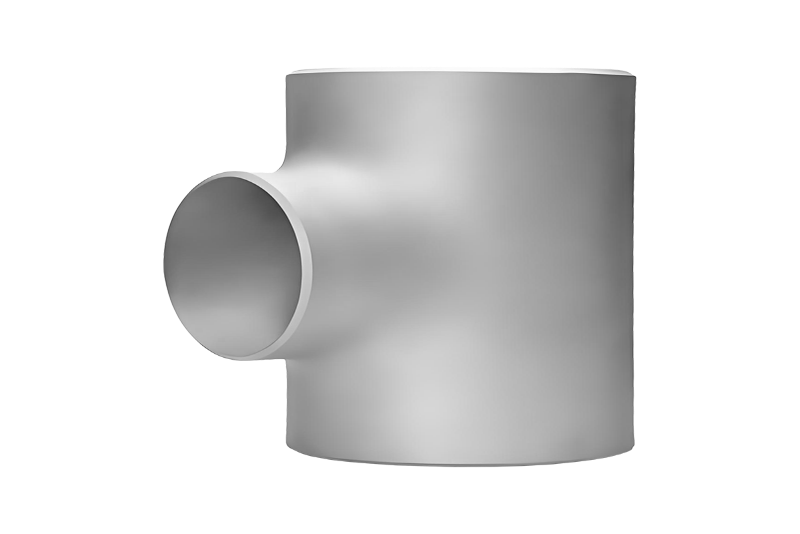
 Special Alloy Butt-Weld Fittings for Corrosive Acid PipingNickel-alloy, duplex, titanium and zirconium butt-weld fittings to ASME B16.9, sized DN15–DN3500, for chloride- and oxidiser-heavy acid piping where 316L falls short.View Product →
Why Fittings and Flanges Decide Acid Line Life
Fittings concentrate everything that acids dislike. An elbow changes direction, so it carries higher local velocity and turbulence. A tee used for dosing or dilution creates a mixing zone where heat of dilution and fresh concentration gradients meet the wall. Concentric and eccentric reducers set up flow patterns that either keep solids moving or drop them into a dead pocket. In acid service, geometry is chemistry.
A few habits make a measurable difference:
- Prefer long-radius or 45-degree bends over tight 90-degree elbows where velocity is high, to spread the impingement over more surface.
- Avoid socket welds and threaded joints in aggressive acid where a crevice can form; butt welding removes the gap entirely.
- Use weld neck flanges for higher-pressure and higher-integrity joints, and think carefully before choosing slip-on designs in wet acid service.
- Specify eccentric reducers at pump inlets so gas pockets cannot accumulate, and concentric reducers where solids are present.
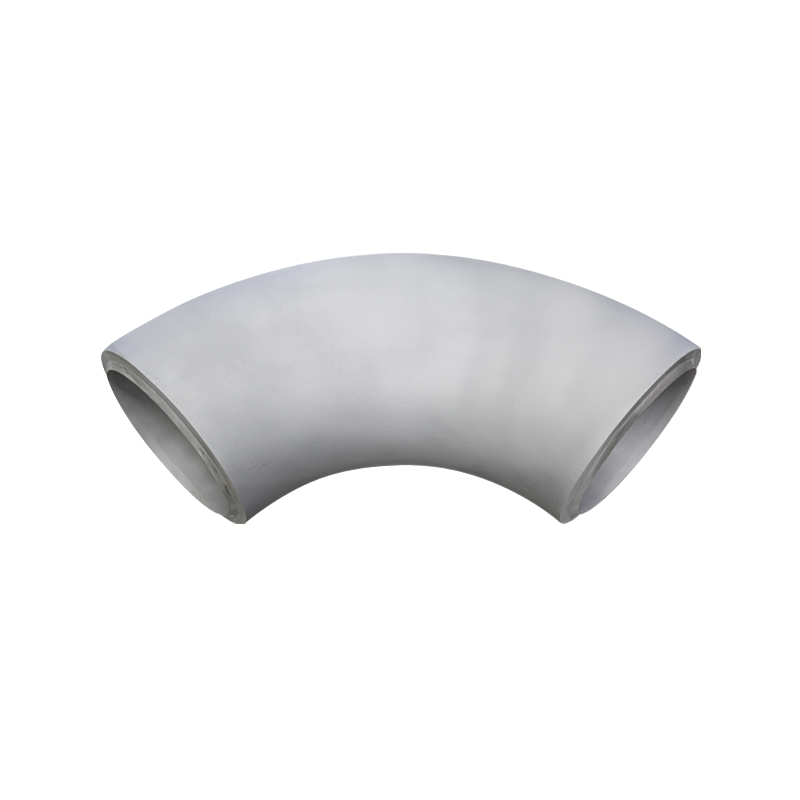
Butt-Weld 90-Degree Elbow for High-Pressure PipingLarge-diameter LR and SR elbows from DN15 to DN3800, with thick-wall options and butt-welded leak-proof joints for corrosive, high-pressure pipeline direction changes.View Product →
Flanged connections deserve the same scrutiny. Each gasket face is a potential crevice, and the alloy of the flange must match the pipe so that no galvanic couple forms in a wet, conductive liquid. For chemical and marine duty we routinely supply 316L corrosion resistant stainless steel pipe fittings alongside matching flanges produced to ASME B16.5 dimensions, so the joint behaves as one material system rather than two.
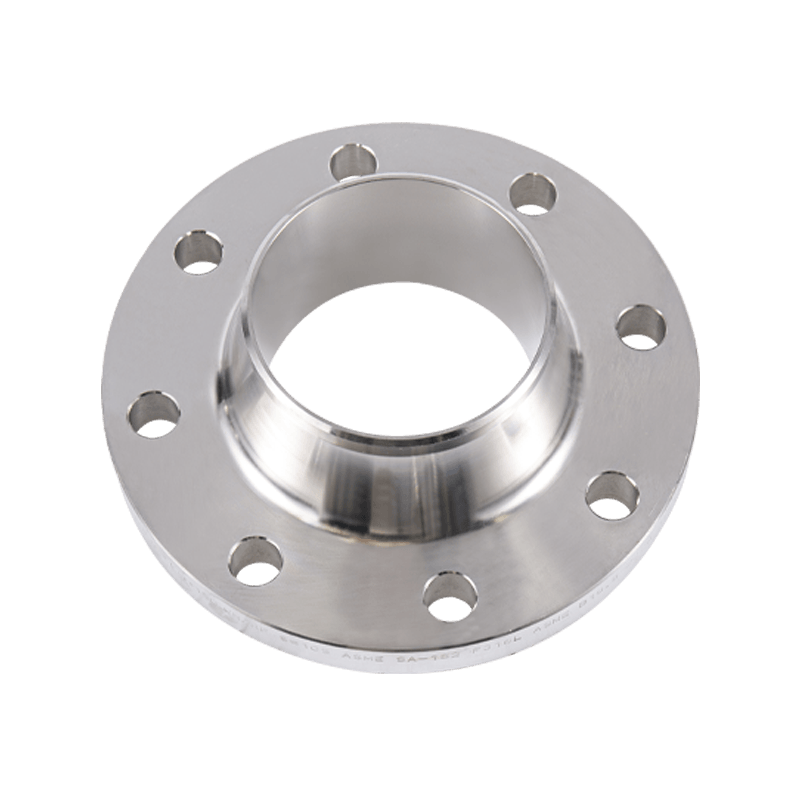 Weld Neck Flange for High-Pressure Piping ConnectionsFull-penetration butt-weld flange with tapered neck for leak-proof, low-stress joints in high-pressure, high-temperature and corrosive service, sized DN15 to DN3500.View Product →
Design Details That Quietly Extend Service Life
Many acid line failures trace back to layout rather than metallurgy. Keeping fluid velocity inside the alloy's comfort zone is the single most effective control; the acceptable limit differs sharply between carbon steel, austenitic stainless and duplex, and it drops further when the stream carries solids or entrained gas. Self-draining slopes prevent stagnant pools where concentration changes during shutdown. Short dead legs at instruments and bypasses are common starting points for pitting because the liquid inside them never refreshes.
Support spacing, expansion loops and nozzle loads also matter. A thin-wall super duplex line behaves differently from a Schedule 40 carbon steel line carrying the same fluid, and the stress analysis needs to reflect that. Insulation should be chloride-free and sealed against moisture ingress; a damp insulation jacket around a stainless pipe is a well-known route to external cracking.
Welding, Fabrication and Verification
In acid piping technology, the weld is usually the weakest link and the hardest place to inspect. Good practice looks like this: qualified procedures and welders per ASME Section IX, inert gas purging on stainless and duplex root passes, controlled heat input, and a ferrite check on duplex weld metal to confirm the balance has not drifted. After welding, pickling and passivation restore the oxide layer that protects stainless steel, and any heat tint left in place becomes a corrosion initiation site.
Verification should be equally deliberate. Positive material identification on every heat number catches mix-ups before installation. Penetrant testing on duplex and super duplex root passes finds the fine cracks that radiography can miss. Dimensional checks on large fittings, hardness checks after post-weld heat treatment, and hydrotesting with low-chloride water followed by prompt draining and drying all pay for themselves in the first year of operation.
Standards and Documentation Worth Asking For
Most acid lines are specified through a small set of documents: ASTM A403 or A815 for wrought fittings, ASTM A182 for forged and flanged components, ASME B16.9 for butt weld dimensions, ASME B16.5 for flange ratings, and ASME B31.3 for the piping design itself. Where sour or wet acid service overlaps with oil and gas, NACE MR0175 / ISO 15156 enters the picture. European projects often reference EN 10253, and severe-service projects may add NORSOK M-650 for special alloys.
Alongside the standard, ask for the pack that proves it: material certificates with heat numbers traceable to the finished part, non-destructive examination reports, heat treatment records and dimensional reports. On a chemical site, that documentation is often worth more than a small price difference.
A Short Selection Checklist
- Define the real operating window: concentration range, temperature range, aeration, chlorides, solids and velocity.
- Confirm the corrosion mechanism you are designing against rather than assuming general wall loss.
- Select the alloy, then check its fabrication requirements before committing the design.
- Choose connection types that eliminate crevices wherever the acid is aggressive.
- Review the layout for dead legs, drainage, mixing points and velocity hot spots.
- Specify welding, heat treatment, testing and identification requirements in the purchase documents.
- Require full traceability from heat number to delivered fitting.
Working With a Manufacturer Who Has Seen These Lines Before
Jiangyin Gaoxin Pipe Fittings has been producing pressure piping components in Jiangsu since 1993, covering butt weld fittings, forged fittings, flanges, special material components and prefabricated items in carbon steel, stainless steel, alloy steel, duplex and super duplex, nickel-based alloys and titanium. Common sizes are held in stock to shorten lead times, and our technical team includes NDT personnel certified in magnetic particle, penetrant, ultrasonic and radiographic testing, together with welders qualified to ASME and pressure equipment standards. Our quality system has passed ISO 9001 and PED audits, and our sales engineers sit close enough to the workshop to walk out and check a job in progress when a customer asks.
If you are working through an acid service specification, send us the line data and we will help match the alloy, the fitting geometry and the documentation package to it. The earlier that conversation starts, the fewer surprises appear at commissioning.
Latest News
News And Blogs
Stay Informed About Our Recent Events